Facebook Ad Campaigns
Meta ad campaigns with carousel creatives and conversion tracking that deliver measurable ROI.
Facebook and Instagram advertising remains one of the most powerful platforms for reaching targeted audiences at scale. I design, launch, and manage Meta ad campaigns across the full funnel — from brand awareness video campaigns through to direct-response lead generation and e-commerce conversion campaigns. Every campaign combines scroll-stopping creative with precision audience targeting and rigorous conversion tracking to ensure every dollar spent is accountable.
Creative That Converts
Thumb-stopping ad creative designed for the feed.
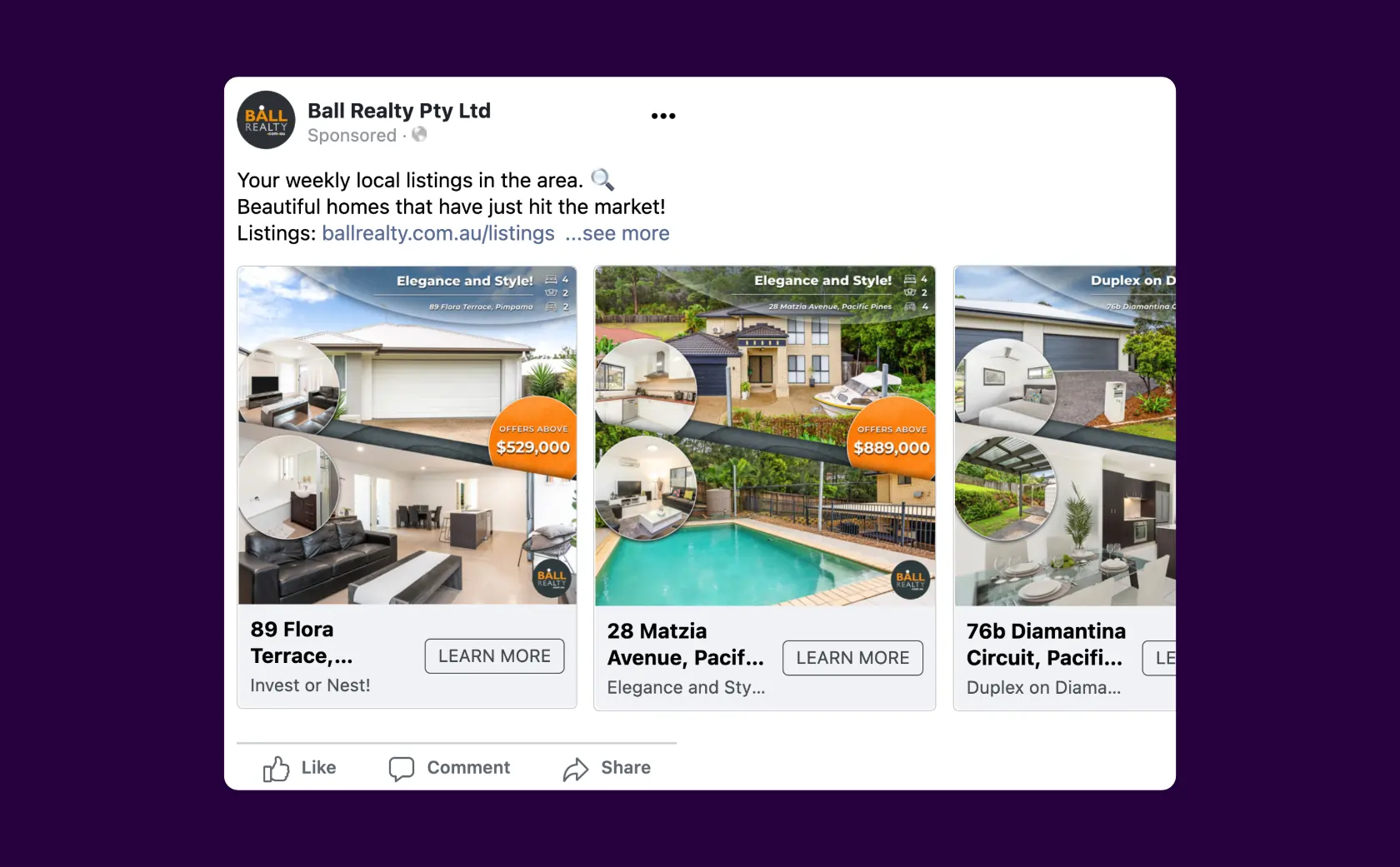
The best targeting in the world means nothing if the creative doesn't stop the scroll. I design ad creative specifically for the Meta environment — understanding that you have less than one second to capture attention in a fast-moving feed. This means bold visuals, clear value propositions above the fold, native-feeling formats (carousels, Reels, Stories), and strong hooks in the first frame of video. Every creative set includes multiple variations for A/B testing, with systematic iteration toward the highest-performing combinations of headline, image, and copy.
Full-Funnel Meta Strategy
Awareness, consideration, and conversion — structured for scale.
Effective Meta advertising isn't a single campaign — it's a structured funnel that moves prospects from awareness through to conversion. I build campaign architectures with clear separation between cold prospecting (broad audiences, video views, engagement), warm retargeting (website visitors, video viewers, engagers), and hot conversion (cart abandoners, lead form openers, high-intent signals). Each stage has appropriate creative, messaging, and bid strategy — ensuring you're not asking cold audiences to buy, and not wasting awareness budget on people ready to convert.
Technical implementation includes full Conversions API (CAPI) setup for server-side tracking that survives iOS privacy changes, custom conversion events matched to your actual business outcomes (not just link clicks), lookalike audiences built from your highest-value customers, and automated rules for budget allocation based on performance thresholds. Monthly reporting includes cost-per-lead, cost-per-acquisition, and ROAS metrics broken down by campaign, audience, and creative — giving you clear visibility into what's working and where to scale.
Creative Testing and Iteration
Systematic A/B testing to discover what resonates.
One scroll-stopping creative is luck. Consistent winners are built through systematic testing. Every campaign I launch includes multiple A/B tests — different images, different headlines, different value propositions, different CTAs. Meta's testing system requires careful setup: single-variable tests to isolate what actually drives performance, sufficient budget per variant to reach statistical significance, and enough test duration (at least 4-5 days) to smooth out daily variance. Common variables I test: hero image versus video, benefit-focused versus emotion-driven copy, short punchy headlines versus longer explanatory ones, different demographic angles (price-conscious vs. quality-focused). The winners emerge from data, not intuition, and ongoing campaigns shift budget toward top performers while killing underperformers quickly.
Audience Segmentation and Targeting Precision
Beyond demographics — psychographic and behavioral targeting.
Meta's targeting capabilities have evolved far beyond simple demographic buckets. Modern campaigns layer custom audiences (your customers), lookalike audiences (people similar to your best customers), behavioral targeting (people with specific interests and online behaviors), and detailed demographic filters. I build custom segmentations based on customer lifetime value, purchase history, and engagement patterns. Buyers that have spent $1000+ get different messaging and offers than one-time purchasers or window shoppers. Geographic targeting can narrow to specific suburbs or expand to look-alike areas in other regions. Seasonal targeting shifts messaging between peak and off-peak periods.
The power of precise targeting is that it lets you do more with smaller budgets. Rather than showing a generic ad to 100,000 broad-interest people, you show highly relevant messages to 5,000 high-probability buyers. This drives down cost per click, improves conversion rates, and protects brand image by avoiding irrelevant impressions. For Gold Coast–based businesses, I leverage location data to target users actively in Gold Coast suburbs, and use demographic data to focus on the age and income brackets that are most likely to buy. Exclusion audiences ensure you're not retargeting people who've already converted or visited pricing pages without interest.
Mobile-First Creative Design
Designs built for mobile feed consumption.
Over 98% of Meta users access the platform on mobile, which fundamentally changes how creative should be designed. Vertical video performs better than horizontal. Safe text areas must account for the space taken up by profile photos and engagement buttons. Animations and transitions need to work on older phones without dropping frames. I design all Meta creative mobile-first — assuming it will be viewed on a phone first and desktop second. This means tighter compositions, larger text, and simplified messaging. Video creative uses captions overlaid directly on the video so even users watching muted (which is most mobile feed viewers) understand the message. Carousel ads arrange multiple products vertically for easy swiping through on mobile. Every template is tested on actual devices before going live to catch rendering quirks and performance issues.
Conversion Tracking and Attribution
Measuring what actually matters to your business.
You can't optimize what you don't measure. I set up comprehensive conversion tracking for every campaign — not just link clicks, but actual business outcomes: form submissions, purchases, phone calls, app installs, or whatever constitutes a valuable action for your business. Meta's Conversions API (CAPI) sends these conversion events server-side, making tracking resilient to browser privacy restrictions and iOS's AppTrackingTransparency changes. Custom conversion events are configured to match your actual sales funnel — a "high-intent" conversion might be someone who submitted a form and visited your pricing page, while a simpler "lead" conversion is just the form submission.
Attribution modeling ensures you understand which campaigns drove conversions even when a customer interacted with multiple touchpoints. Facebook provides first-click, last-click, and data-driven attribution models. For Gold Coast service businesses, multi-touch attribution often reveals that branding awareness campaigns generate indirect sales — someone sees your ad three times over a month, then searches your brand name directly and converts. My reporting always includes these indirect conversions to give credit to full-funnel strategies. Custom dashboards connected to Looker Studio pull conversion data directly from your CRM or analytics platform, so leadership sees accurate ROI metrics updated in real-time.
Building Community and Long-Term Brand Value
Meta platforms are powerful for building community, not just acquiring customers.
Beyond direct lead generation and e-commerce sales, Meta platforms excel at building community and brand loyalty. Engaging with followers' comments, responding to messages quickly, and fostering conversations around the brand creates community that lasts beyond any individual campaign. Users who feel heard and valued become loyal customers and brand advocates who refer friends. This long-term brand building is harder to measure than cost-per-lead but often more valuable. A brand with passionate, engaged followers will outperform competitors with larger but disengaged audiences.
Seasonal and Promotional Campaign Strategy
Timing campaigns to business cycles and external events.
Demand for products and services follows predictable patterns. Retail peaks before holidays, outdoor services peak in summer, legal services peak after accidents or disputes. Smart Meta advertising campaigns anticipate these patterns and increase budget and messaging during peak seasons. A landscaping company increases ad spend in spring when homeowners are planning summer gardens. An e-commerce store increases during Black Friday/Cyber Monday. A legal firm increases before major holiday periods when travel accidents spike. This seasonal optimization is where data-driven marketing creates significant leverage — you can achieve 2-3x better ROAS by running campaigns when demand is naturally high rather than trying to create demand during slow periods.
Promotional campaigns tied to company events (sales, product launches, milestone celebrations) create urgency and drive short-term spikes in demand. A flash sale with 48-hour deadline creates FOMO (fear of missing out) that drives faster conversion. Limited inventory announcements create scarcity that encourages action. These psychological principles, applied through Meta's ad platform, are remarkably effective. But they require careful calibration — overly aggressive promotion damages brand perception and attracts deal-seekers rather than customers who value your product. The goal is to create sustainable business growth, not one-time revenue spikes.
Need Facebook or Instagram ads?
Let's connect.




From the blog
Latest thinking
Tech news, design insights, and development deep-dives from the Gold Coast.