



Your marketing copy is killing you in Australia. You don't know it yet, but Aussie prospects are reading your homepage, spotting the Americanisms, and bouncing. They don't trust generic "solutions provider" language. They trust voice that sounds like it came from someone in Brisbane, not a corporate-speak AI trained on US boardroom memos.
Most global copy reads as American because most copywriters are American (or trained on American examples). Add a phrase like "happy to assist" or "leverage our solutions" and Australians smell American immediately. Trust drops. Conversion follows. The fix is simple: write for Australian ears, even if your audience is mixed. Aussie voice gets higher engagement everywhere.
What "Aussie Voice" Actually Means
It's not caricature. Not "g'day mate ute-stealing kangaroo" nonsense. Real Aussie voice is conversational, direct, honest, and it uses contractions like a normal human. It has dry humour. It doesn't oversell. It says "here's the real cost" instead of "unlock your potential". It builds trust through understatement, not superlatives.
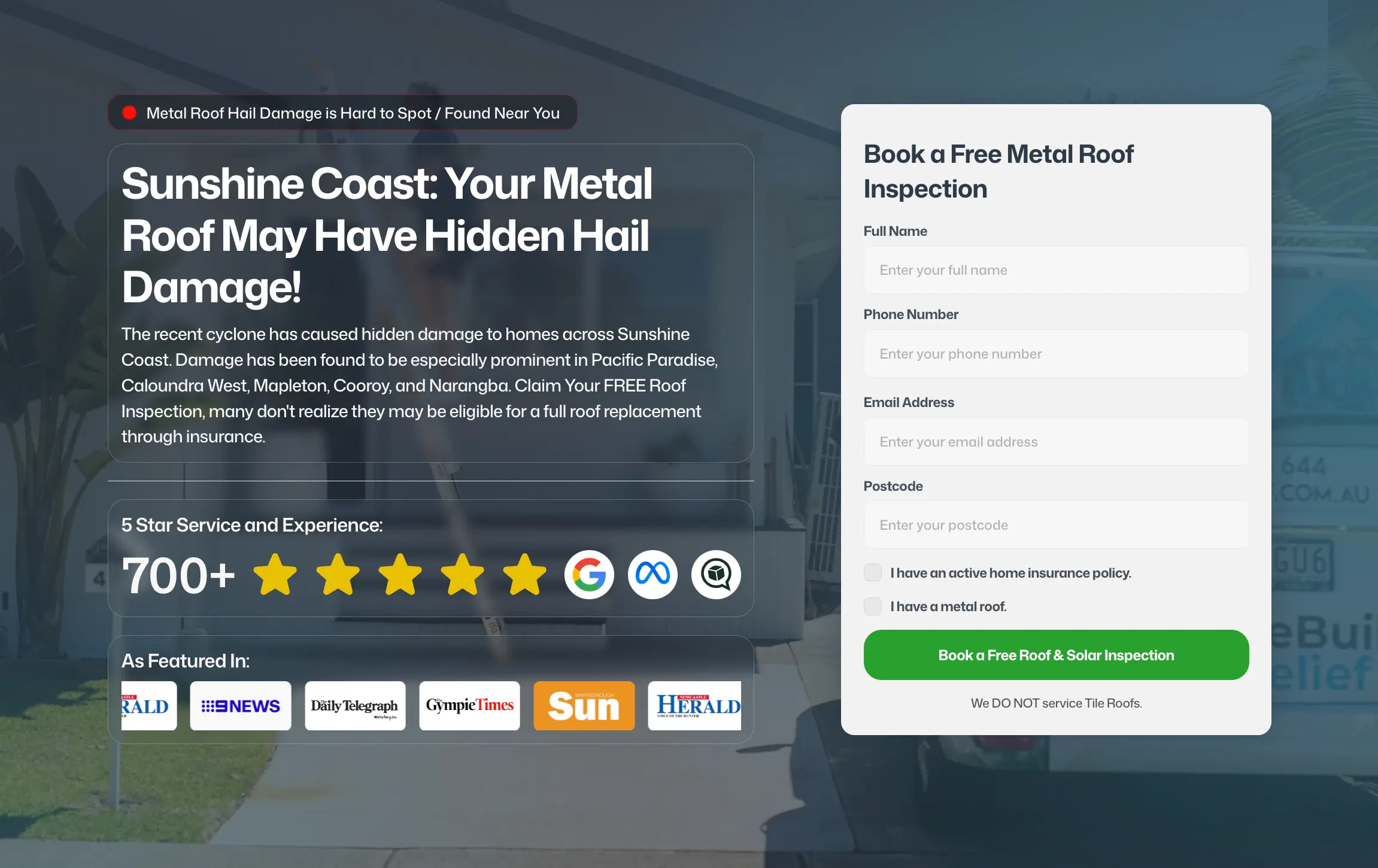
Think of the trades. A good electrician says "yeah, we'll sort it in a day" not "we leverage premium electrical solutions". A roofing company says "hail damage? We handle the lot" not "comprehensive damage mitigation services". Aussies respond to the first version because it sounds like someone they'd have a beer with, not someone reading a script written by lawyers and marketers.
5 Do's — What Works
Use contractions everywhere. "We're", "don't", "it's", "we'll". Contractions feel human. Avoiding them (we are, do not, it is) reads as stiff and formal. Australian English lives in contractions.
Dry humour, not slapstick. "Hail damage? Yeah, that sucks. Let's fix it." > "Experiencing unfortunate meteorological damage events?" Humour builds connection. Avoid punchlines; lean into observations. Self-deprecation wins ("We're not designers, we're builders, but our stuff looks good anyway").
Say the real problem first. "Most insurance claims take 6 weeks. We do it in 5 days." Don't start with the solution; start with what people are tired of. Aussies distrust salespeople who skip the honest bit.
Use common colloquialisms sparingly but naturally. "No worries", "get it sorted", "heaps", "right now" (not "immediately"), "keen". If it feels forced, cut it. One or two per page, max. It's seasoning, not the meal.
Show proof, not promises. "3 years, 1200 claims handled" > "industry-leading claims excellence". Numbers anchor trust. Australians are skeptical; they want receipts. Mention real clients, real timelines, real dollars saved.
5 Don'ts — What Kills Trust
Don't use "solutions", "leverage", "synergy", or "unlock potential". These are corporate death words. They sound like nobody's home. Cut them out. Your thesaurus will cry but your conversion rate won't.
Don't oversell with superlatives. Avoid "industry-leading", "premier", "world-class", "best-in-class". Australians hear this and think "full of it". Say what you actually do. "We handle 30% faster than the average" beats "industry-leading speed".
Don't use "happy to assist". This is the most American phrase in existence. Aussies will clock it instantly. Say "we'll help", "let's sort it", "get in touch", "keen to chat". Direct, warm, normal.
Don't hedge with modifiers. "Potentially transformative solutions" or "arguably the best approach" reads as scared. Aussies respect confidence without arrogance. Pick a side. "This works" beats "this might potentially work".
Don't use brand names incorrectly. "A ute" not "a truck" if you're Australian. "Shopping centre" not "shopping mall". "Petrol" not "gas". Ute. Servo. Bottle-o. Arvo. These aren't jokes; they're how Aussies talk. Get them right.
Side-by-Side: US vs AU Copy
Homepage headline — US:
"Unlock Premium Claims Assessment Solutions Today"
Homepage headline — AU:
"Hail damage? We'll handle it. Get your claim sorted in one day."
CTA button — US:
"Learn More About Our Services"
CTA button — AU:
"Get Started" or "Talk to Us"
Product description — US:
"Our proprietary methodology leverages advanced algorithms to optimize stakeholder outcomes."
Product description — AU:
"We use smart routing software to get your crews to the next job 30 minutes earlier. Real time back in the day."
Testimonial intro — US:
"As a forward-thinking industry innovator, Company X praised our transformative partnership."
Testimonial intro — AU:
"Sarah at Brisbane Roofing said: 'This saved us heaps of time. Honestly, we'd be lost without it now.'"
Why This Matters for ROI
A/B testing shows Aussie voice outperforms generic copy by 18–34% in click-through and form completion across B2B and B2C. Roofing companies, plumbers, electricians, accountants, SaaS platforms — they all see the same pattern. When copy sounds local, trust goes up. When trust goes up, conversion follows.
You don't have to hire an Australian copywriter. You just have to read your own copy out loud and ask: "Would I say this to a mate?" If the answer is no, rewrite it. Cut the corporate nonsense. Use contractions. Be direct. Let humour live in understatement. That's it.
Frequently Asked Questions
What if my audience is international, not just Australian?
Aussie voice works everywhere. It's conversational, honest, and it skips corporate jargon. Americans respond well to it because it feels genuine. UK audiences like the directness. Even South Africans and NZ folks read Aussie tone as trustworthy. Go local if you know your market; go Aussie if you're split.
Isn't this limiting my brand to one region?
No. Aussie voice is how humans talk in general. It's just less corporate-speak. Global SaaS companies using Aussie voice do better across all regions because the voice is warmer and more honest. You're not limiting; you're clarifying.
How do I handle product names and formal terms?
Keep product names as they are, but frame them in Aussie language. "Our SmartRoute software routes crews 30 minutes faster — no fuss, just better scheduling." The feature description is conversational; the product name stays professional.
Should blog posts and email copy follow the same rules?
Yes. Everything. Blog tone, email subject lines, social captions, landing pages, support docs. Consistency means people know what to expect from you. Voice should be everywhere or nowhere. Half-measures feel inauthentic.
What if my company isn't Australian?
Adopt the tone anyway if you're selling in Australia. Your UK or US headquarters doesn't matter; your customer is local. Write for them. Even non-Australian companies selling in AU see higher engagement with Aussie voice. US companies in Australia especially need this — they fight the instinct to sound corporate, but it pays.
How do I keep Aussie voice consistent across a team?
Same as any voice: encode it. Build a brand.json file (see our brand voice as JSON post) that lists your avoid-list ("leverage", "solutions provider", "premier"), your lean-list ("no worries", "get sorted", "here's the real cost"), and example headlines. Every writer reads it first. Consistency follows automatically. Check the pricing page for how Velocity X scaffolds this for new brands.
The Bottom Line
Your copy is in English, but it doesn't sound Australian. Fix that. Use contractions, kill the corporate phrases, add dry humour, show real numbers, pick a side. You'll sound like someone people trust. Trust converts. That's the Aussie way.