




Australian construction businesses live in a unique margin squeeze. A building company managing 3–12 active projects across QLD and NSW can be running 40–80 km of travel per week just between site visits, progress meetings, and subcontractor check-ins. Yet most are still co-ordinating this via email chains, WhatsApp groups split across three phones, and a project manager's notebook that walked into a hardware store and never came back. Procore and similar enterprise project management tools run $300+ per user per month. For a team of 5–8 people, that's $18k–$29k annually — often more than your actual project management overhead.
Velocity X is purpose-built for construction. Multi-site scheduling with automatic route optimization. Subcontractor assignment by trade (plumbers Monday, electricians Tuesday, concreters Friday). RFI (Request For Information) capture with photo evidence, timestamp, and automatic contractor notification. Progress-claim evidence logging — photos, sign-offs, defect tracking — all tied to project milestones. Everything in one app you own forever, with no monthly subscriber grind.
The Construction Workflow Problem
Construction project management sounds simple on paper: schedule site visits, assign trades, track progress, collect evidence for insurance and claims, manage change orders. In reality, it's chaos. A project manager starts their day with three separate Slack channels, a Gmail inbox with 47 unread emails about site conditions, a WhatsApp thread from the site foreman with photos of a "foundation issue that might be a problem," a phone call from the plumber saying the electrical rough-in isn't done so they can't start, and a text from the architect asking why the client's timeline got extended by two weeks.
By the time the PM has triaged all that and decided what to fix first, an hour has gone. By the time they've sent notifications to four different subbies, updated the project timeline in their tracking spreadsheet, called the site foreman back, and logged the cost impact, it's 11 am and they've accomplished nothing except reactive fire-fighting. Meanwhile, the actual site is running on a different schedule — the concreter showed up but the electrical approval isn't there, so now they're standing down for the day, the client is upset about the delay, and the PM doesn't have photo evidence from Friday to prove the site was already past that phase.
Velocity X collapses this. Every site, every trade, every decision lives in one place. The moment a subcontractor reports an issue or completes a milestone, the PM sees it. The moment a new RFI is raised, it auto-notifies the relevant contractor with photos and context. Progress claims build themselves from timestamped evidence the team captured in real-time, not from a PM's memory and spreadsheet formula three weeks later.
Multi-Project Site Scheduling and Route Optimization
A builder with 6 active projects across different suburbs faces a brutal scheduling problem. The PM needs to visit each site 2–3 times per week, but no two projects are on the same schedule. One's in framing, another's pre-pour concrete, another's already in electrical. The PM can't visit them all in one trip, so they're either burning hours in travel, visiting sites in a random order and not seeing critical bottlenecks, or worse, missing site visits and relying on photos from the foreman (which come in eventually, after the decision window closes).
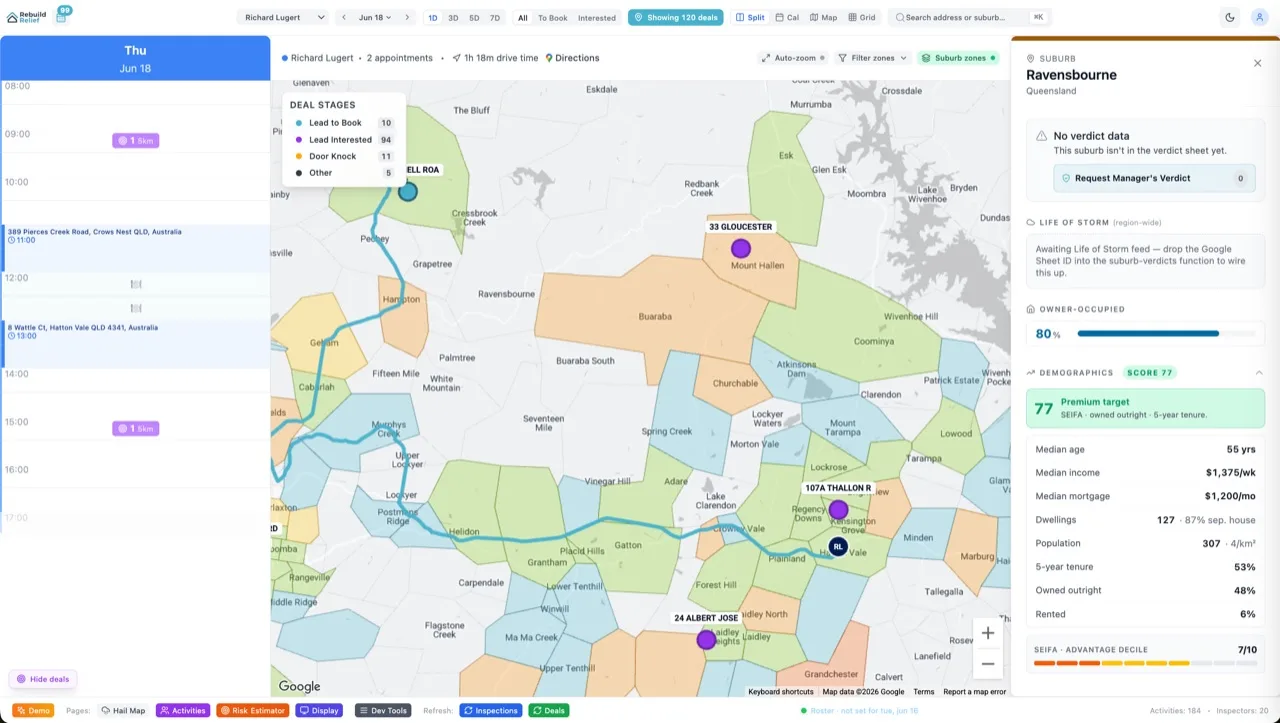
Velocity X solves this with intelligent route bundling. You assign site visits to your calendar for the week — "Frame inspection on Maple Street, Concrete pour sign-off on Laurel Ave, Electrical rough-in check on Birch Street." Velocity plots these across the three projects, calculates drive time between them, and suggests an optimal route for your PM. On the day, the PM opens the app, sees the bundled route, checks in at each site via GPS (one tap), walks through the project with the app open, snaps timestamped photos tied to the location, logs observations, and generates a site report on the spot. By 4 pm, the client has seen photos and notes from all three projects, and the PM has concrete evidence of what was done and what's pending.
The route optimization saves 2–4 hours per week in windshield time. At a PM's loaded cost (salary + overhead) of $85/hour, that's $170–$340 per week, or $8,800–$17,600 per year. Just on one person, on travel alone.
Subcontractor Routing by Trade — The Schedule Board in Your Pocket
Construction trades have a rhythm. Concreters come first. Then frame. Then rough trades (electrical, plumbing, HVAC). Then drywall, then finish. A builder managing multiple projects needs to sequence trades across all of them, and subbies need to know their schedule the week before — they're not sitting around waiting for a phone call on Monday morning.
Velocity X lets you build a trade-by-trade schedule board. "Concreters: Maple Street Monday 7 am, Birch Street Thursday 10 am, Oak Street next Monday." "Electricians: Maple Street Wednesday-Thursday after framing sign-off, Laurel Ave the following week." Each subcontractor gets their weekly schedule via SMS or email, with site addresses, contact details, and a note about what needs to be done. They can acknowledge their slots in the app, text if they're running late, and the PM sees it instantly. No more 6 am "mate I'm stuck in traffic" phone call with no backup trade to slot in.
When a trade completes their work, they check out in the app and log a completion photo. The next trade in the sequence automatically gets notified "your slot is now ready" with the previous trade's sign-off photo as evidence. This is the difference between a 20-week build and a 16-week build — subbies don't wait for a PM to call them, the system tells them when they're next.
RFI Workflow — Capture, Assign, Evidence, Close
An RFI (Request For Information) is a construction formality: a question about design intent, a site condition that doesn't match the plans, or a change order proposal that needs approval before work continues. In traditional construction, an RFI starts with a phone call or email, gets logged in someone's memory or a spreadsheet, gets sent to the architect (maybe; maybe it sits in a PM's drafts folder), waits for a response (days or weeks), and eventually gets answered — but by then, the site foreman has already moved on and made a decision based on "what I thought was right."
Velocity X makes RFIs transactional. A site foreman notices that the wall framing doesn't match the plan in one corner. They open the app, start a new RFI, select "Framing Discrepancy," take 3 photos from different angles (all timestamped and geotagged), write a 2-sentence description, and mark it as "blocking work." Velocity auto-notifies the architect, the builder's PM, and the structural engineer (all in one place). The architect responds within 24 hours, "pour concrete for L1 corner as shown in amended plan, accept as-built framing." The foreman gets notified, sees the photos and decision, marks the RFI closed, and work continues. The whole loop from question to decision is now 18 hours, not 2 weeks, and every step is logged with evidence.
For insurance and post-contract disputes, this is gold. You have dated, geotagged photos of every decision point on a build. If a client claims something was done wrong, you pull up the RFI, show the architect's approval with the photos, and the dispute is over.
Progress Claims and Evidence Capture
Progress claims (the invoices a builder sends to the client at milestones — "Stage 1 complete: foundations to underfloor," etc.) require evidence. The client's insurer, the bank holding the construction loan, and the builder's own accountant all need proof that the work described in the claim was actually done. Traditionally, this is a PM's job: photograph the site at milestone moments, gather trade invoices and sign-offs, assemble a claim document with photos, and email it to the client.
In Velocity X, evidence is captured continuously. Every site visit logs timestamped photos. Every trade completion includes the subcontractor's sign-off photo. Every RFI resolution is documented with photos and decisions. When it's time to generate a progress claim, the system assembles all the photos for that stage (framing complete, rough trades complete, drywall finished, etc.), cross-references them against the milestone checklist, and auto-generates a claim document with embedded evidence. The client can see exactly what was done, when, and by whom. It's harder to dispute a claim when the evidence is visual and dated than when it's a PM's written narrative from six weeks later.
If a defect emerges post-handover, Velocity's timeline also helps you prove you didn't introduce it. You can show photos from the day you handed over, proving the defect wasn't your responsibility.
Real-World Case: Rebuild Relief Multi-Site Assessment
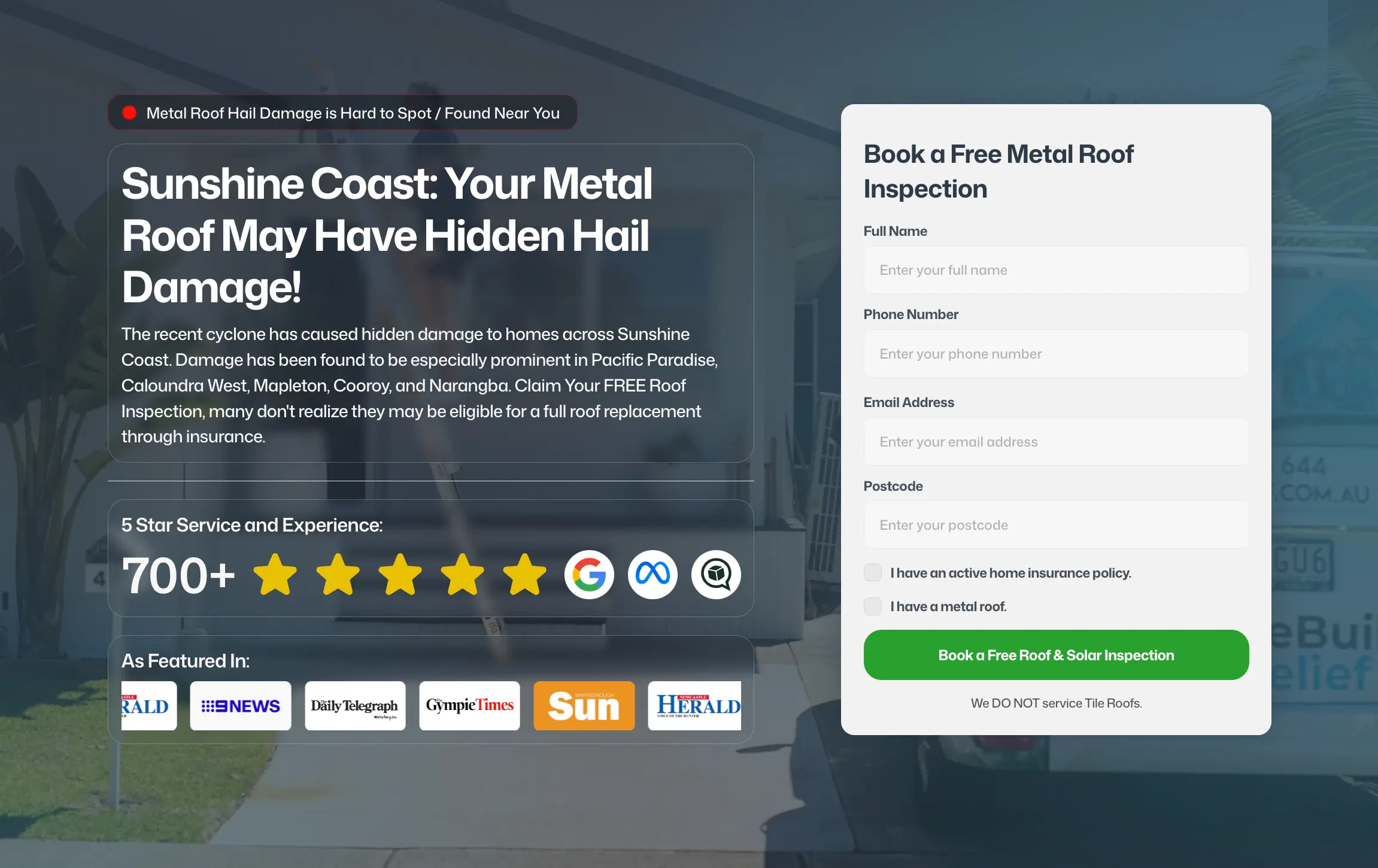
Rebuild Relief assesses hail and storm damage for insurance across multiple properties per day. This is construction's cousin — assessors need to schedule 3–4 site visits per day, capture timestamped photos with GPS coordinates, assign follow-up work to different contractors (roofers for hail, electricians for water ingress), and compile evidence for insurance claims. Before Velocity X, this was a spreadsheet + phone + paper notebook workflow.
After implementing a Velocity instance built for the same workflow (multi-site routing, RFI-style capture, contractor assignment), Rebuild Relief's lead-to-assessment time dropped from 8 days to 2 days. Assessors could check in at a property, photograph damage, assign repairs to the right trade (roofer if it's roof damage, electrician if it's water ingress), and notify the contractor — all in the app, all with geotagged evidence — instead of waiting for the PM to triage the photos and send emails. They scaled from 400 to 800 assessments per month without hiring more admin staff. Read the full case study for the numbers.
Why Velocity X Beats Procore
Procore is excellent, but it's built for contractors managing $50M+ of work across dozens of sites and teams. It costs $300+ per user per month because it's enterprise software. A 5-person builder is paying for features they'll never use: API integrations, advanced budgeting, payroll connectors, a full mobile inspection module that does 100 things.
Velocity X does 10 things really well: route scheduling, subbie assignment, RFI capture, progress-claim assembly, evidence logging, milestones, and basic budget tracking. That's 95% of what a construction PM actually needs on a day-to-day basis. Because Velocity is focused, it's faster for your team to learn, faster to set up, and fast enough that you don't hire a consultant to implement it. You buy a licence, spend two days importing your projects and subbies, and start using it on Monday.
The second advantage is ownership. Velocity X is a one-time purchase. You own your data. You don't get locked into a monthly subscription that eats your margin forever. And if you decide to run it on your own server infrastructure instead of cloud-hosted, you can — though most teams don't bother because the economics don't pencil out.
How to Set Up Velocity X for Your First Project
Week 1: Onboarding. You import your projects, site addresses, and subcontractor contact details (most builders have this in a spreadsheet already). You create your trade schedule template — "Concreters, Framers, Electricians, Plumbers, Drywall, Finishes" — and the system suggests a sequencing based on standard construction logic. You white-label the app with your logo and colours.
Week 2–4: First Project. You assign your first project to Velocity. Your PM starts logging site visits, and subbies start seeing their schedules. You spot what's working (real-time subbie notification is amazing) and what you want to tweak (you realize you need a "client approval" step before some milestones). You give feedback, and the app adapts to your workflow, not the other way around.
Month 2+: Scale Across Projects. Once you're comfortable, you onboard your other active projects. By month 3, you're running your full construction pipeline through Velocity. You've probably added custom fields (project risk flags, insurance policy numbers, architect contact emails) because you realized you needed them, and the system accommodates them without requiring a software update.
Frequently Asked Questions
Can my subcontractors and the client access the app, or is it PM-only?
Both. Subbies see their schedule, can check in/out, and can upload completion photos. Clients can see progress milestones and photo evidence without seeing the internal RFI notes or budget numbers. You control what each role sees.
What if I'm already using a different project management tool?
Velocity X can import from most tools (Asana, Monday, Notion, Excel). We'll migrate your projects, timelines, and milestones. After that, you're working in Velocity for new data capture (site visits, RFIs, progress claims). Your old tool becomes read-only history.
How does the evidence assembly work for insurance claims?
Every photo you capture is timestamped and geotagged. When you generate a progress claim, you mark which milestone it covers (e.g., "foundations to rough trades"). Velocity pulls all photos from that date range, organizes them by site, and embeds them in a PDF claim document. The client (and their insurer) sees visual proof that the work was completed.
Can I track budget and costs in Velocity X?
Yes. You can log estimated budget per stage (framing cost $X, electrical cost $Y), and as subbies complete work, you can log their actual invoices. Velocity calculates variance (over/under budget) and flags large overruns so you can address them before they hit project margin.
What if a site is in an area with poor mobile signal?
Velocity works offline. Your PM can photograph, log notes, and check in on-site even without signal. When they're back in service, everything syncs automatically. For remote rural builds (common in QLD), this is essential.
Can I export data if I decide to leave?
Yes. You can export all projects, timelines, milestones, RFIs, and photos as CSV or PDF. Your data is yours.
The Bottom Line — Margin, Speed, and Evidence
Construction margins are carved in sandstone. Every day of delay costs money. Every communication gap between trades costs rework. Every progress claim that's missing evidence costs time (yours and the client's) in back-and-forth emails. Velocity X doesn't add complexity; it removes it. Multi-site route scheduling collapses your PM's travel time. Trade-by-trade routing removes the "when are you showing up?" phone call. RFI capture with photo evidence collapses decision time from weeks to hours. Progress claims assemble themselves from timestamped evidence instead of a PM's spreadsheet guesswork.
You're running a construction business, not a software company. You need a system that gets out of your way and does the thing. See Velocity X pricing and grab a licence for your first project, or if you want to see how the workflow handles a real build, read how Rebuild Relief scaled their assessment operations across Queensland while cutting admin overhead by 60%.