





What Is Headless UI?
A headless UI library gives you two things and two things only: behaviour (keyboard navigation, focus management, state) and accessibility (ARIA attributes, roles, semantic HTML). It gives you zero styling. No CSS, no CSS-in-JS, no Tailwind utilities. You get a bare <button role="menuitem" tabindex="0"> and you're responsible for making it look good. This is the inverse of Material UI, which bundles design language, theming, and components all in one box. Headless splits the concerns: the library handles the hard parts (a11y, keyboard patterns, open/close mechanics), and you handle the design. Three libraries dominate: Radix UI, React Aria, and Headless UI.
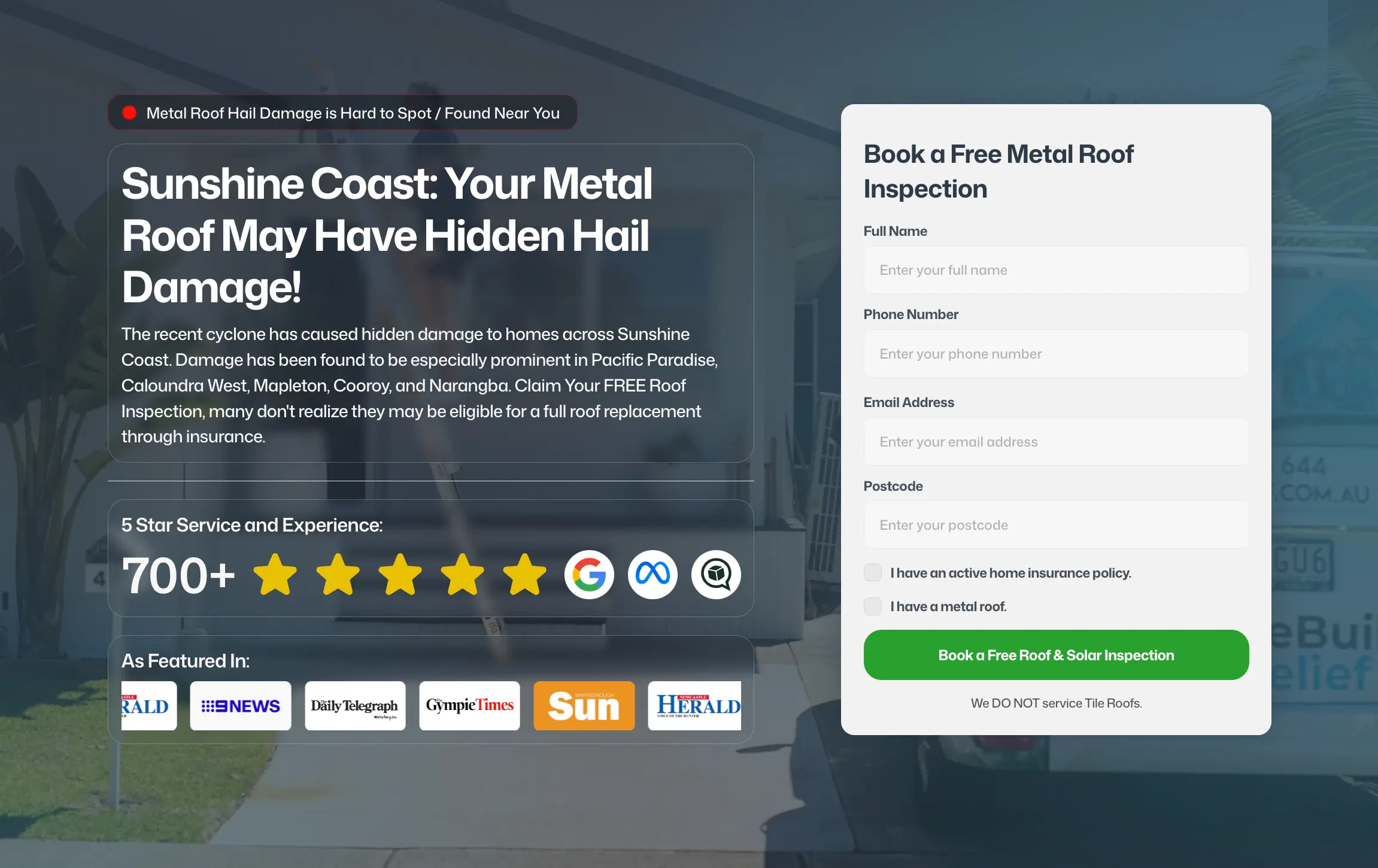
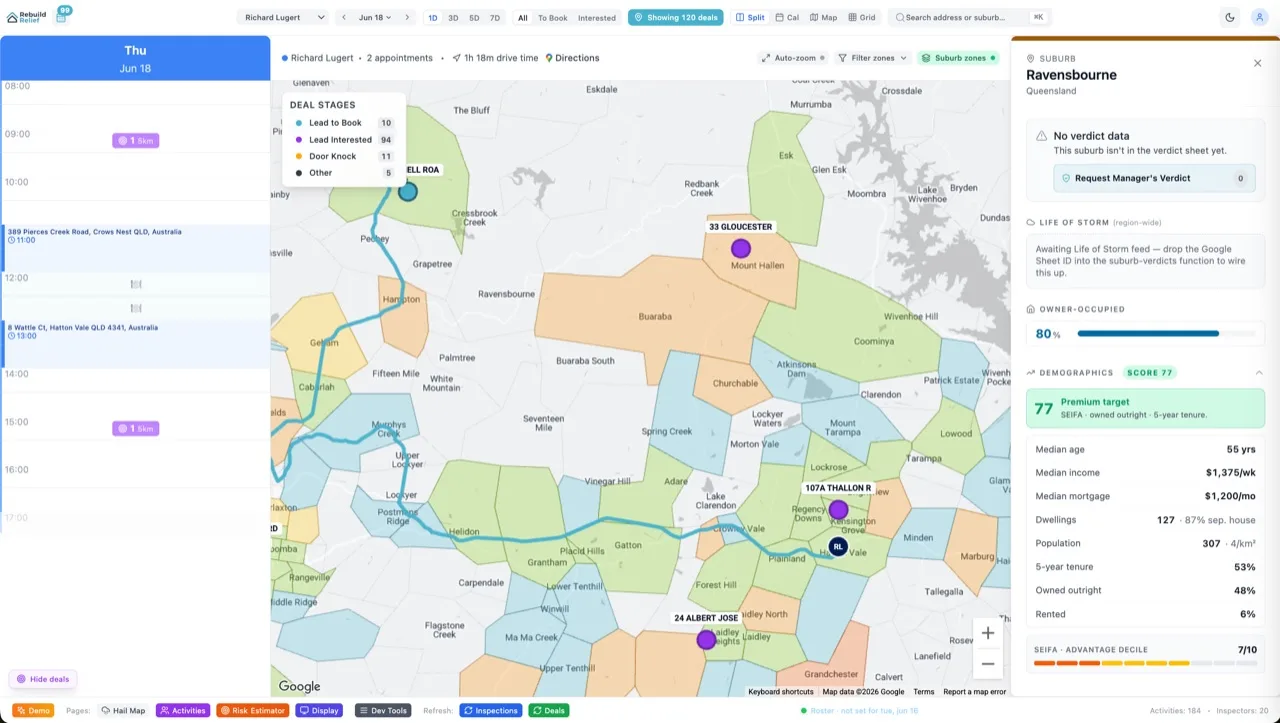
Why headless wins: You're not locked into anyone's design language. You pair the unstyled primitives with Tailwind, CSS Modules, Styled Components, or nothing at all. When you onboard a new brand (HailHero, Staff Operations Dashboard, Rebuild Relief), you don't fork the library — you fork your styling. The accessibility is battle-tested (Adobe, Vercel) instead of custom-built and fragile. And the bundle cost is minimal because you only pay for behaviour, not decoration.
Three Libraries Compared
Radix UI — The Market Leader
Ownership: Adobe (same org that sponsors React). Bundle size: 30–50KB depending on components. API shape: Render props + composition (Dialog, Tabs, Menu are compound components). Installation: Install as npm package, import components directly. Styling: No opinions — pair with anything (Tailwind, styled-components, CSS). Accessibility: Comprehensive. Handles ARIA, keyboard patterns (arrow keys, Enter, ESC), focus traps, dismissal patterns. Adoption: Massive — shadcn/ui is built on Radix, and thousands of design systems use it.
The appeal: Radix components are composable and predictable. A Menu is Menu.Root, Menu.Trigger, Menu.Content, Menu.Item — you read the hierarchy and understand what's happening. Props are explicit. Styling hooks (CSS classes, data attributes) are stable. The Radix team maintains a reference implementation at radix-ui.com with interactive Storybook docs.
The cost: More verbose. You're writing a lot of JSX composition. A simple Dropdown is 8 lines of JSX minimum. Updating components is your problem — when you upgrade Radix, you need to review breaking changes and adapt. No auto-update story.
React Aria — Adobe's Hook-Based Alternative
Ownership: Adobe (same org as Radix). Bundle size: 15–25KB — the smallest of the three. API shape: Hooks + controlled components. useButton, useMenu, useTabs, useDialog — behaviour lives in hooks, you compose your own JSX. Installation: Install @react-aria/button, @react-aria/menu, etc. — granular packages. Styling: No opinions — Tailwind, CSS, whatever. Accessibility: Exceptional. Adobe invested heavily here. Comprehensive i18n, locale-aware keyboard patterns, screen reader optimisation. Adoption: Growing but smaller than Radix. Specialist teams, design-system-at-scale shops.
The appeal: Hooks are more flexible. You own the JSX shape entirely. If you need a custom button that's not a button (say, a link styled as a button), you use useButton on a custom component and you're done. No wrapping. The bundle is tiny because each hook is a small, focused utility. The a11y work is phenomenal — React Aria's documentation on keyboard patterns is the gold standard in the space.
The cost: More cognitive load. You're wiring up the hook, the state, the ref, the ARIA attributes yourself. The API is less obvious — you have to know what hook gives you what. And adoption is niche, so fewer component libraries are built on top (no shadcn/react-aria equivalent).
Headless UI — Tailwind's Option
Ownership: Vercel/Tailwind team. Bundle size: 15–25KB. API shape: Render props + headless (Listbox, Transition, Disclosure, Menu, Popover). Similar compound component approach to Radix but with more render-prop patterns. Installation: Install @headlessui/react, import Listbox, Menu, etc. Styling: Built for Tailwind — uses data-* attributes for styling hooks. Works with Tailwind classNames. Accessibility: Solid. WAI-ARIA compliant, keyboard navigation, focus management. Smaller team than Radix, so less bleeding-edge innovation. Adoption: Moderate. Popular in the Tailwind ecosystem, less so elsewhere.
The appeal: Tightly coupled to Tailwind's philosophy. The components output clean data attributes (data-open, data-selected, data-disabled) that Tailwind can target directly with classNames. No style hooks or CSS modules — it's Tailwind all the way. Lighter-weight than Radix, easier to learn, and the docs are excellent.
The cost: Less flexible. If you're not using Tailwind, Headless UI feels awkward. The component catalogue is smaller than Radix (no Tabs, no DropdownMenu). And the ecosystem is less mature — fewer third-party components built on top. Breaking changes happen, and the team is smaller, so support is slower.
Head-to-Head: The Table
| Metric | Radix UI | React Aria | Headless UI |
|---|---|---|---|
| Bundle size | 30–50KB | 15–25KB | 15–25KB |
| API shape | Render props | Hooks | Render props |
| Component count | 20+ | 30+ hooks | 8–10 |
| Ecosystem | Huge (shadcn) | Small (specialist) | Moderate (Tailwind) |
| Tailwind-first | No | No | Yes |
| Accessibility | Excellent | Exceptional | Solid |
| Flexibility | High | Very high | Medium |
| Learning curve | Shallow | Steep | Very shallow |
Why Aidxn Defaults to Radix (via shadcn/ui)
We build dashboards, product suites, and multi-brand systems at Aidxn. Radix wins for us because of three things: the ecosystem (shadcn/ui means we don't reinvent every component), the flexibility (you're not locked into a hook-based API or Tailwind-specific data attributes), and the maturity (Radix primitives have been battle-tested in thousands of design systems). shadcn/ui is the force multiplier — you don't build Radix components from scratch; you drop them in, own the code, and customize on top.
A typical Aidxn project (Staff Operations Dashboard, HailHero, Rebuild Relief dashboard) uses shadcn components (Radix under the hood) paired with Tailwind and Zustand. When we onboard a new brand, we copy the ui/ folder, update the CSS variable tokens, and redeploy. The components are stable, the accessibility is inherited, and the design scales.
React Aria would be the choice if we were building a highly custom, component-from-first-principles design system. Headless UI would be the choice if we were Tailwind-purist and building single-brand applications only.
Code Examples
Building a Menu in Radix
import {{ Menu }} from '@radix-ui/react-dropdown-menu';

export function MyMenu() {{
  return (
    <Menu.Root>
      <Menu.Trigger asChild>
        <button>Actions</button>
      </Menu.Trigger>
      <Menu.Content>
        <Menu.Item>Edit</Menu.Item>
        <Menu.Separator />
        <Menu.Item>Delete</Menu.Item>
      </Menu.Content>
    </Menu.Root>
  );
}}
Building the Same Menu in React Aria
import {{ useMenuTriggerState }} from '@react-stately/menu';
import {{ useMenu, useMenuSection, useMenuItem }} from '@react-aria/menu';

export function MyMenu() {{
  const state = useMenuTriggerState({{}});
  const ref = useRef(null);
  const {{ menuProps }} = useMenu({{}}, state, ref);

  return (
    <>
      <button onClick={{() => state.toggle()}}>Actions</button>
      {{state.isOpen && (
        <ul {{...menuProps}} ref={{ref}}>
          <li>Edit</li>
          <li>Delete</li>
        </ul>
      )}}
    </>
  );
}}
Building the Same Menu in Headless UI
import {{ Menu }} from '@headlessui/react';

export function MyMenu() {{
  return (
    <Menu>
      <Menu.Button>Actions</Menu.Button>
      <Menu.Items>
        <Menu.Item as={{() => <a href="/edit/">Edit</a>}} />
        <Menu.Item as={{() => <button>Delete</button>}} />
      </Menu.Items>
    </Menu>
  );
}}
Radix is the most compositional. React Aria is the most flexible but requires state management knowledge. Headless UI is the most concise.
Six FAQs
Should I use all three in the same project?
No. Pick one and stick with it. Mixing Radix and React Aria components in the same app creates inconsistent keyboard patterns and bloats your bundle. Same with Headless UI. One library per app.
Can I use Headless UI with React Aria hooks?
Technically yes, but you're fighting against the grain. Headless UI components expect to manage their own state; React Aria hooks are designed to pair with your own JSX. You can do it, but the code gets messy. Choose a library and use its ecosystem.
Is Radix maintained forever?
Radix is owned by Adobe and maintained actively. It's a core dependency of shadcn/ui and thousands of design systems. Long-term stability is high. Same for React Aria (also Adobe). Headless UI is Vercel-backed but has a smaller team, so updates are slower.
What about Vue, Svelte, or non-React frameworks?
Radix and React Aria are React-only. Headless UI is React-only. For Vue, look at Headless UI Vue (maintained separately). For Svelte, Bits UI is a good equivalent. For vanilla JS, use the WAI-ARIA design patterns spec directly — it's harder but gives you full control.
Can I customize a Headless UI component as much as a Radix one?
Almost. Radix gives you render props, so you can swap sub-components. Headless UI gives you as props for deeper control. React Aria gives you hooks, so you control the entire JSX shape. All three are customizable, but in different ways. Radix and React Aria are more flexible.
If I use shadcn/ui, am I locked into Radix?
Yes, for the components you add. But shadcn components are source code in your repo — you can fork them, mix them with Headless UI components, or replace them. You're not locked into the library; you're locked into the code you copied. That's actually freedom.
The Verdict
Choose Radix if: You're building a multi-brand dashboard or design system. You want the biggest ecosystem and the most components. You don't mind slightly higher bundle cost for far more flexibility.
Choose React Aria if: You're building a highly bespoke component library. You want the smallest bundle and the deepest a11y knowledge. You're willing to write more boilerplate for more control.
Choose Headless UI if: You're Tailwind-first, building a single-brand app, and want the simplest learning curve. You don't need 20+ components — 8–10 is enough. You want to ship fast.
Aidxn defaults to Radix via shadcn/ui because the ecosystem multiplier is worth it. When you're shipping product at speed across multiple brands, owning your component code and leaning on Radix's primitives is unbeatable. Pair it with design systems built for scale, and you've got a system that grows from V0 to V100 without rewriting.