






Integrations
Wired in, not bolted on.
The tools you already run — CRM, calendars, Sheets, email, payments — connected as part of the build. No middleware subscriptions, no "phase two."
CRM — both ways
HubSpot · Pipedrive · Attio
Bidirectional sync — your dashboard and your CRM update each other, so a lead added anywhere shows up everywhere. No double entry, no drift.
Calendars & scheduling
Google & Microsoft Calendar
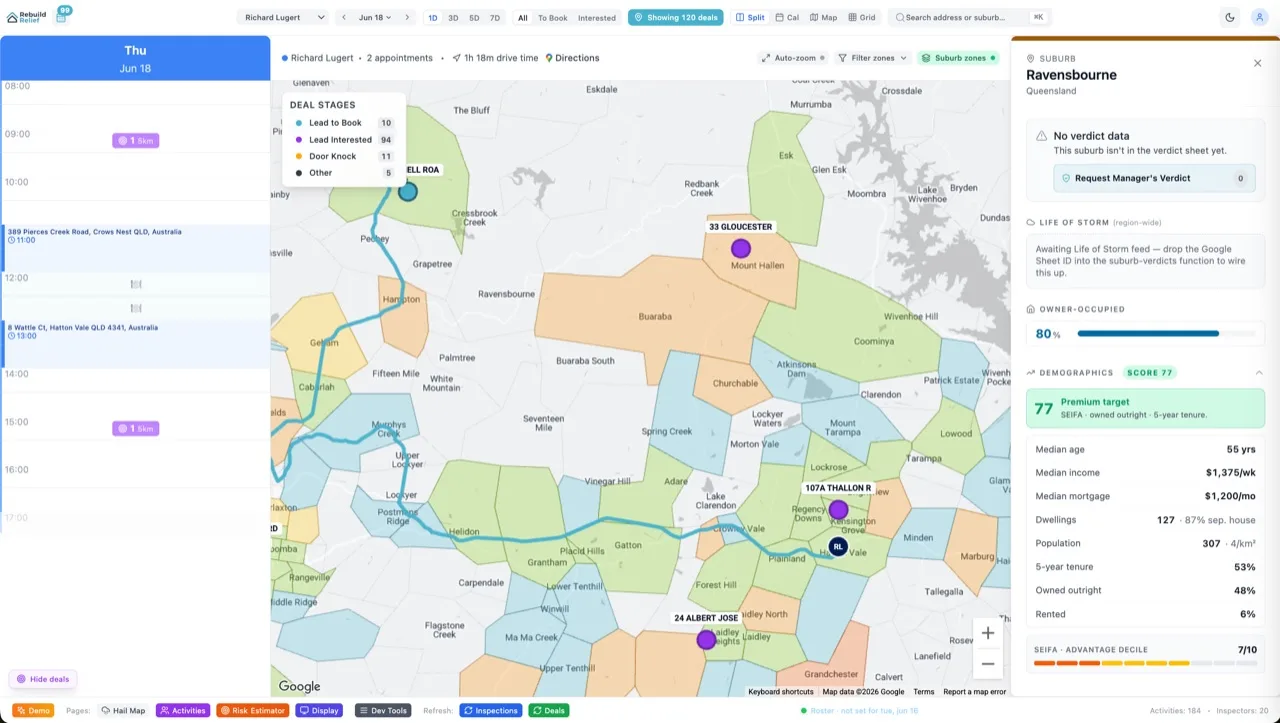
Two-way writeback — bookings land on the right rep’s calendar, and their availability flows back so customers only see real open slots.
Data & email
Google Sheets
Read and write custom business data straight from Sheets — suburb lists, pricing tables, rosters — without a developer in the loop.
Gmail / Google Workspace
Send and log email from inside the system, tied to the right lead and job.
Resend (transactional email)
Lead notifications, drip sequences and kick-off emails fire reliably — no Mailchimp per-contact tax.
Payments
Stripe
Checkout, payment links and billing wired in where you need them — you only pay Stripe’s own processing fee.
Run something else? If it has an API, it can usually be wired in. Ask on the call.
Integrations — common questions
HubSpot, Pipedrive and Attio, all bidirectionally — a lead added in your dashboard or directly in the CRM shows up in both, with no double entry and no drift between the two.
Yes — Google and Microsoft Calendar get two-way writeback, so a booking lands on the right staffer's calendar and their existing availability flows back into the system, meaning customers only ever see genuinely open slots.
Yes — suburb lists, pricing tables, rosters and other custom business data can be read and written straight from Sheets, without a developer needing to be in the loop each time.
Through Stripe — checkout, payment links and billing are wired directly into the build, and you only pay Stripe's own processing fee on top. There is no separate platform fee for the integration itself.
If it has a public API, it can usually be wired in — that is the honest boundary. No public API generally means no integration, or at best a workaround that is less reliable than the ones already listed here.