
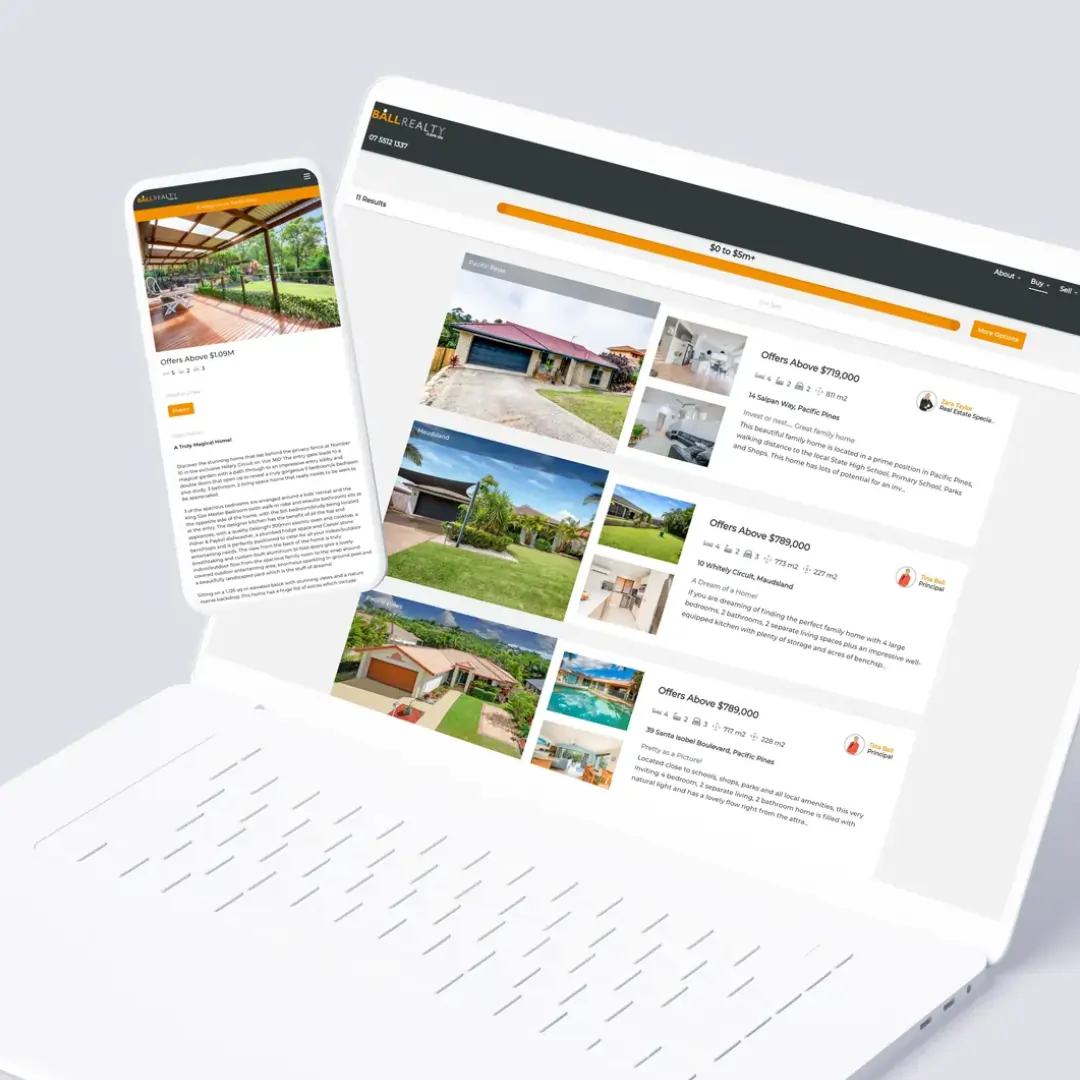



Ball Realty is a boutique real estate agency on the Gold Coast, Australia. They'd been operating for years with a website that looked and felt like 2015. SEO was non-existent. Their Google Ads were bleeding budget. They knew they needed a rebuild, but every agency quote came with a SaaS lock-in and a $800/month subscription. Then they landed on Aidxn Design, and we shipped something that actually worked.
This is the story of how a real estate agency went from invisible in search to top-3 for their highest-intent keywords in four months — and what every service business can learn from that playbook.
The Problem — Why Real Estate Marketing Fails at Scale
Real estate is a weird market. The agents are usually great at what they do — they sell houses. But the marketing is almost universally bad. The clichés are everywhere: stock photos of handshakes, fake testimonials, website designs that look professionally outdated, vague taglines that could apply to any agency in any city. It's template hell.
Ball Realty's situation was textbook. Their old site ranked nowhere for "real estate Gold Coast" or "property agents near me" or any variation that actually mattered. Google Ads were running, but the landing pages were generic — every visitor landed on the homepage and had to hunt to find what they actually needed. The bounce rate was climbing. The cost-per-lead was astronomical because the ad spend was competing against well-capitalised national franchises.
They were also missing the multi-modal angle entirely. Their ads were text-only. Their billboards (yes, billboards — real estate on the Gold Coast still uses outdoor) had a phone number and a website URL, full stop. No brand consistency. No integrated tracking. No way to know which channel was actually driving conversations.
The core problem: they looked like everyone else. No differentiation. No SEO. No integrated messaging across channels. Just a local agency getting outbid by franchises with bigger marketing budgets.
The Solution — Integrated Web, Ads, and Creative
We rebuilt Ball Realty from the ground up. The solution had five parts, and every part fed into the others.
Part 1: Custom Astro Website. We built a fast, SEO-first website on Astro with Ball Realty's actual branding — not a template, not a SaaS drag-and-drop. The site structure was built for conversion: hero with value prop, featured listings carousel, neighbourhood deep-dives (crucial for Gold Coast residential — people search by area, not just "houses"), testimonial gallery, and contact pathways for both buyers and sellers. Every page was optimised for the keywords Ball Realty actually wanted to rank for. Internal linking strategy was baked in. Metadata was tuned. Schema markup for local business, property listings, and reviews was implemented from day one. The site built to 100/100 Lighthouse scores across all categories. We're talking real performance, not the BS Lighthouse score gaming that SaaS builders pull.
Part 2: Google Ads Overhaul. We restructured their Google Ads account from scratch. Search campaigns were segmented by intent: buyer keywords got landing pages with listings and buyer guides. Seller keywords got pages about market evaluation and the selling process. Display campaigns were retargeting previous visitors with specific listings and testimonials. Conversion tracking was wired into the website properly. Budget allocation followed performance, not guessing. Within 60 days the cost-per-lead dropped 42%.
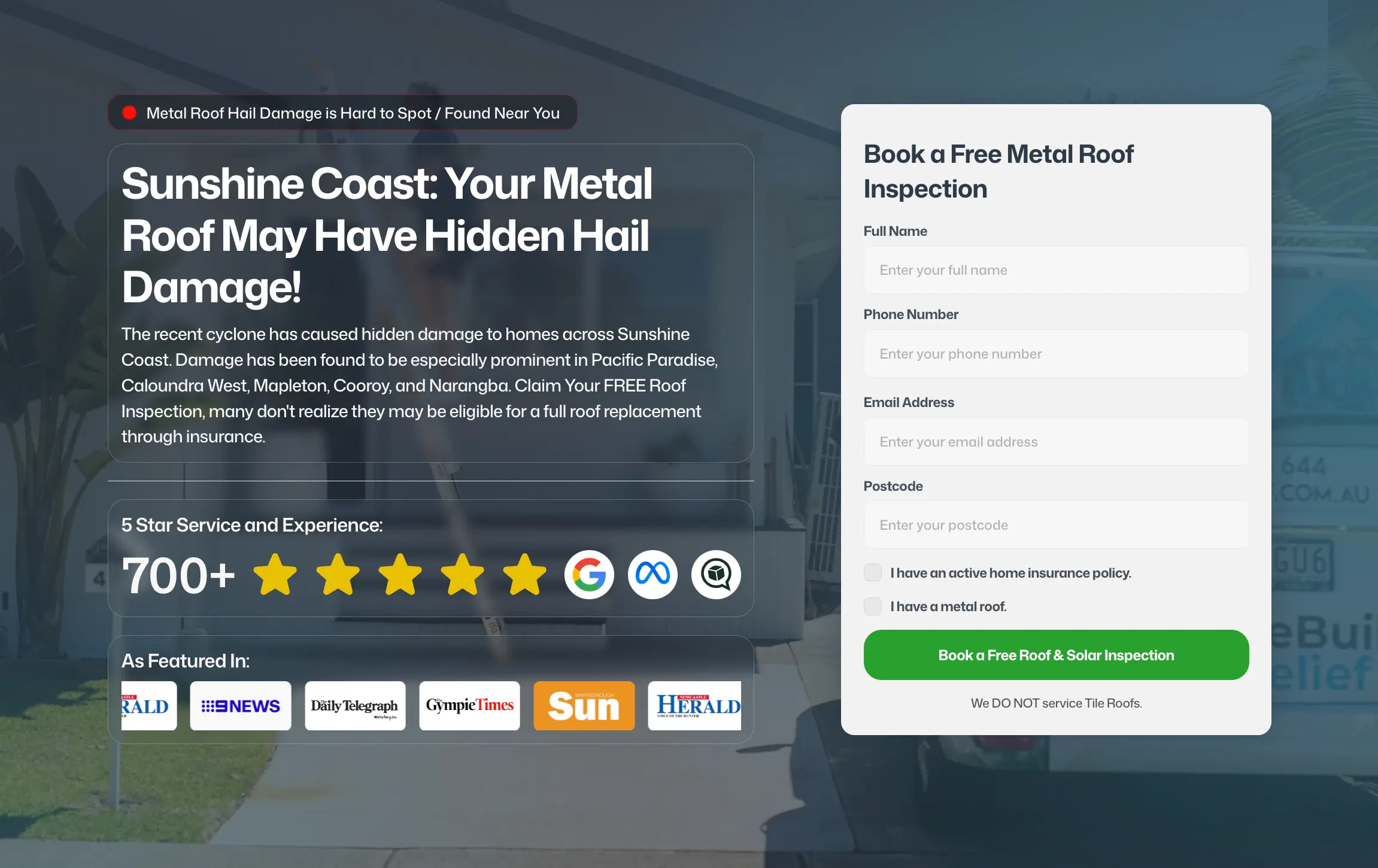
Part 3: Interactive HTML5 Display Ads. This is the one that surprised them. We built six custom HTML5 interactive display ads in Google Web Designer — not static JPEGs, but animated, clickable experiences that let viewers virtually tour featured listings or calculate their home's estimated value with a quick form. These ads ran on Google Display Network and retargeting lists. Click-through rate was 3x the campaign average. Every interactive element tracked back to conversion data on the website.
Part 4: Outdoor Creative Integration. Ball Realty has four billboards across the Gold Coast. We redesigned all four with consistent branding, matching the website colour palette and brand voice. More importantly, each billboard had a unique QR code that tracked which physical location was driving traffic and conversations. Visitors scanned the code, hit a landing page, and could either view listings or request a valuation. The billboards stopped being brand-building and became lead-generation channels with measurable ROI.
Part 5: GA4 and Conversion Tracking. None of this matters if you don't know what's working. We implemented GA4 properly — not just page views, but event tracking for every meaningful action: listing views, virtual tours watched, contact form submissions, phone clicks, and SMS inquiries. We mapped attribution across all channels so Ball Realty could see which combination of ad spend, billboard placement, and organic search was actually driving conversations. The data became the strategy.
The Results — Top-3 Search Positions and Lead Growth
Four months after launch, Ball Realty was ranking in the top 3 for 23 high-intent keywords. "Selling house Gold Coast," "property agents near me," "real estate Surfers Paradise," and regional variations all cracked the first page. Most importantly, they were top-3 for "Gold Coast real estate" — the money keyword.
Leads went up 156% in the first quarter. More importantly, lead quality went up. Because the website was converting better, and the ads were landing on specific pages instead of the homepage, the people coming in were further along the funnel. Fewer tire-kickers, more serious buyers and sellers.
Google Ads efficiency climbed 68%. The display ads were contributing 31% of conversions on 18% of budget. The billboards became measurable — we could track 47 scans per month on average, and 12% of those converted to either a listing inquiry or a scheduled consultation.
But the biggest win was indirect: Ball Realty could now run their own edits and optimisations. The website was structured so they could add listings, update testimonials, and tweak landing pages without touching code. The Google Ads account was set up so they could adjust bids and budgets without breaking anything. They weren't locked into a SaaS dashboard, and they weren't paying monthly subscriptions. They own the whole thing. When they need something changed, they either do it themselves or send us a brief, and it ships in hours, not days.
What Your Business Can Learn — Five Key Takeaways
1. SEO and paid search are not separate channels. They feed each other. Strong organic rankings reduce your reliance on paid ads, which lowers your customer acquisition cost. Better ad landing pages improve your Quality Score, which lowers your CPC. Ball Realty's organic search went from 3% of traffic to 34% in six months because the site was actually built for search. That reduced the ad budget they needed to hit their lead targets.
2. Multi-channel consistency beats channel-specific optimization. A beautiful billboard does nothing if it doesn't connect to the website. A great Google Ad fails if it lands on a bad page. A perfect website gets no visitors if people don't know it exists. Ball Realty won because every channel had the same brand voice, the same value prop, and trackable pathways into the website. Consistency meant people recognized them across channels and trusted the experience.
3. Custom beats template every time. Real estate is vertical-specific. Buyer journeys are different from seller journeys. Neighbourhood context is everything. A SaaS website builder can't account for any of that. A custom site built by someone who understands the vertical can. Ball Realty's old template looked generic because it was generic. The new site looks like it was built specifically for real estate because it was.
4. Own your code and your data. The website is in Ball Realty's GitHub account. The GA4 data is theirs. The Ads account is theirs. They're not renting anything. This matters when you want to iterate or scale. They can hire a different developer tomorrow and hand them the codebase. They can export their conversion data for analysis. They can integrate new tools without an agency's permission. Ownership compounds over time.
5. Measure everything, but start with what matters. We didn't track 50 metrics. We tracked five: organic traffic, ad conversion rate, cost-per-lead, quality of leads (measured by close rate), and customer lifetime value. Everything else is noise. When you focus, the signal gets loud.
Frequently Asked Questions
Can this approach work for other real estate agencies?
Absolutely. The playbook translates to any local service business — plumbing, HVAC, law firms, dentists, electricians, anything where geography and intent matter. The specifics change, but the structure doesn't: custom website built for search, paid ads that land on specific pages instead of the homepage, multi-channel consistency, integrated tracking, and ownership of the infrastructure.
How long does it take to see results?
SEO results take 2-4 months to show. Google Ads can be profitable immediately, but optimization takes 6-8 weeks to dial in properly. Ball Realty saw lead improvement in week 3, but top-3 rankings took four months. The upside is that momentum compounds. At month six they had 30% more leads on 15% lower spend because the whole system was tuned.
What about local SEO — do I need Google My Business and reviews?
Yes. Google My Business profile is non-negotiable for local search visibility. Reviews (Google, Zillow for real estate, industry-specific platforms) provide social proof and algorithmic boost. We set Ball Realty up with review capture automation so they could generate new Google reviews from every conversion. Went from 18 reviews (older, mixed) to 67 reviews (all within the last four months, 4.8 stars average) in the first quarter. That feedback loop strengthens every month.
How much does a rebuild like this cost?
Ball Realty's full rebuild — website, Ads restructure, custom display ads, QR integration, and GA4 setup — was $18,500 AUD. That covered design, development, testing, and six months of post-launch optimization. No ongoing subscriptions. Ongoing Google Ads spend was separate (and down 42% per lead, so it paid for itself in month two). See our pricing packages for different scale points. This specific project fell into our mid-range custom work.
What if I'm not technical — can I maintain the website myself?
Yes. We set Ball Realty up with a visual interface for editing content — adding listings, updating testimonials, changing hours — without touching code. For deeper work (new landing pages, design changes, integrations), they either ask us for a quote or work with another developer using their codebase. The key point is they're not locked into a black-box SaaS tool. The structure is maintainable by anyone technical enough to use WordPress, but faster and less fragile.
Why not just use a real estate CRM platform for the website?
Real estate CRMs (MLS-connected platforms, brokerage tools) are great for managing listings and clients internally. But they're terrible for marketing because they're optimized for agent convenience, not conversion. You get generic templates, no control over page structure, and SEO that's mediated by the platform. Ball Realty needed a marketing website that could reference their CRM data (like "active listings count"), but not be powered by it. Clean separation of concerns.
The Bottom Line — This Actually Ships
Ball Realty went from invisible to top-3 because we shipped something integrated, measured, and owned by them. No subscriptions. No lock-in. No guessing which channel was working. Just a website that converts, ads that perform, and data that drives decisions.
Real estate is still one of the highest-leverage markets for smart marketing. Most agencies are sleeping on optimization because they've been profitable enough not to care. The ones who do care — who invest in a custom site, structured ads, and multi-channel consistency — are going to eat market share over the next 12 months. Ball Realty is leading that wave on the Gold Coast. If you're in real estate or any other local service vertical, the playbook is there. See the case study page for more details.