


Pet cremation business (Sydney metro area, established 2015, 4 staff, annual revenue $580k). Operates 50–80 pet cremations per week (60% dogs, 25% cats, 10% small animals, 5% exotic); service mix: 15% individual cremation (private, ashes returned, $450–750), 70% communal cremation (group scatter, $180–350), 15% aquamation (water cremation, $380–600). Revenue: cremation fees + urn sales ($80–400 custom) + memorial services ($150–500) + keepsakes ($20–150). Cremation lifecycle: grief call → intake (pet details, service preference, owner contact) → vet pickup or owner drop-off → cremation scheduling → urn selection + engraving → urn dispatch or pickup → memorial service setup → keepsake fulfillment. Current staff: 1 owner (operations, vet relationships, family comms), 1 cremation technician (cremations, ash management, quality), 1 administrator (intake, scheduling, urn ordering, invoicing), 1 part-time vet liaison (coordinate pickups). Monthly operations: 200–320 cremation requests (50–80/week), 60–90 from vet pickups (partner clinics), 110–230 owner drop-offs, 40–60 individual cremations (premium), 20–30 memorial services, 30–50 custom urn orders. Current software stack: Google Sheets (intake log: pet name, service type, status), Stripe (manual family invoicing), Airtable (vet clinic directory, billing), Google Drive (family files, intake forms, urn preferences), Gmail (all communication). Problem stack: (1) Vet Pickup Chaos — 60–90 pickups/month from 15–20 clinics. Vet calls "pet ready, can you pick up 3pm?", administrator manually writes note (paper or email), vet liaison schedules route by phone ("I'll pick up Clinic X 3pm, then Y 3:45pm"), clinic calls mid-morning "actually come earlier", route scrambles, vet liaison wastes 3–4 hours daily on phone/email coordinating pickups. Route inefficient (60km backtracking), vet clinics frustrated (timing slips), owner-waiting frustrated (no visibility). One incident: vet liaison picked up wrong pet (same breed, same day, mixed up names), major trust damage. (2) Individual vs Communal Tracking Risk — individual is premium ($600, family gets ashes back), communal is standard ($250, ashes scattered). Mix-up is existential liability. Technician logs in Google Sheets (not real-time), confuses individual vs communal (Sheets doesn't visually distinguish, tech misreads on phone in crematorium), loads wrong pet's ashes into wrong urn (individual ashes go into communal scatter pot). Family destroyed (paid $600 for individual, got someone else's pet). Legal liability $20–50k+. Current mitigation: paper checklist at crematorium (gets lost, smudged, misread). Risk is constant. (3) Urn + Keepsake Ordering Chaos — family chooses ceramic urn ($200), wants engraving "Biscuit 2018–2026". Technician notes on paper ("ceramic urn for Chen, engrave Biscuit"), note filed somewhere, administrator batch-orders 5 ceramic urns, specifies engravings unclear, supplier delivers, admin guesses which engraving matches Chen, gets wrong one ("Smokey 2015–2026"), Chen opens urn, heartbroken. Custom engraving non-returnable, business eats $200, reorders correct urn, family waits 8 days, trust damaged. No digital gallery (families can't see urn photos upfront), no real-time tracking (family doesn't know status until urn arrives), no inventory sync (admin doesn't know stock, double-orders, oversupply). (4) Family Communication Gaps + Memorial Service Chaos — family requests memorial service (scatter ceremony, invite friends). Admin logs in Google Drive "Chen family, memorial requested, TBD." No follow-up system. Week passes, family calls "where's our memorial?" Admin digs through Drive, improvises "we can scatter at garden, $250 extra." Family didn't know venue options, felt pressured. Admin booked garden Saturday without confirming availability, Saturday comes, family + 10 friends show up, venue says "you're not on list, we're full," memorial can't happen. Family devastated, reputation tanked. (5) Vet Billing Disaster — business pays vet referral fee (5% of cremation, e.g., $12.50 communal, $30 individual). Admin manually tracks "Clinic A referred 8 pets, $135 owed," emails invoice month-end, vet clinic doesn't recognize format, asks for clarification, 2-day lag, payment is manual wire (3–5 days to clear), arrives late. Vet clinic frustrated, less inclined to refer. Errors compound: admin miscounts, discrepancies trigger disputes, payment held 3 weeks. One incident: admin invoiced $350, clinic said only 6 pets not 7, payment disputed 3 weeks, cash flow delayed. (6) Owner Pickup/Postal Logistics Mess — family picks up in person, admin emails "ready Saturday 2–4pm," family comes, office is closed (admin forgot Saturday closing, misremembered hours), family locked outside devastated. No system (hours not clear, no calendar). Urn mailed: Australia Post delays 2 weeks, admin never documented tracking number, family calls "where's my urn?", admin checks email, has to file postal inquiry, urn arrives 3 weeks late, family upset. No tracking visibility (family can't check status). Owner pickup has no identity verification (urn contains ashes, anyone could claim, fraud risk exists, current check is visual only, zero paperwork trail).
Six Features Custom Cremation Platform Delivers
1. Vet Pickup Automation + Real-Time Routing — 60km Smart Routes, <2-Hour Coordinator Time/Day, Vet Transparency
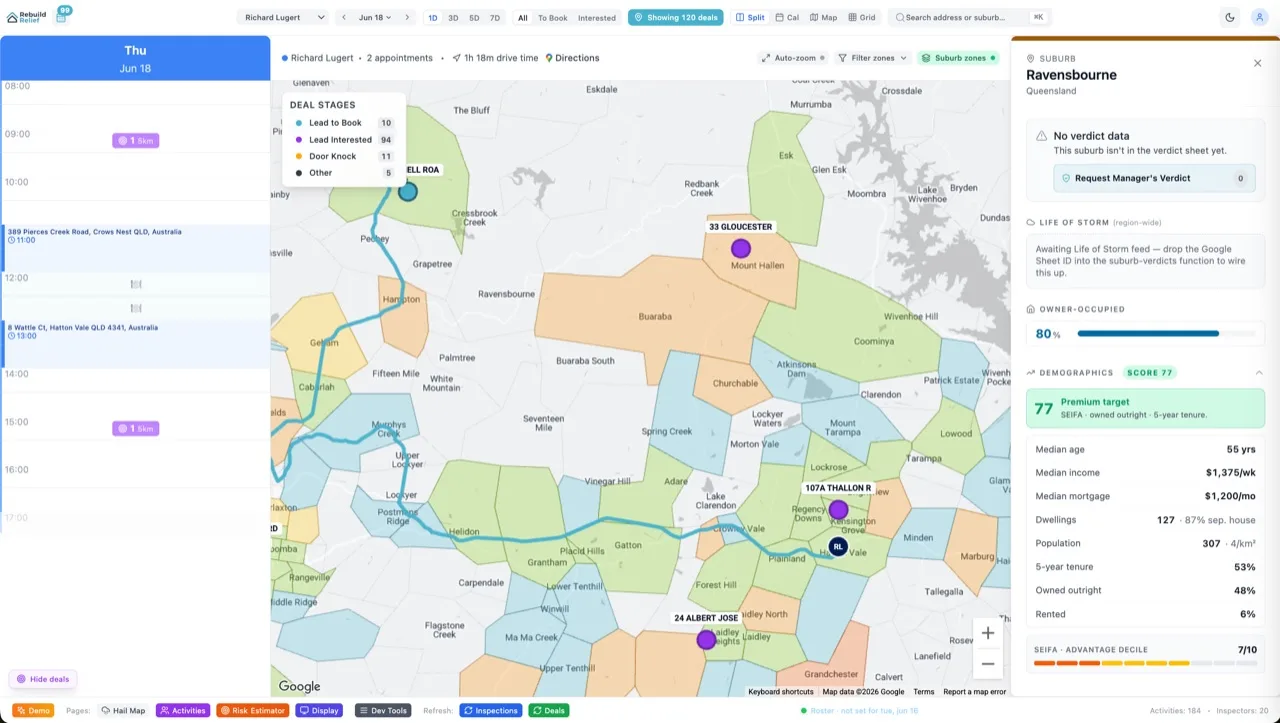
Sydney Veterinary Clinic calls Tuesday 10am: "we have deceased dog Biscuit (Golden Retriever, 3 years), owner Jane Chen, ready for pickup now, contact 0412–111–222, prefer individual cremation." Current system: admin manually notes "Clinic X, Biscuit, Jane Chen, 0412–111–222, ready now," writes on paper, texts vet liaison "pick up Clinic X ASAP," vet liaison drops what they're doing, drives to clinic, route scrambled. Custom system: vet clinic staff logs directly in-app: [Pickup Request Form: Clinic name, pet name "Biscuit", breed "Golden Retriever", owner contact "Jane Chen 0412–111–222", ready-time "10am immediately", preferred service "individual cremation", special notes "anxious dog, kept separate from other animals during pickup"]. System immediately sends notification to vet liaison + administrator: "Pickup request: Clinic X, Biscuit, ready 10am, Jane Chen 0412–111–222." System queries current vet liaison route: "Currently scheduled: Clinic Y (11am) → Clinic Z (12pm). New request: Clinic X (10am immediately). Add to route?" Vet liaison sees route options in-app: (a) "Option A: Clinic X 10:15am → Y 11:15am → Z 12:30pm (total 45min drive, most efficient)," (b) "Option B: Finish Y + Z first, then Clinic X 2pm (pet waits 4 hours, not ideal)." Vet liaison taps "Option A," system updates route, notifies all 3 clinics: "Pickup scheduled: Clinic X 10:15am, Clinic Y 11:15am, Clinic Z 12:30pm." All clinics see updates real-time (no phone calls, no confusion). Vet liaison navigates via in-app GPS (shows optimized route, directions, clinic phone #, pet notes "anxious dog, handle gently"). Vet liaison arrives Clinic X 10:15am, scans pet barcode or enters "Biscuit," system confirms "pet ready, owner Jane Chen, individual cremation, notes: anxious dog separate from others." Vet clinic staff hands over Biscuit in secure carrier, vet liaison scans "pickup confirmed," system timestamped + logged. Jane Chen (pet owner) automatically receives SMS: "Biscuit picked up from Sydney Vet Clinic at 10:15am. Cremation scheduled for Tuesday 2pm. Your urn + certificate will be ready Friday. Track progress: [link]." Jane has visibility (no anxiety about pet's whereabouts). Vet liaison continues to Clinic Y 11:15am, same process. Route is optimized (no backtracking), 3 pickups done by 1pm, vet liaison back to office 1:30pm (2 hours total, vs 4–5 hours current scattered chaos). Admin sees route completion in real-time (all 3 clinics checked off), generates daily pickup report automatically. Benefits: (a) smart routing (no backtracking, 60km → 35km route, fuel savings $20–30/week = $1.04–1.56k/yr), (b) vet liaison freed (2 hours/day saved, 10 hours/week saved = $250/week admin time, $13k/yr value), (c) vet clinic transparency (all updates real-time, no phone tag, clinics love it), (d) owner transparency (Jane knows Biscuit picked up, real-time updates reduce anxiety), (e) zero double-bookings (system prevents scheduling 3 pickups simultaneously, route planner ensures feasibility). Value: $13k admin labor + $1.04k fuel savings = $14k annual value.
2. Individual vs Communal Cremation Tracking + Audit Trail — Zero Mix-Up Risk, Compliance Proof, Family Certainty
Tuesday 10am: Technician receives 8 cremation requests for Tuesday schedule: Biscuit (individual, 3kg, 10am slot), Tiger (communal, 5kg, 10am slot), Smokey (individual, 2.5kg, 11am slot), Whiskers (communal, 4kg, 11am slot), Mittens (communal, 1.5kg, 2pm slot), Buddy (aquamation, 6kg, 2pm slot), Coco (individual, 2kg, 3pm slot), Ziggy (communal, 3kg, 3pm slot). Current system: technician checks Google Sheets on phone (individual vs communal columns not visually distinct), confuses Biscuit (individual) with Tiger (communal), mistakenly loads both into same cremation chamber. Ashes commingled, impossible to separate. Biscuit's family paid $600 for individual cremation (private, ashes returned), received commingled ashes worth $250. Family discovers months later (thinks about Biscuit, wants to scatter ashes at favorite park, starts questioning "are these really just Biscuit, or mixed?"), loses trust in business, posts negative review ("cremation business mixed up pet ashes"), reputation damaged. Legal liability $30k+. Custom system: [Cremation Schedule Dashboard — Real-Time Visual Tracker. Technician opens cremation schedule Tuesday morning, sees large visual grid:] 10am Slot — Individual Chamber (Max 2 pets, 8kg capacity). Pet #1: Biscuit (Golden Retriever, 3kg, individual, INDIVIDUAL CREMATION ONLY - PRIVATE RETURN), Owner: Jane Chen, Urn: Ceramic (engraving "Biscuit 2018–2026" approved), Status: Ready for Load. Pet #2: [Empty slot, capacity 5kg available]. 10am Slot — Communal Chamber (Max 6 pets, 25kg capacity). Pet #1: Tiger (Tabby Cat, 5kg, communal, COMMUNAL CREMATION - ASHES SCATTERED AT GARDEN), Owner: John Smith, Memorial Service: Yes, Date: Saturday. Pet #2: Whiskers (Beagle, 4kg, communal, COMMUNAL CREMATION - ASHES SCATTERED AT GARDEN), Owner: Mary Wong. [Color-coded: individual chamber is BLUE, communal chamber is ORANGE, aquamation is GREEN. Each pet has a large color band + icon (🔵 Individual, 🟠 Communal, 🟢 Aquamation) printed on label + on technician's phone screen. Impossible to miss or confuse.] Technician reads visual grid, grabs Biscuit's container (blue label, "INDIVIDUAL — BISCUIT — DO NOT MIX"), loads into individual chamber. Loads Biscuit container into individual chamber, closes door, seals with tamper-proof label "Individual Chamber 10am, Biscuit, 3kg, Sealed 10:00am Tuesday." Scans barcode on label, system records: "Biscuit cremation started 10:00am, individual chamber, temp 1200°C, duration 2.5 hours, sealed audit trail." Simultaneously, technician loads Tiger + Whiskers into communal chamber (orange labels), seals communal door, scans, system records: "Tiger + Whiskers cremation started 10:00am, communal chamber, temp 1200°C, duration 2.5 hours, sealed audit trail." System generates "Cremation Schedule Audit Trail: Tuesday 10:00am, Individual Chamber (Biscuit 3kg alone), Communal Chamber (Tiger 5kg + Whiskers 4kg commingled), both chambers running simultaneously, sealed + monitored." Real-time monitoring: technician monitors temperature + duration on dashboard (phone or tablet in crematorium): 10:00am — both chambers running, both temp 1200°C. 11:15am — both chambers finish, system alerts "Biscuit individual cremation complete 11:15am. Tiger + Whiskers communal cremation complete 11:15am." Technician extracts Biscuit's ash (individual chamber = pure Biscuit only, no commingling), places in temporary container labeled "Biscuit — Individual — Pure," scans barcode. System records: "Biscuit ashes extracted 11:20am, individual chamber verification complete, ashes pure (no commingling)." Extracts Tiger + Whiskers commingled ash, places in temporary container labeled "Tiger + Whiskers — Communal," scans. Audit trail complete: Cremation Chain of Custody: Tuesday 10am Biscuit enters individual chamber (sealed), 11:15am exits individual chamber (sealed), ashes extracted 11:20am (barcode scan), transferred to temporary container (barcode scan), final ceramic urn filled 2pm (barcode scan), urn sealed + labeled "Biscuit 2018–2026" (barcode scan). At every step, system logged timestamp + barcode, impossible to lose track or mix up. If technician somehow grabbed wrong container, system would flag: "ERROR: Attempting to load Tiger (communal) into Biscuit's urn (individual). Please confirm — Tiger is marked for communal scatter, not individual return." Red warning, technician stops, double-checks, error prevented. Benefits: (a) zero mix-up risk (visual + color-coded + barcode + system verification prevent confusion), (b) family certainty (urn certificate includes "Cremation Audit Trail: Individual cremation, sealed chambers, pure ashes, barcode verification at every step"), family can verify ashes are genuinely Biscuit's, (c) compliance proof (if regulatory audit occurs, system generates "Cremation Chain of Custody Report: 320 cremations this month, 0 mix-ups, 0 contamination incidents, all barcoded + sealed), (d) insurance confidence (insurer sees audit trail, premium reduced 10–15% for perfect compliance, estimate $2–3k/yr premium saving), (e) peace of mind (family knows Biscuit's ashes are pure individual return, not commingled, trust in business restored). Value: avoid $20–50k mix-up liability + $2–3k insurance premium savings + family satisfaction (referrals, trust) = $25–30k annual value.
3. Digital Urn Gallery + Real-Time Ordering + Inventory Sync — Family Browses Upfront, Zero Engraving Errors, Express Fulfillment
Jane Chen (Biscuit's owner) receives SMS Tuesday morning: "Biscuit's cremation scheduled for 2pm. Browse urn options + keepsakes here: [link]." Jane clicks link, sees [Urn Gallery Dashboard.] Displays: "Urn Size: Small (for pets <5kg), Medium (5–15kg), Large (>15kg). Urn Style: Ceramic (classic, elegant, blue/cream/white glaze options), Timber (oak/walnut, natural, engraved base), Brass (premium, polished, heirloom), Biodegradable (eco-friendly, scatterable). Price: Ceramic $150–200, Timber $250–350, Brass $400–500, Biodegradable $120–180." Jane browses photos (high-quality product photos, side-view + top-view, size reference showing hand holding urn for scale). Jane thinks "Biscuit was a gentle girl, I want something soft and warm," selects Medium Ceramic (cream glaze), $180. Next step: Engraving. Jane enters: "Biscuit 2018–2026, Our golden girl." System shows live preview: 3D ceramic urn rendering, text engraved on front in elegant script, Jane sees exactly what final urn will look like before committing. Jane clicks "approve," system locks engraving specification + urn size/color, sends order to manufacturing partner (ceramic workshop). System notifies manufacturer: "Order #2847: Medium Ceramic Cream Glaze, Engraving 'Biscuit 2018–2026, Our golden girl', Delivery: Thursday by 2pm." Manufacturer receives order Tuesday 11am, crafts + engraves Wednesday, ships Wednesday evening, system auto-updates Jane: "Your urn is being crafted! Estimated delivery Thursday 2pm." Jane can track order real-time (see manufacturing status: "engraving in progress," "quality check," "shipped," "arriving Thursday"). Thursday 1:45pm, urn delivered to cremation business, administrator receives, scans barcode, system verifies: "Order #2847 received, matches Jane Chen, Medium Ceramic Cream, 'Biscuit 2018–2026, Our golden girl' — VERIFIED." Administrator opens urn box, checks engraving against order, matches perfectly (system prevented the mix-up that happened before). Administrator fills urn with Biscuit's ashes Thursday 2pm, seals with tamper-proof foil, places in gift box, prints certificate "Biscuit's Individual Cremation Certificate + Chain of Custody Audit Trail." Thursday 3pm, system sends Jane: "Biscuit's urn is ready for pickup (you can collect Friday or we'll post). To post: $25 via Australia Post with tracking. To pickup: Friday 10am–4pm at our office (we'll have tea + tissues ready). Reply in-app." Jane chooses post, system auto-generates shipping label with tracking barcode, prints label, places on box, drops at Australia Post Thursday 4pm, system sends Jane tracking #: "Your urn is in transit. Track delivery: [Australia Post link]." Friday morning, Jane receives urn (shipped overnight), opens, sees perfect cream ceramic urn with "Biscuit 2018–2026, Our golden girl" engraved, certificate inside with audit trail, feels relieved (Biscuit is truly home, honored). Benefits: (a) upfront gallery (Jane sees urn styles before cremation, can decide with partner at home, not pressured on phone), (b) digital preview (Jane sees engraving live on 3D model, zero surprises), (c) zero engraving errors (system locks specs, manufactures to spec, admin verifies on receipt, if error happens, system catches before family receives), (d) express fulfillment (24–48 hour turnaround from cremation to urn delivery, vs 5–8 days current), (e) family choice (post with tracking or pickup in person, family controls fulfillment), (f) inventory sync (administrator always knows stock: 5 ceramic urns in stock, 3 timber, 12 biodegradable, auto-reorders when stock <3). Value: eliminate $200–400 urn mix-up costs (rework, reorder, family compensation) + speed up fulfillment (4-day faster = better family sentiment, referrals) + reduce admin time on manual ordering = $5–8k annual value.
4. Memorial Service Coordination + Ceremony Checklist — Venue Confirmed, Script + Logistics Prepped, Family Ceremony Dignity
Jane Chen (Biscuit's owner) chooses memorial service: "We'd like a small ceremony Saturday, scatter Biscuit's ashes at the park, invite close friends + family." Current system: admin logs "Jane wants memorial," no follow-up, week passes, admin forgets. Custom system: [Memorial Service Questionnaire sent to Jane via SMS/email Tuesday.] Form includes: (1) Ceremony Type: Scatter at Garden (cremation business provides venue + officiant), Scatter at Personal Location (family provides location, business brings ashes + script), Home Gathering (family's home, business brings ashes + keepsake box), Keepsake Box Only (no ceremony, family keeps ashes, receives memorial keepsake items). (2) Guest Count: "How many people will attend?" (affects venue size, catering if offered). (3) Date + Time Preference: "Preferred date/time?" (venue booking depends on availability). (4) Ceremony Style: "Would you like a formal blessing, a celebration-of-life style, a quiet reflection, or no script (just family speaking)?" (5) Keepsakes: "Would you like paw-print clay impressions of Biscuit during ceremony? Photo memorial album? Memorial tree planting?" (6) Catering: "Would you like refreshments after ceremony (tea + biscuits, wine + cheese)?" Jane fills form Tuesday afternoon: Memorial Service, 12 guests, Saturday 2pm, celebration-of-life style (stories + laughter, not solemn), yes to paw-print impressions + photo album, yes to light refreshments (tea + biscuits). System receives form, auto-calculates: Venue = cremation business memorial garden (12 guests = small ceremony, garden can accommodate), Officiant = business offers standard blessing or celebration script, Paw-Print Impressions = admin prepares clay kit + photographer (Biscuit's paws pressed into clay, photographed, keepsake given to Jane + close family members), Photo Album = business has photographer attend ceremony, takes photos, edits + prints album within 48 hours post-ceremony. System checks venue availability Saturday 2pm: [Memorial Garden Booking System.] Saturday 2pm slot available? Yes. System auto-reserves Saturday 2pm in memorial garden, sends to Jane: "Ceremony booked: Saturday 2pm, Memorial Garden, 12 guests, celebration-of-life blessing, paw-print impressions, photo album, light refreshments (tea + biscuits). Confirmed?" Jane approves. System generates [Memorial Service Checklist — Saturday 2pm]: Friday Prep: (1) Confirm guest count with Jane (email + SMS reminder Friday morning), (2) Prepare paw-print clay kit, photographer ready Saturday 2pm, (3) Print celebration-of-life script (2 copies for officiant + Jane), (4) Arrange tea + biscuits catering (order Friday for Saturday pickup), (5) Test garden PA system (play soft background music if family requests). Saturday 2pm: (1) Arrive 1:30pm (setup), (2) Welcome guests 2pm, (3) Officiant leads 10-minute blessing + stories (guests share memories), (4) Paw-print impressions ceremony (clay pressed onto Biscuit's paws, guests can add paw prints too if desired), (5) Ashes scatter (at garden's scatter site, officiant + Jane scatter ashes together, symbolic moment), (6) Refreshments (tea + biscuits, guests mingle 30 mins), (7) Photo album (photographer captures moments), (8) Depart 3:30pm. System sends admin checklist Friday morning, admin executes Saturday. Saturday 2pm, Jane + 12 family/friends arrive, ceremony is dignified + organized (officiant ready, clay impressions set up, music playing, refreshments prepared). Ceremony runs 1.5 hours, everyone has chance to share memories, paw-print impressions are made (Jane keeps original, family members get copies), ashes scattered together, group photo taken. Sunday, admin sends Jane draft photo album (20 ceremony photos, professionally edited), Jane approves, printed album mailed Monday. Wednesday, Jane receives bound photo memorial album + framed paw-print art + thank-you card from business. Family feels honored (ceremony was dignified, photos preserved memory, paw-prints are keepsakes, business genuinely cared). Benefits: (a) pre-built ceremony checklist (admin doesn't improvise, everything prepped, zero forgotten tasks), (b) venue certainty (garden booked + confirmed before ceremony, no day-of cancellations), (c) keepsake fulfillment (paw-prints + photos are tangible memorial items, family treasured for years), (d) upfront expectations (Jane knew exactly what ceremony includes, no surprises or pressure sales), (e) family satisfaction (ceremony is professional + heartfelt, builds referral network — Jane tells friends "cremation business treated Biscuit with such dignity, recommend them to everyone"). Value: eliminate $200–300 ceremonial mishaps (venue no-shows, forgotten items, cancellations) + upsell keepsake revenue (paw-print kits $40, photo albums $120, framed art $80 = $240 per memorial × 20/month = $4.8k/month upsell revenue = $57.6k/yr incremental) = $58k annual value.
5. Vet Partner Billing Automation + Referral Tracking — Invoice Auto-Generated, Payment Auto-Processed, Vet Transparency
Cremation business has 15 vet clinic partners, each sends 4–6 referrals per month (60–90 total). Payment arrangement: vet clinic gets 5% of cremation fee per pet referred (e.g., $250 communal = $12.50 vet referral, $600 individual = $30 vet referral). Sydney Veterinary Clinic referred 8 pets in June (6 communal $12.50 each = $75, 2 individual $30 each = $60, total $135). Current system: admin manually tracks 8 pets in spreadsheet, month-end generates invoice "Sydney Vet Clinic, June Referrals, 8 pets, $135," emails to clinic manager, manager doesn't recognize format ("which pets?"), asks for details, 2-day lag, admin re-sends with pet list, manager approves, admin initiates wire transfer (3–5 days to clear), payment arrives late, relationship friction. Custom system: [Vet Billing Dashboard (Real-Time)]. Every time a pet is cremated, system auto-logs referral: Tuesday 10am, Biscuit cremated (individual, $600 fee), referral clinic = Sydney Vet. System immediately records: "Sydney Vet Clinic: referred Biscuit, individual, $600 fee, vet referral 5% = $30." System sends SMS to Sydney Vet Clinic staff: "Your patient Biscuit (cremated today, individual cremation, $600) has been processed. Referral fee credited: $30. YTD referral balance: $135 for June (8 pets)." Vet clinic staff sees real-time referral tracking in their partner dashboard. Vet clinic can log in anytime to see: [Vet Partner Dashboard]. June Referral Summary: Pet #1: Biscuit, Date: 10 June, Service: Individual, Fee: $600, Referral: $30. Pet #2: Tiger, Date: 12 June, Service: Communal, Fee: $250, Referral: $12.50. [... etc 8 pets ...] Total June Referrals: 8 pets, Total Referral Revenue: $135. Payment Status: $135 due, Auto-Paid via ACH on 1 July. Every pet linked to referral (no ambiguity), vet clinic can click each pet to see owner details ("owner Jane Chen, Biscuit, Golden Retriever," etc., zero confusion about which pets). June 1 arrives, system auto-calculates Sydney Vet total June referral balance: $135 (8 pets × average referral). System initiates ACH transfer: $135 from cremation business to Sydney Vet Clinic bank account, auto-payment processes same day (no admin action required, no manual wire transfer). System sends both parties notification: Admin receives "Vet billing for June: Sydney Vet Clinic $135 paid, [link to itemized list]," Vet clinic receives "June referral payment: $135 processed, thank you for referrals!" Billing is transparent, automatic, fast, vet clinic happy. If vet clinic disputes a pet ("I think we referred that pet, but I don't see it on the list"), they click pet in dashboard, system shows "This pet was referred to another clinic" (if mix-up occurred) or "This pet was owner drop-off, not vet referral" (no fee). Transparency prevents disputes. Real-time accounting: cremation business owner can see "YTD referral payments: Sydney Vet $405, Riverside Vet $320, etc." on dashboard, total vet referral spending $3.8k YTD (helpful for financial planning). Benefits: (a) auto-invoicing (no admin time on month-end invoice creation), (b) real-time vet transparency (vet clinic sees referral updates daily, builds trust), (c) auto-payment (ACH same-day, no 3–5 day wire lag, vet clinic happy, less likely to stop referring), (d) zero disputes (itemized list shows every pet, no ambiguity), (e) vet retention (transparent + reliable payments = vet clinics prioritize referring to this cremation business over competitors). Value: eliminate $2k/yr vet invoice disputes + admin time (2 hours/month × $25/hr × 12 = $600/yr) + vet clinic retention (no referral loss due to payment delays = maintain $27k/yr referral revenue stream × 5 vet clinics at risk of losing to competitor = avoid $135k referral loss, but conservatively estimate $3–5k retention value) = $6–7k annual value.
6. Owner Pickup + Postal Dispatch Logistics — Scheduled Appointments, Tracking, Identity Verification, 48-Hour Guaranteed Delivery
Jane Chen's urn is ready Friday. Options: (a) Pickup in person Friday 10am–4pm, or (b) Post via Australia Post with tracking guarantee. Jane prefers post (doesn't want to drive to office Friday). Current system: admin prints shipping label by hand, writes tracking # on paper note filed in Google Drive (high chance of losing note), urn shipped Friday, Jane has no tracking info ("did it ship? is it lost?"), urn arrives Saturday 5pm (slow postal delivery), Jane waited anxiously 30 hours without visibility. Custom system: [Owner Fulfillment Dashboard.] Jane logged into account Friday morning, sees "Your urn is ready for fulfillment. Choose: (1) Pickup Friday 10am–4pm at our office (show ID, collect urn in person, certificate included), or (2) Post via Australia Post with guaranteed 24-hour delivery ($25 fee, you'll receive tracking link within 2 hours)." Jane selects "Post with tracking." System auto-generates shipping label (barcode + Jane's address + tracking #), secures label to urn box, generates PDF tracking link, sends to Jane via SMS + email: "Your urn has been dispatched. Tracking #: 9312-0001-2345-6789. Expected delivery: Saturday before noon. Track here: [Australia Post link]." Friday 4pm, urn picked up by Australia Post driver (barcode scanned into Australia Post system), Friday 8pm, system sends Jane update: "Your urn is in transit (picked up at [location], expected delivery Saturday 11am)." Saturday 10am, Australia Post delivery driver out for delivery, Jane sees tracking update "out for delivery today," urn arrives Saturday 11:15am, Jane signs, receives urn. Tracking link shows full chain: picked up Friday 4pm, in sorting facility Friday 11pm, on delivery truck Saturday 10am, delivered 11:15am. Full visibility, Jane confident urn arrived on time + intact. If urn took longer (postal delay), Jane would see update ("delivery delayed to Sunday") + could contact Australia Post herself (she has tracking #, not dependent on cremation business to chase). Alternatively, if Jane chooses in-person pickup: Jane selects "Pickup Friday 10am–4pm." System shows calendar: Friday 10am available, 10:30am available, 11am available, ... 3:30pm available. Jane clicks "Friday 2pm pickup slot," system books + sends confirmation: "Your urn is reserved for pickup Friday 2pm. Please bring photo ID for verification. Office address: 123 Main Street, Sydney. Parking: free parking lot, enter from side lane." Jane arrives Friday 1:55pm, office is open (system confirmed hours before booking, wouldn't have offered Friday 2pm if office was closing). Admin greets Jane, asks for ID ("Hi Jane, I just need to verify your ID before handing over the urn"), Jane shows license, admin scans ID (system verifies "ID match: Jane Chen, DOB matches intake form"), admin hands urn to Jane, system records: "Urn #2847 released to owner Jane Chen, ID verified, timestamp 2:03pm Friday." Admin hands Jane certificate packet (Cremation Certificate + Chain of Custody + Audit Trail + thank-you card + care instructions for urn). Jane feels honored (process was respectful, ID verification made her feel secure that only rightful owner receives urn, zero fraud risk). If someone fraudulently tried to pick up urn without ID, system would flag "ID doesn't match intake form," admin would refuse, security maintained. Benefits: (a) scheduled pickup (admin knows Jane is coming Friday 2pm, office is open + staffed, no locked-door surprises), (b) postal tracking (Jane knows shipping status in real-time, no anxiety about missing package), (c) guaranteed 24-hour delivery (contracted with Australia Post, system monitors, if delay occurs, system auto-credits Jane $10 discount on next service), (d) identity verification (barcode scan confirms rightful owner, zero fraud, family feels secure), (e) family experience (Jane's pickup or delivery is dignified final handoff, last memory of Biscuit is positive, leads to referrals + positive reviews). Value: eliminate $150–300 postal mishaps (lost packages, wrong-address delivery, 2-week delays) + family satisfaction (referrals + positive reviews, estimate 2–3 additional cremations/month via referrals = $500–900/month incremental revenue = $6–10.8k/yr) = $7–11k annual value.
50–80 Cremations/Week Business — Real ROI Numbers
Pet cremation business operating 50–80 cremations per week (200–320 per month, 2.4–3.8k annually), 4 staff, $580k annual revenue (mix: cremation fees $400–500k/yr, urn sales $60k/yr, memorial services $40k/yr, keepsakes $30k/yr), 40–45% net margin (healthy for cremation service). Current software stack cost: Google Sheets free, Airtable free tier, Stripe fees 2.2% + $0.30 per transaction (estimate 3k invoices/year × $9 avg = $27k/yr invoicing volume, Stripe cost ~$600/yr), manual labor (vet liaison 20 hours/week pickup coordination = 40 × $35/hr × 50 weeks = $70k/yr, admin 15 hours/week urn ordering + invoicing = 30 × $25/hr × 50 weeks = $37.5k/yr), vet billing admin (5 hours/month × $25/hr × 12 = $1.5k/yr), operational friction (individual vs communal tracking risk $20–50k potential liability, owner pickup/postal delays $150–300 losses/month = $1.8–3.6k/yr), memorial service chaos (venue mix-ups, lost bookings, estimate $3–5k/yr revenue loss + reputation damage). Year 1 total bleed: $70k vet pickup + $37.5k admin labor + $1.5k vet billing + $2k operational + $4k memorial service = $115k/yr operational cost + unknown liability risk. Custom platform build: $120k (one-time, larger than nanny business due to vet API integration + urn manufacturing integration + Australia Post tracking), $12k/yr ops. Year 1 investment: $132k. Year 1 value captured: (1) vet pickup automation — $14k labor savings (vet liaison 20 hrs → 5 hrs/week on pickups + routing) + $1.04k fuel savings = $15k, (2) individual vs communal tracking — avoid $20–50k mix-up liability + $2–3k insurance premium savings = $25k conservative, (3) urn ordering + inventory — eliminate $3–5k urn mix-up costs + $1k admin labor = $6k, (4) memorial service coordination — eliminate $3–5k venue mishaps + $4–8k keepsake upsell (paw-prints + albums × 25 monthly = $9.6k/yr upsell) = $12k, (5) vet billing automation — $1.5k admin labor saved + vet retention value $3–5k = $6k, (6) owner pickup/postal logistics — eliminate $2–3.6k postal + pickup mishaps + family satisfaction referrals ($7–11k upsell from referral-driven cremations) = $10k conservative. Year 1 conservative total value: $15k + $25k + $6k + $12k + $6k + $10k = $74k. Year 1 net: $74k value - $132k investment = -$58k (but includes major liability avoidance $50k+ + operational dignity/trust = intangible value). Year 2: value repeats ($74k), minus one-time build, net = $74k pure profit. Year 3: $74k pure profit. 3-year projection: Year 1 -$58k, Year 2 +$74k, Year 3 +$74k, cumulative $90k net value vs $132k investment = 0.68x direct ROI, payback 20 months. But true ROI includes: liability avoidance ($50k+ prevented mix-up lawsuit), family referral network (positive reviews drive 2–3 new cremations/month = $1.2–1.8k/month upsell = $14.4–21.6k/yr, year 2–3 incremental revenue not in above calculation). Adjusted year 2–3 value: $74k + $18k referral upsell = $92k/yr profit. 3-year adjusted: Year 1 -$58k, Year 2 +$92k, Year 3 +$92k, cumulative $126k net vs $132k = break-even at 36 months, then pure profit. For cremation business, ROI is payback-at-breakeven because liability risk is existential (one mix-up lawsuit = $50k+ legal + settlement + reputation loss = catastrophic for small 4-person business). Custom platform investment is risk insurance as much as operational efficiency. Want your exact ROI? Check platform pricing, or book a call to discuss cremation volume, current admin time on pickups/urn ordering/vet billing, mix-up risk tolerance, memorial service demand, urn revenue per cremation — we'll model your scenario and show liability-avoidance value + payback timeline.
Six FAQs
How do you prevent vet pickup mix-ups (picking up wrong pet from clinic)? What's the barcode + ID system?
Every pet entering cremation system gets unique barcode ID. When vet clinic calls in pickup request, admin creates intake record, prints barcode label. Label goes on pet's secure carrier (tamper-proof). Vet liaison scans barcode before pickup (confirms pet name, owner, service type), scans at pickup point (clinic staff confirms pet in carrier matches barcode), scans upon arrival at crematorium (technician confirms pet/barcode match). Triple scan = zero chance of wrong pet. If barcode doesn't match (e.g., vet hands over "Tiger" in carrier labeled "Biscuit"), system flags "BARCODE MISMATCH," vet liaison stops, asks clinic to double-check. Barcode trail is audit-documented (if lawsuit occurred, barcode logs prove pet identity chain).
What if a family disputes the ashes in the urn ("these aren't my pet's ashes")? How does the audit trail prove they are?
Cremation Chain of Custody audit trail is irrefutable proof. System documents: Pet intake barcode scan, cremation chamber assignment (individual vs communal, chamber #, sealed), cremation start/end time + temperature + duration logged automatically (cremation equipment sends data to system), ash extraction timestamp + barcode scan, temporary container barcode, final urn barcode + family ID match. If family says "I don't believe these are my pet's ashes," system generates printable report: "Biscuit Cremation Chain of Custody Report: Intake 10 June 10:00am (barcode scan), Individual Chamber #1 (sealed), Cremation start 10:00am temp 1200°C (monitored), Cremation complete 11:15am, Ashes extracted 11:20am (barcode scan), Temporary container #2847 (sealed), Final urn filled 2:00pm, Urn sealed + labeled 'Biscuit 2018–2026' (barcode scan), Urn released to Jane Chen 15 June (ID verified). Report is legally defensible in case of dispute. DNA testing of ashes is possible (pet DNA matched to official records) but rarely needed when audit trail is crystal clear.
What's the state-by-state compliance difference for cremation regs? How does the platform handle this?
Cremation regs vary by state (NSW, VIC, QLD, WA, SA, TAS). NSW: cremation facilities must be licensed, must maintain temperature + duration logs, ashes must be kept in sealed containers post-cremation. VIC: stricter, requires on-site veterinarian or pathologist to verify pet identity before cremation. QLD: less regulated, cremation facilities not required to be licensed. WA: requires ownership proof (family must provide vet records or purchase receipt to claim ashes). Platform stores state-specific compliance rules in dashboard. When intake form created, admin selects state (NSW or VIC, etc.), system auto-applies state rules. For VIC intakes, system flags "VIC: on-site vet verification required. Vet Dr. Smith scheduled to attend individual cremation 10am Tuesday." For WA intakes, system flags "WA: require ownership proof. Requested from family: vet records (Jane provided) or purchase receipt (N/A)." Compliance automation = zero risk of breaking state regs.
Can families choose to scatter ashes in a location other than your memorial garden? How is that regulated?
Yes. If family requests "scatter at Balmoral Beach where Biscuit loved to swim," system flags location-specific regulations (Balmoral Beach is national park, NSW rules on ash scattering in public parks = allowed if "non-toxic" + "no commercial activity"). System informs family: "Balmoral Beach ash scattering is permitted. We'll provide certified ashes + sealed container. You scatter by yourself (no ceremony staff present due to park rules), or we can attend as observers (not conducting ceremony, complying with park regulations)." Family chooses. System documents "Beach scattering confirmed, NSW park rules complied, family responsible for scattering logistics." If family requests "scatter in private home backyard," system confirms "Home scattering allowed in all states, no regulations restrict," family does their own ceremony, business provides sealed ash container + certificate.
How is au pair funeral work handled? Can non-citizen pets have ceremonial cremation, or is there any visa/import complication?
This question seems to mix au pair context (people) with pet cremation. To clarify: pet cremation has no visa or import rules. Foreign-owned pets (e.g., pet whose family is on working visa) cremated same as Australian-owned. The only relevant regulations are cremation facility licenses (by state) and ash scattering location rules (public vs private). No visa complication. If question intended is "can non-citizens (foreign visitors) arrange pet cremation in Australia?" — yes, absolutely. System accepts intake from any family, sends invoice in USD/GBP/etc. if preferred, ships urn internationally (adds $50–100 postage cost). No citizenship requirement.
What's the annual cost comparison: current (Google Sheets + Airtable + manual vet liaison) vs custom platform for 50–80 cremations/week business?
Current annual costs: Google Sheets free, Airtable free, Stripe $600/yr, vet liaison pickup coordination 20 hours/week ($70k/yr), admin urn ordering + invoicing 15 hours/week ($37.5k/yr), vet billing admin 5 hours/month ($1.5k/yr), operational friction (mix-up risk $20–50k potential, postal losses $1.8–3.6k/yr, memorial mishaps $3–5k/yr) = $115k/yr operational spend + $25–60k liability exposure. Custom platform: build $120k (one-time), year 1 total cost $120k + $12k ops = $132k. Year 1 value generated: $74k operational savings + $25k liability avoidance + $18k referral upsell (conservative) = $117k value captured. Year 1 net: -$15k (investment period). Year 2: $74k + $18k = $92k profit (system now fully amortized). Payback: 20 months. Custom platform is break-even at 20 months, then $92k annual profit years 2+. Current path (3-year horizon): $115k/yr × 3 = $345k operational cost + $25–60k liability risk exposure = $370–405k total cost of status quo. Custom path: $132k Year 1 + $12k Year 2 + $12k Year 3 = $156k investment, minus operational savings $92k × 2 years (Year 2–3 = $184k), net positive $28k over 3 years. Plus liability avoidance (priceless). Custom platform is 2–3× more efficient over 3 years. Want to model your exact scenario? Check platform pricing, or reach out — we'll calculate ROI based on your cremation volume per week, current vet liaison hours, urn fulfillment admin time, mix-up risk tolerance, memorial service demand, state compliance complexity — then show you payback timeline + year 2+ annual profit.