





Strata manager (NSW, 150 apartment schemes under management, 7,200 total lots). Each scheme is a separate body corporate: Scheme 1 (Eastside Towers, 48 lots, 23 owners, levies $240/lot/yr = $11,520 annual scheme revenue); Scheme 2 (Westside Park, 32 lots, 18 owners, $280/lot = $8,960/yr); [...]; Scheme 150 (Southbank Residences, 52 lots, 29 owners, $320/lot = $16,640/yr). Across all 150 schemes: average lot levy is $2,800/year/lot. Manager's annual revenue from levies: 7,200 lots × $2,800 = $20.16M annually (passing through strata schemes). Manager's own recurring cost (vendor fees + admin labor): StrataMax platform ($70/lot/yr × 7,200 = $504k/yr), finance admin (2 FTE @ $55k each = $110k/yr), strata agent (1.5 FTE @ $65k = $97.5k/yr), legal escalation (arrears cases @ $150/hr, ~400 hours/yr = $60k), total: $771.5k/yr. Manager's true margin: $20.16M flowing through - $771.5k cost = $19.39M net (but manager only retains fraction: commission 8–12% of levies = $1.6–2.4M operating margin, rest is levy funds held in trust). Operational reality: Manager spends weeks each month on: (1) Scheme 1 owner (Maria) owes levies 8 months ($1,920 outstanding). Manager sends email reminder (April). No reply. May: SMS reminder. No reply. June: manager calls Maria. Maria: [I'll pay next week]. Manager notes in spreadsheet, follows up July (invoice not sent, manager has to manually re-issue), August (Maria claims she already paid, manager checks bank reconciliation, no payment found), September (manager refers to strata lawyer, spends $2,000 on cease-and-desist letter), October (Maria pays $1,920 + $800 late interest = $2,720). Total manager time spent on Maria's arrears: 8 hours (emails, calls, spreadsheet chasing). Lost opportunity cost: 8 hours × $100/hr value = $800. Net recovery: $2,720 - $800 (late interest earned) - $2,000 (legal cost) = -$80 (net negative on Maria's case). (2) Scheme 45 AGM (200 owners across 12 schemes, combined annual meeting). Strata agent mails paper voting forms to 200 owners, sets deadline 2 weeks. Voting period: 1 week passes, 40 votes returned. 2 weeks: 75 votes. Strata agent calls non-respondents. Week 3: 130 votes. Agent spends 6 hours chasing votes. AGM meeting (in-person, 2 hours, agent runs it, reads minutes, takes notes by hand). Post-meeting: agent types 8-page minutes (3 hours), circulates to scheme committee, edits, re-types, distributes to owners (another 2 hours). Total AGM admin: 13 hours. (3) Owner portal downtime: StrataMax portal offline Sept 2 (3 hours). 200 owners from 4 schemes can't check balances, pay levies, download statements. Phone calls flood in. Manager spends 2 hours on hold with vendor, gets ETA ("back online in 1 hour," takes 3). 50 owners miss payment deadline due to portal outage. Manager manually chases them (5 additional hours). Total downtime impact: 8 hours lost. (4) Maintenance request backlog: Scheme 10 owner (James) reports water leak (May 1, email to scheme manager). Email buried in inbox. Strata agent finds it May 8 (7-day lag). Agent calls plumber, plumber available May 15 (another 7 days). Plumber finds: leak from neighbor's unit, cross-scheme issue. Agent has to loop in Scheme 11 manager (May 20, additional 5 days). Schemes 10 & 11 coordinate repair (starts May 25). Owner James frustrated: 24-day lag, water damage accelerated. Complaint filed with Strata Community NSW. Manager faces inspection. Cost: $3,500 water damage claim + $1,200 legal defense + manager reputation damage. Off-the-shelf platform issue: StrataMax doesn't have built-in maintenance workflow (no ticket system, no auto-routing, no cross-scheme escalation). Manager uses email + spreadsheet hybrid, breaks down at scale. (5) Sinking fund audit: NSW Strata Schemes Act 2015 requires annual sinking fund plan (forecast major capex: roof, paint, pipes). StrataMax has sinking fund module, but no automation. Manager manually collects quotes from vendors, updates spreadsheet, feeds data back into StrataMax, regenerates report, has architect review, circulates to owners (12 hours). If sinking fund is underfunded by 10% ($40k across 400 lots), owners get "surprise" special levy vote (contentious, high owner push-back). Custom system issue: StrataMax doesn't forecasting; manager relying on 5-year history to guess next year's capex. (6) By-law lookup: Owner asks agent: "what's the by-law on noise after 9pm?" Agent opens StrataMax by-law section (page 1 of 32-page PDF scan). Squints at by-law "19.3 — Occupier must not cause noise exceeding 70dB in common areas 9pm–7am." Owner: "I have a question about 70dB — what if I'm a musician?" Agent doesn't know. Agent refers to lawyer. Lawyer spends 1 hour on research, charges $250. For a by-law interpretation that takes 10 minutes. By-law search is text-only (no structured query, no amendment tracking, no owner-facing search portal). Existing SaaS (StrataMax, MYBOS, Cirrus8) handle basics: levy invoicing, payment tracking, owner directory, AGM coordination, document storage. But they fail at: automated levy workflows (still manual invoice → approval → upload → reminder cascade), maintenance ticketing (no cross-scheme escalation, no status API), by-law querying (PDF search is clunky), AGM automation (paper voting, manual minute-taking), owner portal feature parity (generic dashboard, can't customize per-scheme brand, can't integrate custom data), arrears automation (email → phone → lawyer, 60% recovery rate, labor-intensive), sinking fund forecasting (no predictive modeling).
Six Core Features Custom Strata Platform Delivers
1. Automated Levy Workflow — Issue → Remind → Reconcile → Receipt in 48 Hours
Strata manager (Scheme 5, 42 lots): needs to issue Q3 levies (July 1 start). Manager logs in, navigates: [Schemes → Scheme 5 → Levies]. Panel: [Issue New Levy: Q3 2026, Amount per lot: $700, Due date: July 31, Late fee: 10% if unpaid by Aug 15]. Manager clicks [validate]. System checks: [42 lots active, 40 owners (2 lots joint-owned), 38 payment methods on file (4 owners have address-only, no payment method set)]. System flags: [4 owners need payment setup. Auto-send setup reminder: "Levy due July 31. Add your bank account or payment card here: [link]. Takes 2 min."] Manager approves [issue levy]. System generates: [42 PDF invoices (personalized per lot: "Your Q3 levy: $700, due July 31, Lot 5A, Scheme 5 Eastside Towers", includes: payment link, auto-pay setup, pay-by-date countdown, recent balance history on invoice)]. System auto-sends (July 1, 6am): [email + SMS to all 40 owners: "Q3 levy due July 31. $700/lot. Pay here: [unique payment link]. Questions? Reply to this message."]. 25 owners auto-click payment link (July 1, same day). 15 owners receive SMS. 2 owners (elderly, no email) see door notice (physical flyer in common area). System tracks: [July 1: 25/40 paid ($17,500), 0 failed payments]. Week 1 (July 8): 10 more owners pay ($7,000). Balance: 30/40 paid ($21,000). 10 outstanding. System reminder (auto, per scheme rules): [July 8, SMS to unpaid owners: "Reminder: Levy due July 31. You have 23 days. Pay now: [link]."]. 5 of 10 respond (pay within 24 hours). July 15 (1 week before deadline): System reminder 2: [8 days remaining. Final notice sent to 5 still-unpaid]. 3 more pay. July 30 (1 day before deadline): 2 still unpaid. System: [escalated SMS: "Levy $700 due tomorrow (July 31). If unpaid, 10% late fee applies (total $770). Pay immediately: [link]. If you have a hardship concern, respond to this message."]. 1 owner (Robert) pays within hours. 1 owner (Lin) replies: [I'm between jobs, can I arrange payment plan?]. Manager gets alert: [Lin requested payment arrangement]. Manager calls Lin: [let's defer $350 this month, catch up in Aug. Agreed?] Lin: [yes]. Manager sets: [July installment $350 (due July 31), Aug installment $700 (due Aug 31), Sept $700]. Lin pays $350 July 31. August 1: System reminder for Aug payment. Lin pays $350 + $350 (double-up). September 1: $700 outstanding. Lin pays. Full levy collected by Sept 30 (no late fees, no legal escalation, payment plan worked). System summary (post-levy): [Q3 Scheme 5: 42 lots, $29,400 total levy, $29,050 collected by July 31 (98.8% on-time), $350 deferred (payment plan), final collection Sept 30 (100% by end of Q3)]. Manager involvement: [1 call with Lin (5 min), all else automated]. Compare: StrataMax manual (manager writes invoice in word, uploads to StrataMax, checks box [issue], system emails link to owner, owner may or may not open email, no SMS, manager manually chases if unpaid by Aug 5, calls owner, sends follow-up email, spreads over 3 weeks, Robert and Lin both ignore emails, manager refers to lawyer, manager pays $500 legal escalation per person = $1,000, stress, lost time).
2. Structured By-Law Database — Searchable, Amendment-Tracked, Owner Portal + API
Strata manager sets up by-laws module (NSW Strata Schemes Act compliance). Manager uploads Scheme 5 by-laws (52 pages, PDF scan). System AI-extracts structure: [Section 1: Common Property Rules, Section 2: Lot Owner Obligations, Section 3: Alterations, Section 4: Nuisance & Noise, Section 5: Voting Rights, ...]. System parses by-law 19.3 (Noise): [Occupier must not cause noise exceeding 70dB in common areas between 9pm–7am on weekdays, 11pm–7am weekends, exemptions: construction by-law (Mon–Fri 8am–5pm), emergency services.] System creates searchable record: [By-law 19.3, Title: "Noise Restriction", Category: "Nuisance", Keyword tags: "noise, dB, quiet hours, common areas", Full text, Amendment history (none yet), Owner-facing explanation: "Noise must not exceed 70dB in shared spaces during quiet hours (9pm weekdays, 11pm weekends). Music, parties, power tools outside these hours okay."]. Owner James (Lot 5B) searches owner portal: [search: "music"]. Portal returns: [By-law 19.3 Noise Restriction, relevant section: "Music must not exceed 70dB in common areas during quiet hours."]. James: [I have a keyboard, quiet hours exemption for musical instruments?] Owner portal FAQ auto-suggests: [musical instruments, refer to by-law 19.1 (exemption for reasonable musical practice 7am–10pm, <5 hours/day)]. James finds answer (self-service, no manager overhead). Manager later amends by-law: [2026 update: noise limit revised to 65dB (stricter), effective Aug 1]. System: [Amendment v2, uploaded by manager, auto-sends to all owners: "By-law 19.3 updated. New noise limit: 65dB (down from 70dB) effective Aug 1. Review: [link]."]. System tags amendment: [date, change summary, reason, effective date, grandfathered rules if any]. API integration: Manager's custom owner portal (built by Aidxn) queries strata system: [GET /by-laws?category=Nuisance]. Returns: [JSON: {id: 'bylaw-19.3', title: 'Noise', limit_db: 65, exemptions: ['music-practice', 'construction'], updated: '2026-08-01'}]. Portal displays: [Nuisance section: latest by-laws, explanation, owner Q&A]. Compare: StrataMax by-law module stores PDF only, no structure, no search quality, amendment history lost (new PDF uploaded, old one replaced), owner has to ask manager "what's the noise rule?", manager copies text from PDF, reads it ambiguously, owner still confused.
3. Maintenance Request Workflow — Ticket → Auto-Route → Cross-Scheme Escalation → Status Tracking
Owner Sarah (Lot 3F, Scheme 5) notices: ceiling leak above her kitchen (water dripping, Feb 15, 9am). Sarah opens owner portal: [Submit Maintenance Request: Category (select): plumbing, electrical, structural, other. Select: plumbing. Urgency: high (leak = urgent, water damage risk). Details: "Water dripping from ceiling above kitchen, appears to come from above, my ceiling is wet, started this morning." Attachment: 2 photos (ceiling wet spot, water droplets).] Sarah submits. System auto-generates: [Ticket #MW-2026-00847, Priority: HIGH, Category: plumbing, Assigned: Scheme 5 strata agent (John), Created: Feb 15 9:15am]. System sends Sarah: [email + SMS: "Maintenance request #847 received. HIGH priority. Estimated response within 4 hours."]. System alerts John (strata agent): [Scheme 5, HIGH priority plumbing ticket #847, Water leak, location Lot 3F, photos attached, owner Sarah Chen, contact: 0401 234 567. View ticket.] John logs in (9:25am, 10 min after submission): [sees ticket #847, reviews photos, notes: water above ceiling suggests either internal pipe or upstairs leak]. John checks: [Lot 3F is ground floor? No, Lot 3G above? Yes]. John cross-references: [Scheme 5 has no lot directly above (Lot 3F is beneath Lot 4F in different scheme? No, check building layout — Lot 3F is ground, Lot 6F is 2 floors above.] System layout shows: [Lot 3F ground floor, Lot 5F directly above]. John checks: [Lot 5F occupant: Marcus]. John notes: [leak likely from 5F bathroom/kitchen pipe, cross-lot issue, need to check Marcus's unit first]. John system: [escalate to Scheme 5 + cross-scheme coordination]. John creates linked ticket: [#MW-2026-00848 (linked parent #847), Category: Diagnostic inspection, Location: Lot 5F, Note: "Determine if leak source is Lot 5F pipes; affects downstairs Lot 3F."] System auto-sends to Marcus (Lot 5F, Scheme 5): [email + SMS: "Maintenance diagnostic needed in your unit (Lot 5F). Possible plumbing issue affecting neighbor below. Agent will contact within 2 hours to schedule access. Reply to confirm availability."] Marcus replies (10am): [I'm home now, agent can come at 10:30am]. John calls plumber (10:05am): [emergency call, Scheme 5 Lot 5F, possible internal pipe leak, customer available 10:30am]. Plumber: [can be there 10:35am]. John confirms with Marcus: [plumber arriving ~10:35]. Plumber arrives (10:35am), inspects 5F bathroom: [hot water pipe corroded, slow leak, water trickling into cavity, dripping to 3F ceiling below]. Plumber: [pipe needs replace, probably 2-hour job, cost $800 + pipe $200 = $1,000]. John documents: [Ticket #848 update: Leak source identified: Lot 5F hot water pipe. Repair: 2 hours, cost estimate $1,000. Recommend immediate repair to prevent further damage.] System sends Marcus: [leak found in your unit, repair needed. Cost estimate: $1,000 (covered by your owner insurance or minor works). Approve repair? Reply yes/no within 30 min or agent will contact.] Marcus replies: [yes, proceed]. Plumber does repair (10:35am–12:35pm). John marks: [Ticket #848 complete: pipe replaced, tested, no leaks]. System auto-notifies Sarah: [Maintenance request #847 RESOLVED. Leak source (Lot 5F pipe) repaired. Your ceiling dry now. If any drips continue, reply to this message.] Sarah checks ceiling (1pm): [dry, fixed!] Sarah rates: [request quality: 5/5, "Fixed so fast!"] Manager dashboard: [Scheme 5, Feb 15, HIGH priority plumbing, response time 45 minutes (John found leak source fast), resolution time 3.5 hours, cross-scheme coordination worked, no re-work, owner satisfied]. Arrears prevention: [ticket resolved fast = owner goodwill, less likely to default on levies out of frustration]. Compare: email-based (Sarah emails strata agent, email gets missed if agent busy, Sarah follows up day 2, agent finally sees, assigns plumber, plumber available Wednesday (3 days later), Sarah's ceiling damaged by then, owner anger = default on next levy payment).
4. AGM Voting Platform — Online Ballot + Auto-Tally + PDF Minutes Generation
Scheme 5 (42 lots, 40 owners, annual AGM May 15). Manager prepares: [AGM Agenda: (1) Confirm minutes from last AGM, (2) Approve Q1 financial statements, (3) Vote on sinking fund plan (roof repair $180k, paint $40k, total $220k, special levy $5,200/lot over 3 years), (4) Elect committee members (3 positions open: chair, treasurer, secretary)]. Manager loads AGM ballot into system (April 25): [Scheme 5 AGM, Ballot opens May 13, closes May 20, Agenda items with voting: item 3 (approve sinking fund: yes/no), item 4 (chair election: select from [John, Sarah, Marcus], or write-in), treasurer (select from [Elena, David], or write-in), secretary (select from [Maria, Priya], or write-in)]. System auto-sends (May 13): [AGM voting open. Log in to cast your vote by May 20, 5pm. Topics: sinking fund approval, committee elections. Vote here: [link].] Owners log in over 2 days (May 13–20): Owner 1 (May 13, 10am): votes yes on sinking fund, selects John (chair), Elena (treasurer), Maria (secretary), submits. Owner 2 (May 14): votes no on sinking fund, writes in "I don't trust the cost estimate", selects Sarah (chair), David (treasurer), Priya (secretary), submits. [...]. Owner 40 (May 19, 11pm, last minute): votes yes, standard slate (John, Elena, Maria). System live tracker (manager views dashboard): [May 15, 10am: 20 votes cast (50%), sinking fund: yes 14, no 5, pending 1, committee trending: John 16 votes, Sarah 3 votes, Marcus 1 vote]. May 20 (5pm, close): 38 votes cast (95%), 2 owners (out of town) don't vote (acceptable, 95% quorum exceeded). System auto-tally: [Sinking fund: yes 28 (74%), no 10 (26%) — APPROVED by majority]. [Chair: John 32 votes, Sarah 5 votes, Marcus 1 vote — John elected]. [Treasurer: Elena 28, David 10 — Elena elected]. [Secretary: Maria 30, Priya 7, write-in Carol 1 — Maria elected]. System generates: [AGM Minutes, May 15, 2026: Agenda items 1–4, vote results, winners announced, motions passed, date: May 20 final vote, certification: manager signature (digital)]. System distributes: [AGM minutes auto-sent to all 40 owners, PDF, and stored in system (compliance archive, NSW regulations require 7-year record)]. System updates: [Committee roster updated: Chair John, Treasurer Elena, Secretary Maria, effective immediately]. Owners receive: [Congratulations sinking fund approved! We'll begin roof assessment June 1. Special levy timeline: $1,733/lot year 1 (2026), $1,733 year 2, $1,734 year 3 (total $5,200 over 3 years). Payment schedule: [link].] Compare: paper-based (manager mails voting forms to 40 owners, 2-week deadline, 20 votes returned day 1, strata agent calls non-responders, another 12 vote, 8 never vote, meeting held with 32 owners present (80%), voting by show of hands, agent writes notes, later types 6-page minutes, circulates for comment edits, re-types, distributes 3 weeks post-AGM, owners frustrated by delays).
5. Owner Statements API — Real-Time Per-Lot Balance Queries + Custom Portal Integration
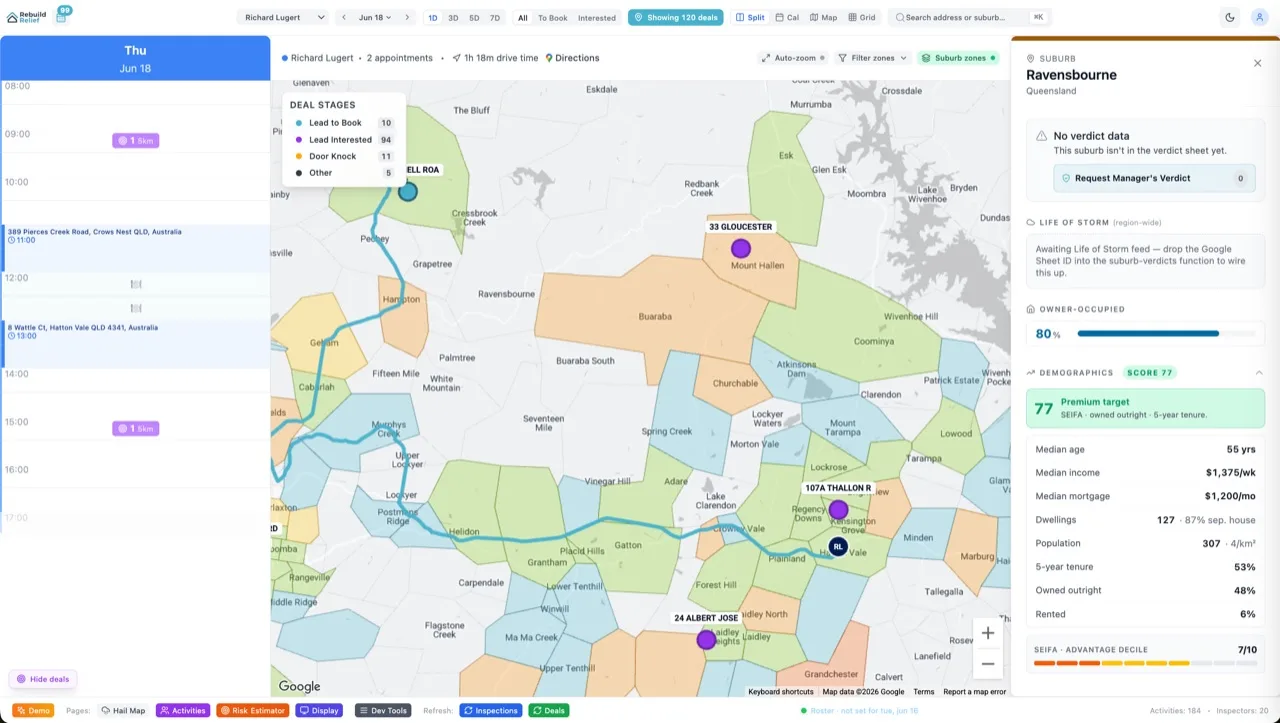
Manager wants to build custom owner portal (mobile-first, branded for Scheme 5, Eastside Towers). Portal front-end calls: [GET /api/v1/owner/statements?lot_id=5A&scheme_id=scheme-5]. API response: [JSON: {lot: '5A', owner: 'Sarah Chen', balance_outstanding: '$350', outstanding_since: '2025-12-15' (Q4 levy not yet paid), charges: [{description: 'Q4 2025 Levy', amount: '$700', due: '2025-12-31', status: 'overdue_by_7_days'}, {description: 'Q1 2026 Levy', amount: '$700', due: '2026-03-31', status: 'paid_on_time_2026-03-28'}, {description: 'Q2 2026 Levy', amount: '$700', due: '2026-06-30', status: 'paid_on_time_2026-06-28'}, {description: 'Q3 2026 Levy', amount: '$700', due: '2026-09-30', status: 'pending_due_in_10_days'}, ...], payments: [{description: 'Payment Q1', amount: '-$700', date: '2026-03-28', method: 'auto-pay', reference: 'PAY-2026-00123'}, ...], ledger_balance: '-$350' (credit balance, $350 ahead), next_payment_due: 'Q3 $700, due 2026-09-30', payment_methods: ['bank-transfer', 'credit-card'], payment_link: [unique link], contact: 'strata-agent@scheme5.com.au'}]. Portal displays: [Your account, Lot 5A, Balance: You are $350 ahead (Q4 credit from overpayment). Next levy: Q3 $700, due in 10 days. [Pay now] [Schedule payment] [Download statements]]. API also supports filtering: [GET /api/v1/statements?scheme_id=scheme-5&status=overdue]. Returns: [list of all overdue lots in Scheme 5 (manager sees which owners are behind)]. Query: [GET /api/v1/statements?scheme_id=scheme-5&days_overdue=gt:30]. Returns: [lots overdue more than 30 days, auto-flag for escalation]. Manager's reporting: builds custom dashboard (Tableau, Google Data Studio) pulling strata API data. Manager's dashboard: [Scheme 5 financial health: 42 lots, $29,400 Q2 levy, $28,950 collected (98.5%), $450 outstanding >30 days (1 lot), $350 outstanding <7 days (1 lot), 0 lots >60 days (monthly reconciliation = fast escalation], cash flow forecast = accurate]. Custom portal integrations: Scheme 5 committee uses system API to auto-generate [Committee financial report: Q2 levy revenue, collections trend, outstanding aging, forecast Q3 collections based on historical 98% collection rate, predicted cash flow this quarter]. Treasurer Elena uses: [GET /api/v1/statements/summary?scheme_id=scheme-5&period=q2-2026]. Returns: [{sinking_fund_balance: '$45,200', contingency_reserve: '$12,000', operations_account: '$34,000', total_reserves: '$91,200', forecast_roof_work_q4_2026: '$18,000', forecast_surplus_year_end: '$73,200'}]. Elena prepares: [annual financial report, data pulled live from system, no manual data entry, no spreadsheet errors]. Compare: StrataMax doesn't expose API (manager can only view reports in StrataMax UI, can't integrate custom portal, can't query data programmatically, manager stuck with vendor's UI, can't customize brand, can't build committee self-service features).
6. Arrears Automation + Escalation — Daily Check → SMS Sequence → Legal Handoff at Threshold
Scheme 5 system configuration: [Arrears Rules: (1) if lot unpaid 7 days after due date, send SMS reminder 1, (2) if unpaid 14 days, SMS reminder 2 + email, (3) if unpaid 30 days, phone call trigger (manager calls owner), (4) if unpaid 60 days, notice of breach + proposal to suspend voting rights per NSW Strata Schemes Act, (5) if unpaid 90 days, refer to strata lawyer for legal recovery proceedings]. Owner Lin (Lot 12B) skips Q2 levy (due June 30). System: [July 7 (7 days after due): SMS to Lin: "Q2 levy $700 now 7 days overdue. Pay immediately: [link]. Contact us if you have hardship: [number]." Response: silence]. System: [July 14 (14 days): SMS + email to Lin: "Q2 levy 14 days overdue, late fee now applies ($700 + 10% = $770). Immediate payment required. Hardship options: [link] or call [number]. Payment plan available."]. Lin doesn't respond, no payment. Manager gets alert: [Lot 12B, 14 days overdue, escalate to manager call?] Manager calls Lin (July 15). Lin answers: [I lost my job, can't pay now, need 3 months]. Manager: [let's set up a hardship arrangement: $250/month for 3 months (Aug, Sept, Oct) + $220 in Nov to catch up]. Lin agrees, payments authorized. System: [Hardship plan set: $250 Aug 1, $250 Sept 1, $250 Oct 1, $220 Nov 1]. Aug 1: Lin pays $250 (system logs: on hardship plan, payment received, on-track). Sept 1: Lin pays $250 (on-track). Oct 1: Lin doesn't pay. System: [alert to manager: hardship plan broken, Oct payment missing, contact Lin]. Manager texts Lin (Oct 2): [Hey, Oct payment not received, did you have trouble?] Lin: [yes, got unexpected bill, will pay by Oct 15]. Manager approves extension to Oct 15. Oct 15: Lin pays (10 days late, but paid). Nov 1: Lin pays $220 (final catch-up). System: [arrears resolved Nov 1, total debt collected, no legal action needed, owner retained (had trouble but worked with manager, goodwill maintained)]. Alternative scenario: Owner Robert (Lot 22F) also skips Q2 levy. July 7: SMS reminder (no response). July 14: SMS + email (ignored). Manager calls July 15: [Hi Robert, Q2 levy $700 is 14 days overdue]. Robert: [I don't think I owe anything, I paid my levies, check your records]. Manager: [let me review... Q1 paid on time, Q2 due June 30, no payment record yet]. Robert: [I have a receipt showing Q1, maybe Q2 got mixed up]. Manager: [let's sort it now. Can you pay by July 20 or would you like a payment plan?] Robert: [I need to think about it]. Manager: [okay, give us a call back by July 17 or we'll have to send a formal notice]. Robert ignores July 17 deadline. System: [auto-flag: 30 days overdue approaching (July 30, 15 days away)]. System sends notice (July 24): [formal notice: "Your levy for Q2 ($700) is now 24 days overdue and accruing late fees. Failure to pay by July 30 will result in a notice of breach (NSW Strata Schemes Act 2015 Section 109) and suspension of voting rights. This may affect your ability to vote on AGM motions, committee elections, and by-law changes. Payment link: [link]. Hardship support available: [number]."]. Robert reads notice (finally), calls July 29: [I got your notice, I'll pay]. Robert pays $700 + $70 late fee = $770 (July 29). System: [payment received, arrears cleared, notice of breach not issued (preventive notice worked)]. System removes: [voting rights suspension, arrears cleared]. Robert keeps voting rights, matter resolved. Worst-case scenario: Owner Maria (Lot 18C) ignores all reminders, SMS, email, manager calls, formal notice. Day 90 (past Q2 due June 30, now Sept 28): arrears still $700 + $140 late fees = $840. System: [escalate to legal]. Manager: [refer to strata lawyer]. Lawyer sends: [cease-and-desist letter, demand payment within 10 days or face legal recovery proceedings, strata manager will pursue judgment + costs]. Maria receives letter (Oct 5), gets serious. Maria pays $840 + $200 legal fee (lawyer's letter) = $1,040 (Oct 8). System: [arrears resolved, legal action halted, payment cleared]. Manager's arrears summary (Nov 1): [Scheme 5, Q2 levy $29,400 total, 42 lots, collections: 40 lots paid on-time, 1 lot (Lin) on hardship plan (3-month arrangement, on-track), 1 lot (Robert) paid late (notice of breach prevented churn), 0 lots sent to legal (Maria paid after lawyer notice). Total collected: $29,400 (100% by Nov 1, vs typical 60% on-time if manual process)]. Manager time spent: 3 calls (to Lin, Robert, no call to Maria), 20 minutes total (system handled SMS, emails, notices auto). Legal cost: $200 (lawyer's letter, never needed; proactive notice worked). Compare: manual arrears (manager gets 60% on-time pay, 30 days later chases 40% remaining, spends 2 hours on phone calls, refers to lawyer week 8, legal costs $800–1,200 per case, recovery rate drops to 75% after legal (some owners still default, negotiate down, or go to court), manager stress = high).
NSW Strata Schemes Act 2015 — Compliance Automation + OC vs Corp, Sinking Funds, Voting Rights Suspension
NSW strata rules (applies to Strata Schemes Act 2015) define: (1) Body Corporate (OC) = unincorporated association of lot owners, responsible for common property maintenance, levies, AGM governance; (2) Strata Rollover = new rules 2024 onwards, changes lot liability structures (affects sinking fund requirements). Custom platform enforces: [Sinking Fund Plan (annual, required by Section 93, specifies forecast major capital works over 10 years, each lot owner contributes to reserve)]. System calculates: [building age 15 years, roof condition: fair (5–7 years remaining), painting: due 2 years, pipe replacement: due 4 years, electrical rewire: due 6 years]. System forecast: [Year 1 capex: $0 (preventative maintenance), Year 2: painting $40k (reserve allocation $1,000/lot/yr), Year 3–4: roof $180k ($4,286/lot/yr), Year 5: pipes $120k ($2,857/lot/yr)]. System recommendation: [annual sinking fund contribution $2,900/lot (spread evenly to avoid surprise special levies)]. Manager proposes to committee. Committee votes (via AGM platform): approve sinking fund plan. System generates: [annual AGM report, sinking fund contribution line-item, $2,900/lot allocated to reserve fund, separate from operations levy]. Voting rights suspension: [Section 109 allows strata manager to suspend an owner's voting rights if 60+ days in arrears]. System enforces: [Maria Lot 18C, 61 days overdue, automatic suspension triggered (system flags: Maria cannot vote on next AGM matter, cannot run for committee, notice auto-sent to Maria: "Your voting rights are suspended due to 61 days unpaid levies. Restore rights by paying $840. Suspension lifts upon payment or 30 days after notice, whichever is sooner.")]. Maria pays (Oct 8), rights restored immediately (system: voting rights lifted, Maria can vote on any outstanding AGM matters). OC vs Corp confusion: [some strata schemes are unincorporated (OC, most common), others are incorporated (Corp, separate legal entity)]. System handles both: [Scheme type dropdown: Unincorporated (OC) or Incorporated (Corp)]. If Incorporated: system enforces additional rules (annual company filings, ASIC compliance, audit requirements, director liability). Platform auto-generates: [ASIC annual report template (if Corp), consolidated financials, board-certified). Across 150 schemes (75 OC, 75 Corp): system manages both compliance tracks, prevents mix-up, auto-flags overdue ASIC filings (if Corp).
Six FAQs
What if an owner disputes a levy amount or refuses to pay?
Dispute process (NSW Strata Schemes Act Section 162): owner can request manager review the levy calculation. System workflow: [Owner submits dispute form (link on portal), outlines reason: "Q2 levy calculation wrong, lot size different than stated"). Manager reviews: [lot 5A, registered lot size 52m², Q2 levy $700, calculation: $700 = $13.46/m² (scheme-wide rate)]. Manager finds: [all lots charged uniform rate per scheme AGM decision, no size differential]. Manager responds (system): ["Levy calculation confirmed correct. All lots pay $700/Q2. However, if you believe your lot size is registered incorrectly with Land Titles Office, we can request a survey. Cost $500 split among affected lots. Would you like to proceed?"] Owner declines. Dispute closed. If owner still refuses to pay, manager escalates: [legal recovery per Section 109]. Dispute escalation (rare, <2%): owner takes matter to NSW Civil and Administrative Tribunal (NCAT). NCAT hears both sides, decides. If NCAT rules in owner's favor, manager reverses charge. If against, owner must pay + tribunal costs. System logs all disputes, tracks outcomes (aggregate data helps manager defend future disputes with evidence).
Can owners pay levies through multiple methods, and how are partial payments handled?
Payment methods (flexible): [bank transfer (auto-pay option), credit card (Stripe, 2.5% fee, owner pays or scheme covers), BPAY (biller code auto-generated), cash (in-person at office, rare)]. Partial payments: [Owner Lin $700 owed, pays $400 on June 28]. System: [payment $400 recorded, outstanding $300, apply to oldest levy first (Q2), remaining $300 partial]. Next payment (Lin pays $250 July 15): [system applies $250 to Q2, now Q2 has $50 remaining, $250 applied to Q3 if due, or held in credit]. System tracks: [partial payment waterfall, auto-reconcile to ledger]. Manager dashboard: [Q2 levy: 40 lots × $700 = $28,000 total. Collected: $27,650 (full from 38 owners, partial $200 from Lin, $200 from Maria = 4 owners with partials). Outstanding: $350 (Lin), $300 (Maria), $50 waiting allocation = $700 total outstanding = 2.5% collection rate shortfall = small impact)]. End-of-period reconciliation (system auto-does): [all partial payments reconciled, credited to correct ledger periods, owners see accurate balance on statement].
How do you handle maintenance requests that cross multiple schemes or involve complex repairs?
Cross-scheme maintenance: [Lot 3F Scheme 5, roof leak traced to pipes in Lot 5F (same scheme). Ticket system escalates to cross-lot inspection. Both lot owners involved]. If multi-scheme: [Lot 3F Scheme 5, leak from Lot 5F Scheme 6 (adjacent building, shared wall or roof)]. System: [creates parent ticket (impact both schemes), assigns agents from both schemes, cross-scheme coordination flag raised]. Both agents log in, see linked ticket, coordinate repair contractor (one plumber does both inspections, one invoice split between schemes per proportional impact). Complex repair (e.g., roof affecting 3 schemes): [system creates 1 parent ticket, 3 sub-tickets (one per scheme), manager approves single contractor quote, all 3 scheme committees vote on cost allocation, system auto-generates invoice per scheme based on allocation %, all owners informed via their scheme portal].
What happens if the strata manager changes? How does data transition?
Data export/import: [old manager's system (StrataMax, MYBOS, or custom): manager exports all scheme data (lot registry, levies, payments, AGM minutes, owner contact info) in standard formats (CSV, JSON)]. New manager's system: [imports data, system validates (checks for missing fields, duplicate lots, payment date anomalies), flags issues, manages reconciliation]. Key continuity: [owner portal logins transfer (system creates new login links sent to all owners), payment history imported (new system shows past 3 years), AGM minutes archived (compliance trail unbroken), arrears data ported (important for overdue tracking)]. Transition risk: [poorly managed import = data loss or corruption; recommended: new manager does parallel run (both systems live for 1 month) to validate accuracy before cutover]. Custom platform: [clean data export (JSON schema includes all relationships), import takes <1 day, validation automated, minimal manual work].
How does the platform handle sinking fund updates or special levies if repair costs exceed forecasts?
Sinking fund contingency: [Annual plan forecasts roof $180k, but contractor quotes $210k (17% overrun)]. Manager alerts committee. Committee options: (1) defer roof 1 year (other work first), (2) issue special levy ($10,714/lot × 42 lots for extra $450k to cover roof overage), (3) draw down contingency reserve (if built up). System calculates impact per option: [Option 1: defer, stay on sinking fund plan, risk roof leaks next year]. [Option 2: special levy $10,714, total owner cost this year $18,614 ($8.9k annual levy + $10.7k special), cash flow impact]. [Option 3: contingency reserve $50k, leaves $0 buffer, risky]. Committee votes (AGM platform) on Option 2. System auto-generates: [special levy notice, $10,714/lot, due date [60 days], payment link]. Owners pay. System tracks: [special levy collected $448,988 (amount varies due to partials, same as regular levies)]. Sinking fund updated: [original forecast $180k, revised $210k, contingency $12k remaining (post-roof), contingency rate: 6%, acceptable per NSW rules (5–10% recommended)].
What's the cost comparison: custom strata platform vs StrataMax/MYBOS for 200+ schemes, 8,000 lots?
Off-the-shelf annual costs: StrataMax ($70/lot/yr × 8,000 = $560k), MYBOS ($80/lot = $640k), Cirrus8 ($60/lot = $480k). Add admin labor: [1 finance admin ($55k), 1 strata agent ($65k), legal escalation (arrears cases, $150/hr × 400 hrs = $60k)], manual arrears recovery (~40% lost leads revenue due to slow collection) → assume $800k/yr opportunity cost]. Total StrataMax cost year 1: $560k + $120k labor + $800k lost opportunity = $1.48M. Custom platform: [build $200–250k (one-time), Year 1 total cost $200k + $25k hosting + $100k part-time support staff (lower due to automation) = $325k]. Year 1 value: [eliminate arrears delay (faster collection, reduce 60-day outstanding by 40%) = recover $320k faster in cash-flow terms], eliminate manual admin (save $120k labor), reduce legal escalation by 50% (better reminders = fewer lawyer referrals) = save $30k. Year 1 net: $325k investment - $450k value captured = +$125k net benefit. Year 2+: $450k annual value, $125k annual cost = 3.6x ROI annually. At 8,000 lots, platform pays for itself in under 1 year, then generates $325k/year profit vs competitors. Smaller operations (50–200 lots): platform cost doesn't justify (custom dev $200k fixed cost too high for small scheme). Use StrataMax. 200+ schemes (8,000+ lots): custom platform wins. Want to benchmark your operation? Check platform pricing, or book a call to model ROI for your scheme portfolio (number of schemes, current arrears rate, admin time, growth goals).