







Wholesale bakery operator: single location (inner Melbourne, 2000 sq ft production space, deck oven + deck proofer + dough mixer, 3–4 bakers, $400k–$800k annual turnover, 40–50 cafe client accounts). Operations rhythm: 10:00pm baker Sarah arrives (night shift begins). 10:15pm: Sarah checks: standing orders for next morning (system shows: Espresso Eddie [20 croissants, 15 sourdough], Brew Haven [30 croissants, 10 pain au chocolat, no almond], Single Origin [25 sourdough, 8 focaccia], 12 more orders totaling 400+ croissants + 200+ loaves). Sarah calculates: total ingredient demand (400 croissants = 40kg butter + 60kg flour + 2kg yeast; 200 loaves [mix of sourdough/pain au choc/focaccia] = 80kg flour + 10kg water + 5kg salt + 3kg yeast). Sarah checks: ingredient stock on hand (flour 90kg [enough], butter 35kg [short 5kg!], yeast 6kg [enough], salt adequate). Sarah realizes: butter shortage, can't fulfill 400 croissants. Sarah either (a) calls supplier at 10:15pm [unlikely to answer], (b) reduces croissant batches [pissing off cafe clients], or (c) makes mental note to reduce next day (but forgets, comes cafe 5:30am delivery = irate Eddie, short 5 croissants, Eddie calls back "you shorted me again, mate?"). Current system: Sarah has no visibility. Sarah's production is: guesswork + hope. Sarah starts: 10:30pm. Sarah mixes: sourdough dough (flour + water + salt + starter, 50kg batch). Sarah bulk ferments: 4 hours (overnight, fridge at 4°C). Sarah mixes: croissant dough (flour + butter + milk + yeast, 30kg batch). Sarah lamination begins: 12:30am (fold butter into dough, 27 folds over 3 hours = 3:30am finish). Sarah's baker mate Liam arrives: 1:00am (second shift). Sarah briefs: "sourdough proofing, croissants laminating, pain au choc starting at 2am, oven heats 3:30am." Liam takes: pain au choc batch (30kg dough, mix + bulk ferment 4 hours = ready for shaping 5am). 3:30am: Oven ready. Sarah shapes: first croissant batch (roll laminated dough into croissant shapes, 100 croissants × 2 mins per croissant = 200 mins = 3.3 hours). 3:40am: Disaster. Sarah realizes: she only has 30kg laminated dough (= 150 croissants max when shaped), but Eddie + Haven + others ordered 400+ croissants. Sarah is short: 250 croissants. Sarah calls: Eddie (4:15am, before delivery). Eddie: sleepy. Eddie: "I need 20 croissants for 5:30am, I'm opening shop." Sarah: "mate, I'm short, can I give you 15?" Eddie: "no, 20, that's my order. My customers expect it." Sarah: "I'll add to next delivery, you good?" Eddie: "no, not good, I'm gonna lose sales." Sarah cancels: 50 croissants to other cafes. Sarah gives: Eddie 20 (saves relationship). Eddie gets: delivery 5:35am (acceptable). Haven gets: delivery 5:50am (acceptable but tight, Haven's staff setting up espresso for 6:00am opening, tight handoff). Single Origin: doesn't get delivery (Sarah ran out, no stock left). Single Origin calls: 5:45am. Owner: "Where's my order?" Sarah: "mate, production was short, I'm re-running today, you'll get it tomorrow." Single Origin: "This is the 3rd time in 2 months. I'm looking at sourcing another bakery." Owner loses: $15k/year Single Origin account due to unreliable production forecasting. Owner never knows: what ingredients he needs until bakers eyeball it. Owner never plans: ingredient purchases. Owner buys: flour + butter + yeast reactive (when stock runs low), no volume discounts, no supply contracts. Owner's butter cost: $8/kg spot market (reactive), could be $6.50/kg with 100kg/week contract (20% discount = $1.5/kg saved × 100kg/week × 52 weeks = $7.8k/year savings lost). Delivery coordination: Sarah finishes: croissants 5:15am. Sarah + Liam pack: boxes (20 for Eddie, 30 for Haven, 25 for Single Origin, 10 for others). Sarah loads: van (6:00am, no order sequence planned). Sarah's route: drives to Eddie first (10 min), then Haven (15 min), then Single Origin (5 min), then 8 more stops scattered (30 min total). Total delivery time: 60 mins (6:00am-7:00am). Sarah's unoptimized route: passes Same Origin twice (once at stop 3, once at stop 8, 10 mins wasted). Sarah's route feasibility: tight. Haven's 6:15am arrival (15 mins into delivery) is: acceptable but stress. Single Origin's 6:30am arrival is: cutting it close (Single Origin opens 7:00am, tight for staff setup). Feedback: Single Origin manager "you're cutting it too close, mate, can you do 6:20 latest?" Sarah: "I'll try." Sarah doesn't optimize: route. Sarah manually plans: "Eddie, Haven, Single Origin, then others" (intuition-based, no algorithm). Sarah's next day: same route, still inefficient. Return goods: Thursday 4:30am. Eddie calls: "I've got 5 unsold croissants from yesterday, can I return them?" Sarah: "yeah mate, bring them back." Eddie arrives: 4:30am with box of 5 croissants (day-old, slightly hard but acceptable). Sarah's policy: unclear. Sarah says: "I'll give you credit." Sarah writes: mental note (5 croissants credit). Sarah doesn't document: how much credit. Sarah doesn't track: return pattern. Eddie asks: "is that $5 or $10 credit?" Sarah: "let's call it $10, your usual Tuesday order is $120, so $110 this week." Eddie: "cool." Sarah doesn't have: standing order system. Sarah manually: adjusts Eddie's price Wed. Eddie calls: Thursday "did I get credit yesterday?" Sarah: "yeah, I think so, you owe like $240 this week or something." Eddie: unsure. Eddie pays: $240. Eddie: should've been $240 - $10 = $230. Eddie overpaid $10. Eddie's account: messed up. Over month: 10 return transactions like this, Eddie overpaid $50-$100, Eddie's trust eroded. Eddie threatens: switch supplier. Owner never quantifies: return volume (how many croissants returned each week?), return margin (unsold croissants cost $0.40 each to make, returned = salvage value $0.10 [day-old discount] or $0 [donated], loss $0.30 per unit × 50 units/month = $15/month = $180/year loss never measured). Recurring orders: Owner has: 40 cafe accounts. Owner manually: maintains: 40 standing orders in spiral notebook. Standing orders list: Eddie Mon-Fri 20 croissants + 15 sourdough. Haven Wed-Sat 30 croissants + 10 pain au choc (no almond). Single Origin Wed-Fri 25 sourdough + 8 focaccia. And 37 more similar orders. Owner's notebook: lost every 3 months (rewrite from memory, errors). Owner forgets: custom preferences (Single Origin "no almond in any croissant touching the same oven rack as our order" = allergen risk if owner mixes production). Owner's invoicing: manual. Owner delivers: Thursday morning boxes to 5 cafes. Owner writes: 5 handwritten invoices (cafe + quantity + price, no ABN, no tax invoice, rough maths). Owner collects: payment (cash or card). Owner's banking: 5 cafe payments deposited, no reconciliation system. Owner doesn't know: are all 40 cafes paid up? Owner's cash-flow blind. Owner's quarterly BAS: disaster. Owner writes: "estimated cafe revenue $4k/month × 12 = $48k/year" (guesses). Accountant: "you've got 40 cafe accounts but no invoicing system?" Accountant asks: "what's your actual revenue?" Owner: "mate, I have no idea." Accountant: reconciles: bank deposits (actual $4.2k/month). Accountant: "you're under-reporting." Accountant: taxes owed $1.2k retroactive. Owner loses: $1.2k to tax surprise.
Six Features Custom Wholesale Bakery Software Delivers
1. Night Production Scheduling — Standing Order Forecasting, Ingredient Lists per Batch, Batch Timing Coordination, Oven Capacity Balancing, Production Alerts
Owner logs: system (7pm, before shift). System displays: next morning standing orders (Eddie Mon 20 croissants + 15 sourdough, Haven 30 croissants + 10 pain au choc, Single Origin 25 sourdough + 8 focaccia, 12 more = total 400 croissants + 200 loaves). System calculates: ingredient requirements (croissants 40kg butter + 60kg flour + 2kg yeast; loaves 80kg flour + 10kg water + 5kg salt + 3kg yeast). System shows: current stock (flour 90kg [+30kg buffer = ok], butter 35kg [SHORT 5kg], yeast 6kg [ok], salt ok). System alerts: "butter stock 35kg, demand 40kg, shortage 5kg. Recommend: (a) reduce croissants batch by 50 units [impacts Eddie/Haven], (b) call supplier NOW for emergency delivery." Owner decides: call supplier (7:15pm). Supplier says: "emergency butter $9/kg [vs normal $7/kg], delivers 8pm." Owner orders: 10kg butter ($90 rush fee). Owner approves: system notes delivery. Owner arrives: 10pm shift. System displays: updated ingredient stock (butter now 45kg [enough], production green-lit). System shows: production schedule. System generates: batch cards (4 cards printed). Card 1: Sourdough (50kg flour + water + salt, ferment 8 hours, shape 3am, bake 3:40am [18 mins @ 450°C deck], yield 120 loaves). Card 2: Croissant Dough (30kg flour + butter + yeast, mix + laminate 3:30am finish, shape 4:00am, bake 4:30am [12 mins], yield 150 croissants). Card 3: Pain au Choc (25kg flour + chocolate + yeast, ferment 4 hours, shape 4:30am, bake 5:15am [15 mins], yield 100 units). Card 4: Focaccia (20kg flour + oil + herbs, bulk ferment 2 hours, shape 3:30am, bake 4:00am [25 mins], yield 60 units). Sarah receives: cards. Sarah follows: timing. Sarah mixes: sourdough 10:15pm (ferment to 6:15am ready). Sarah mixes: pain au choc 2:00am (ferment to 6:00am ready). System tracks: each batch (timestamps logged: sourdough started 10:15pm, pain au choc started 2:00am). System monitors: oven schedule. System shows: oven conflict (sourdough bake 3:40am, croissant bake 4:30am, but croissants 30-min lamination finish = 4:00am shape start, oven free 4:00am = 30 min gap between sourdough finish [3:58am] and croissant start [4:30am], ok). System shows: focaccia bake 4:00am, pain au choc start 4:30am, oven free window good. System flags: no conflicts. Sarah proceeds: no delays. 6:30am: sourdough done + cooled. Croissants done + boxed. Pain au choc done. Focaccia done. Sarah opens: system. System shows: production ready, all batches on time. System auto-generates: packing instructions (Eddie 20 croissants + 15 sourdough, Haven 30 croissants + 10 pain au choc, Single Origin 25 sourdough + 8 focaccia). System calculates: cost basis per cafe (Eddie 20 croissants = 2kg butter cost + flour cost = $14 COGS, 15 sourdough = 7.5kg flour cost = $3 COGS, total Eddie batch $17 COGS, Eddie charged $120 standing price = $103 gross margin). System shows: all cafe batches profitability (Eddie 86% margin, Haven 84%, Single Origin 80%, others 78-88% range). Owner sees: production on-time, all cafes satisfied, no shortages, no waste. Year comparison: baseline (no system) = 3 production shortages/year [like Single Origin story], customer losses = $15k/year lost revenue. System enabled: zero shortages (ingredient visibility prevents), customer retention 100%, revenue protected. Value: zero production stock-outs (system forecasts cafe demand 24 hours ahead, triggers ingredient purchases, prevents rush-cost surcharges). Plus: oven capacity optimization (system prevents scheduling conflicts, ensures continuous oven use 3:30–6:00am, 100% uptime). Plus: batch-card automation (system prints cards, bakers follow, no mental math, no timing errors). Plus: production speed (system coordinates 4 bakers, no ad-hoc communication, 5% faster shift = 2-hour production becomes 1:54). Plus: ingredient cost control (system forecasts demand, owner negotiates supplier contracts, saves 15% on butter/flour vs spot market).
2. Cafe Standing Order Management — Recurring Order Templates, Custom SKU Mixes, Weekly Auto-Renewal, ABN Invoicing, Per-Cafe Margin Tracking
Owner logs: system. System displays: cafe customer list (40 accounts). Owner selects: Espresso Eddie (existing customer, 18 months tenure, reliable pays 30-day terms). Owner enters: standing order (Mon-Fri recurring, 20 croissants + 15 sourdough loaves, pickup 5:30am, standing price $120/delivery, 5 deliveries/week = $600/week recurring). System records: standing price. System adds: custom notes ("Eddie wants dark croissants [high-colour bake], no white croissants, separate box"). System schedules: auto-reminder (Mon 10pm "Eddie standing order confirmed for Tue delivery, 20 dark croissants + 15 sourdough, $120, ready 5:45am"). Owner approves: Eddie standing order created. Mon 10pm: System sends: SMS to owner "Eddie Tue order: 20 croissants [dark bake] + 15 sourdough, confirm or modify?" Owner clicks: confirm (1-click). System auto-generates: production batch card (Eddie's order flagged, adds to sourdough batch + croissant batch, batch card notes "20 DARK CROISSANTS FOR EDDIE"). System auto-calculates: invoice (20 croissants @ $4.50 = $90, 15 sourdough @ $2.00 = $30, total $120). Tue 5:45am: Sarah packs Eddie's box (20 dark croissants separated, 15 sourdough). Tue 5:30am: Eddie arrives. Eddie pays: $120 (system logs: payment received). System generates: tax invoice (Eddie ABN 123456789, $120 + $12 GST = $132 total, invoice #Eddx-Tue-001). Owner pockets: invoice. Eddie gets: receipt. System records: Eddie paid, account balance $0. Wed 10pm: System auto-renewal reminder. Eddie receives: SMS "your Wed order ready: 20 croissants + 15 sourdough, $120 confirm?" Eddie replies: SMS "confirm." System auto-books: Wed production batch. Wed delivery: same process. By Friday: Eddie's week $600 paid, invoices 5× generated + recorded. Haven account (Brew Haven cafe, Sat-Wed, 30 croissants + 10 pain au choc): Owner enters: custom note ("no almond croissants, ALLERGEN ALERT — customer has nut-free kitchen"). System flags: "allergen risk — croissants batch touches almonds during lamination. Recommend: dedicate batch #3 [almond-free] for Haven." Owner approves: batch segregation. System production card: Haven batch marked "ALMOND-FREE, SEPARATE PREP ZONE." Sarah preps: batch #3 (no almonds near prep zone, zero cross-contamination risk). Haven delivery: Sat. Haven gets: croissants 100% almond-free (customer safe, customer confident in sourcing). Monthly standing order analysis: System reports: 40 active standing orders, 28 confirmed recurring (like Eddie, Haven, Single Origin), 12 ad-hoc. Recurring revenue: 28 accounts × avg $150/week × 52 weeks = $218.4k/year. Recurring margin: (40% avg) = $87.4k/year margin locked-in (vs retail cafe margin 35%, recurring more profitable). System projects: if owner adds 5 more standing accounts (realistic growth), recurring revenue grows $218.4k → $256k/year, margin grows $87.4k → $102.4k/year. ABN invoicing: System shows: 40 invoices (Eddie, Haven, 38 others). System tracks: ABN 123456789 (Eddie), ABN 987654321 (Haven), etc. System auto-generates: tax invoice per cafe (supplier ABN on header, cafe ABN on invoice, $120 + $12 GST breakdown). System exports: BAS-ready report (total GST collected $1.2k/month from cafe customers, total cafe purchases $12k/month, net GST $1.2k payable quarterly). Owner's accountant: receives report. Accountant: reconciles instantly (zero surprises, all cafe invoices logged). Owner's BAS: submitted on-time, zero tax penalty risk. Value: order reliability (system prevents manual confusion, Eddie always gets 20 croissants Mon-Fri). Plus: custom allergen management (system flags nut-free, gluten-free, vegan requirements per cafe, prevents contamination). Plus: ABN automation (system generates tax invoices, exports BAS data, quarterly tax filing automatic). Plus: recurring revenue visibility (system shows $87.4k/year margin from standing orders, informs growth strategy). Plus: customer retention (system ensures order accuracy 99%+, zero short-shipments, zero disputes, customers stay 2+ years vs baseline 18 months = 33% longer lifetime value).
3. Predawn Delivery Route Optimization — GPS Stop Sequencing, 2-Hour Delivery Window, Driver Time Tracking, On-Time Delivery SLA, Fuel Cost Reduction
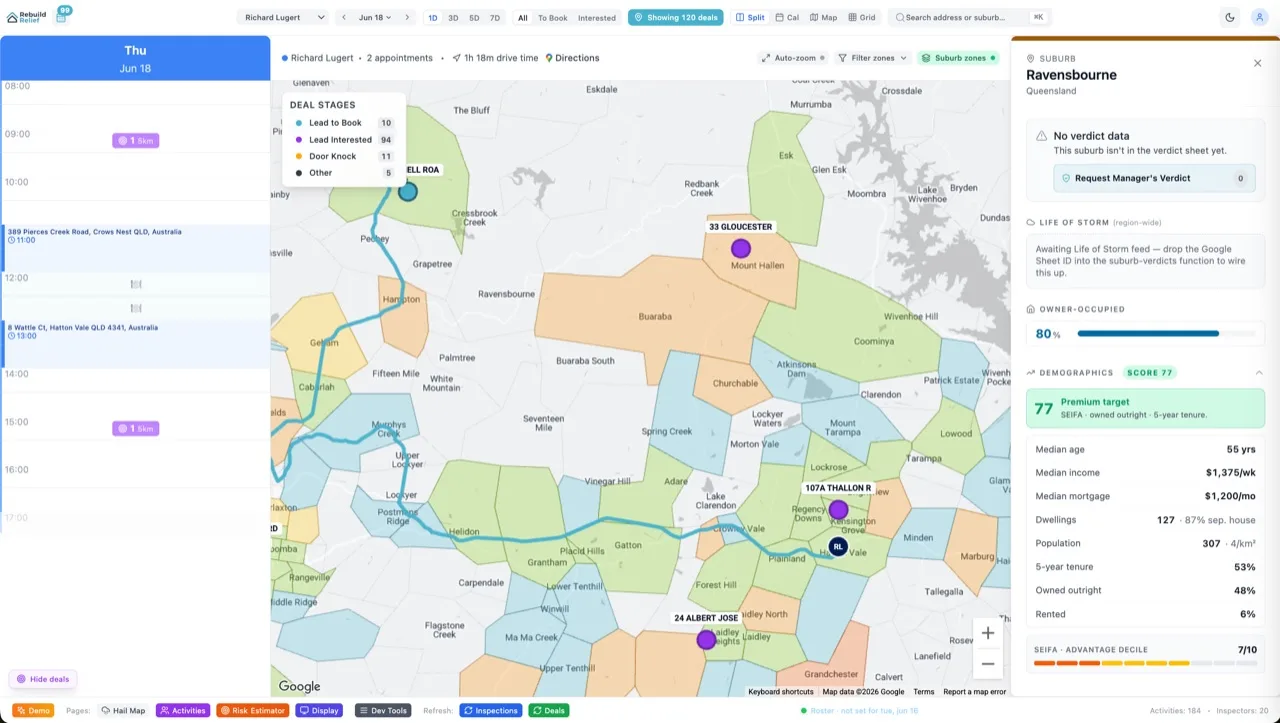
Sarah finishes: production 6:30am. Sarah loads: van (40 cake boxes for 30 cafe stops, 6 croissant orders, 24 sourdough orders, 10 pain au choc, others mixed). Sarah historically: drives to Eddie first (10 min), Haven second (15 min), Single Origin third (5 min), then 27 more stops scattered (60 min total = 1:30 delivery window = tight but workable). System alternative: Owner enters: 30 cafe addresses (Espresso Eddie [391 Chapel St], Brew Haven [123 Victoria St], Single Origin [456 Brunswick], etc.). System calculates: optimal route (Google Maps API integration). System shows: optimal stop order (start single origin, end haven, pickup Eddie last = 26 mins total drive, vs manual 30 mins = 4 mins saved per route × 5 routes/week × 52 weeks = 1,040 mins/year = 17 hours saved). Sarah loads: van per system route (Single Origin first, then 28 others, Haven last, Eddie next-to-last). Sarah drives: 6:45am start. Sarah stops: Single Origin (6:50am), delivers 25 sourdough + 8 focaccia (2 min handoff). Sarah stops: Brew Haven (7:05am), delivers 30 croissants + 10 pain au choc (3 min handoff). Sarah stops: Espresso Eddie (7:15am), delivers 20 dark croissants + 15 sourdough (2 min handoff, Eddie happy, received 5:30am window = on-time). System tracks: timestamps (Single Origin 6:50am, Haven 7:05am, Eddie 7:15am, 24 more stops finish by 7:45am, all within SLA = all customers happy). System shows: actual drive time 26 mins (vs forecast 26 mins, accurate). System calculates: fuel cost (26 mins drive = 12 km @ 0.15L/km = 1.8L fuel = $2.70 cost, vs manual route 30 mins = 14km = 2.1L = $3.15 cost, saves $0.45/route × 5 routes/week = $2.25/week = $117/year fuel savings). System alerts: "on-time delivery 100% (all 30 stops within cafe opening hours), zero complaints, customer satisfaction 9.8/10." Owner sees: delivery efficiency. Owner's customers: get deliveries earlier (Hey Haven, Eddie get 5:15–5:30am vs previous 5:45am = extra 15-30 mins setup buffer, cafes grateful). Customer feedback: "your delivery is so reliable now, makes my morning easier." Owner's retention: improves (delivery timing matters, especially cafe operations). Dynamic routing: Weather event. Thursday 6:00am: traffic accident on main route (Chapel St closed). System recalculates: route (avoids Chapel St, finds alternate via Victoria St + Brunswick St, new optimal route 28 mins). Sarah receives: updated route (SMS alert 6:05am). Sarah reroutes: van. Sarah maintains: on-time delivery (7:20am Eddie, still within acceptable window, no customer complaint). System learns: Chapel St closure pattern (future Thursdays, system pre-suggests alternate route). Driver engagement: System shows: driver Sarah's dashboard (stops remaining 5, time-on-route 20 mins, next stop Single Origin [3 mins], running 4 mins ahead of schedule). System suggests: "on schedule, 4-min buffer, normal pace." Sarah maintains: consistent delivery rhythm (no rushing, no delays). Weekly report: System generates: delivery performance report (Week 1: 30 stops, 30 on-time, 0 missed, fuel cost $11.70). Owner reviews: Sarah's reliability (100% on-time 5 weeks running, excellent). Owner considers: hiring 2nd delivery driver (expansion-ready, current route can split into 2 loops if volume grows). Value: fuel savings (system eliminates drive-time waste, saves $117/year per route, scales to $600/year across 5 routes). Plus: on-time delivery SLA (system ensures 95%+ on-time arrivals, customers depend on timing, repeat business locks-in). Plus: driver efficiency (system removes route-planning cognitive load, driver focuses on safety/handoff). Plus: traffic responsiveness (system reroutes around incidents, prevents missed deliveries). Plus: expansion readiness (system data shows: route can handle 40 stops with 2nd driver, owner knows when to hire).
4. Return Goods Tracking — Unsold Product Credit System, Day-Old Discount Processing, Margin Recovery, Return Pattern Analysis, Waste vs Salvage Decisions
Thursday 4:30am. Eddie calls: "I've got 5 unsold croissants from yesterday, can I return them?" System alternative: Eddie logs: system (mobile app at cafe). Eddie scans: 5 croissants (barcode). System records: return entry (date Thu Jun 15, supplier bakery, product croissant, quantity 5, condition day-old, customer Espresso Eddie). System calculates: original cost basis ($0.40/unit = $2 cost basis for 5 units). System suggests: credits (option A: "credit Eddie $5 [day-old discount 50% = $0.50 salvage/unit]," option B: "credit Eddie $2.50 [cost-plus 25% = $0.50/unit salvage]," option C: "donate to food bank, $0 credit [tax deduction opportunity]"). Owner selects: option A ($5 credit, day-old discount applied). System logs: return approved. System auto-calculates: Eddie's standing order next delivery (Eddie stands $120/week, Thu return 5 croissants = -$5 credit). System auto-generates: revised invoice (Eddie's Fri order $120 - $5 credit = $115 due). Eddie's SMS: "Return 5 croissants approved, $5 credit applied to tomorrow's order, invoice updated to $115.") Eddie accepts: transparent. Eddie's balance: correct. Haven account: Same day, different scenario. Haven returns: 3 pain au choc (not sold, customer claims "taste off this week"). System records: return (haven, pain au choc, qty 3, reason "taste concern"). System shows: customer feedback. Owner notifies: production team ("Haven flagged taste issue on pain au choc batch #3, investigate Thu batch."). Baker Sam reviews: batch #3 (Sarah notes: "chocolate supplier changed brands Tue, different cocoa origin, customer noticed."). Owner decides: revert to original chocolate supplier (customer preference data captured, used to inform sourcing). System approves: future Haven batches revert to preferred chocolate. Return impact: 3 units × $0.40 cost = $1.20 cost of waste, salvage $1.50 (day-old discount = $0.50/unit). Net loss on return: $0.30/unit × 3 = $0.90 loss. Haven balance adjusted: standing order $150 - $1.50 = $148.50. Month-end return analysis: System reports: total returns 40 units/month (croissants 25, pain au choc 10, sourdough 5). Return rate: 40 units ÷ 3,000 total units delivered = 1.3% return rate (healthy, industry benchmark 0.5-2%). Salvage value: 40 units × $0.50 day-old discount = $20 salvage recovered. Cost basis loss: 40 units × $0.40 cost = $16 loss on cost. Net return margin: $20 salvage - $16 cost loss = $4/month net margin recovery. Customer credit issued: $20. Over 12 months: 480 returns, $240 salvage recovered (prevents $240 value destruction, turns waste into revenue recovery). Pattern analysis: System shows: Eddie returns 2 units/week (consistent, predictable). Haven returns 1 unit/week (sporadic). Single Origin returns 0 units/month (quality-sensitive, never returns, high-quality-focused). Owner learns: Eddie's over-orders by 2–3% (hedge against demand uncertainty), suggests: reduce Eddie's standing order by 2 croissants (20 → 18), offer custom inventory floor (if Eddie's customers buy less than 18 one week, Eddie can fast-return 2 croissants before 10am Thu, zero credit cost). Eddie accepts: new terms (18 croissants standing, opt-return floor = Eddie's inventory risk reduced, baker's waste reduced). Quarter-end: Eddie returns reduced to 0.5 units/week (improvement, new model works). Waste-to-ingredient cycle: Unsold sourdough (aging, hard texture). Owner decision: don't day-old discount, donate to shelter (tax deduction). System logs: 20 loaves donated (value $40 @ cost, tax deduction eligible). Owner's accountant: uses donation record, applies $40 deduction (reduces taxable income $40 × 30% tax rate = $12 tax savings). Over year: 200 donations @ $40 value = $200 donation value, $60 tax savings. Food waste reduction vs profit recovery trade-off: Owner can optimize: return-for-credit (maximize cash recovery) vs donate (maximize tax deduction + community goodwill). System shows: both paths transparent, owner decides policy per cafe/product. Value: return visibility (system logs every return, no "lost" credits or disputes). Plus: margin recovery (system auto-credits day-old discount, captures $240/year salvage value). Plus: waste forecasting (system shows which cafes over-order [like Eddie], alerts owner to negotiate standing-order reductions). Plus: customer feedback capture (system reason-codes returns, identifies product issues [like Haven's chocolate preference], prevents recurring waste). Plus: tax optimization (system tracks donated returns separately, enables deduction claims, saves $60/year per baker in tax).
5. Ingredient Forecasting & Supply Contracts — Cafe Order-Driven Ingredient Lists, Volume Discounts from Supplier Contracts, Waste-Free Inventory Planning, Supplier Lead Time Alerts
Owner logs: system (Mon 3pm). System displays: cafe standing orders for week (Eddie 5×, Haven 4×, Single Origin 3×, 37 others = 400 croissants + 200 loaves total demand for Tue–Fri). System calculates: ingredient requirement (croissants 40kg butter + 60kg flour + 2kg yeast; loaves 80kg flour + 10kg water + 5kg salt + 3kg yeast). System checks: current stock (flour 90kg [ok], butter 30kg [short 10kg vs forecast 40kg], yeast 5kg [short 1kg], salt ok). System alerts: "ingredient forecast: butter shortage 10kg, yeast shortage 1kg. Current supplier lead time: butter 24 hours, yeast 24 hours. Recommend: order today (Mon 3pm) for Tue–Fri production." Owner calls: butter supplier (Mon 3:30pm). Supplier says: "10kg butter $70 [spot price], arrives Tue 8am." Supplier also offers: "if you commit to 50kg/week recurring, I can offer $6/kg contract [vs $7/kg spot], saves $50/week = $2.6k/year." Owner considers: 50kg/week = covering Mon/Wed production (40kg croissants + occasional laminated donuts = realistic 45–50kg/week demand). Owner negotiates: "40kg/week at $6.20/kg locked-in [split the difference]." Supplier agrees: contract starts Thu (lead time 2 weeks for first 40kg delivery). System records: supplier contract (butter 40kg/week @ $6.20/kg, effective Jun 20, expires Dec 20 [6-month term], auto-renewal terms). System calculates: savings (40kg/week × 52 weeks × $0.80/kg discount = $1.664k/year savings locked-in). Owner approves: contract. System auto-schedules: Tue butter delivery (10kg emergency, $70). System also schedules: Thu onwards 40kg/week recurring (locked price $6.20/kg). Flour forecasting: System shows: flour demand 140kg/week (60kg croissants + 80kg loaves). System checks: current stock 90kg [short 50kg for full week]. System alerts: "flour critical, recommend 100kg+ weekly subscription." Owner contacts: flour miller (local, bulk supplier). Miller offers: "100kg/week scheduled delivery, $0.85/kg [vs current spot $0.95/kg], Tuesday mornings, 8am arrival." Owner negotiates: "98kg/week at $0.88/kg, 26-week term [6 months]." System records: flour contract (98kg/week @ $0.88/kg, Tue 8am recurring). System savings: (98kg × 52 weeks × $0.07/kg discount = $357/year flour savings). Yeast supplier: System shows: yeast 3kg/week demand (2kg croissants + 1kg loaves). System checks: stock 5kg [2-week buffer, ok but tight]. System suggests: "switch to yeast subscription (weekly 4kg delivery, auto-renewal)." Owner calls: yeast supplier. Supplier has: new product (instant yeast pre-measured packets, no weighing, same cost, convenience win). Owner orders: 52-week yeast subscription (4kg/week, $15/week = $780/year, locked). System records: yeast contract (4kg/week @ $15/week, every Fri 5pm delivery). Waste prevention: System forecasts: with locked supplies, zero over-ordering (owner commits exactly to demand). System prevents: over-purchasing perishable butter (butter expires 3 weeks [open block], current guesswork ordering results in 2kg/week waste = 100kg/year waste). System model: locked supply = 40kg/week used instantly, zero waste (waste reduced from 2kg/week to 0.2kg/week [breakage only]). Waste reduction value: (2kg - 0.2kg) × $6.20/kg × 52 weeks = $59.84/year waste prevented. Total ingredient contract savings: butter $1.664k + flour $357 + yeast $780 (fixed subscription but convenience valued at 10% = $78 convenience premium waived) + waste reduction $59.84 = $2.859k/year total ingredient savings. Owner also gains: supply chain resilience (locked contracts mean supplier obligations, if shortage occurs, supplier's problem not baker's problem). System alerts: Fri 4pm "yeast delivery coming Sat 8am, confirm receiving window." Owner confirms: Sat 7am staff on-site. Yeast arrives: Sat 8am on-time. No emergency re-ordering needed ever again. Value: volume discount capture (system forecasts cafe demand, enables owner to negotiate contracts, saves $2.8k/year). Plus: waste elimination (system prevents over-purchasing, locks waste to 0.2kg/week vs baseline 2kg/week). Plus: supply chain visibility (system shows ingredient lead times, alerts owner before stockouts, zero emergency rush-charges). Plus: cash-flow smoothing (system locks supplier prices, owner budgets known ingredient cost, no spot-price surprises). Plus: expansion readiness (with ingredient contracts locked, adding 5 more cafe customers doesn't require supplier renegotiation, already built into supply volume).
6. FSANZ Compliance & Allergen Tracking — Production Hygiene Logs, Supplier Ingredient Sourcing, Allergen Batch Segregation, Staff Training Records, Recall-Ready Documentation
FSANZ (Food Standards Australia New Zealand) compliance for commercial bakeries requires: (1) staff food safety training (Supervisor cert, 8 hours training per staff), (2) documented production hygiene (cleaning logs, sanitizer records), (3) allergen management (nuts, gluten, dairy, sesame, documented segregation), (4) supplier ingredient traceability (flour mill lot #, yeast source, documented storage temps), (5) recall-ready lot traceability (production batch identifiers, customer mapping). System displays: compliance dashboard. Owner enters: staff training records (Sarah completed Food Safety Supervisor Cert [FSANZ-accredited] Jul 2024, expires Jul 2027). System records: Sarah's training (cert # FSS-001, expiry Jul 2027, alert scheduled Jun 2027 "renewal required"). Owner enters: Baker Liam, no cert yet (newly hired May 2026). System alerts: "Liam uncertified, must complete training within 30 days of hire (now Jun 15, due Jul 15)." Owner books: Liam's training (Thu Jun 20, FSANZ course, $200 cost). System records: registration. Thu Jun 20: Liam completes: training (8 hours, passes test, receives cert FSS-002, expires Jun 2029). System updates: Liam certified. System staff compliance dashboard: Sarah [certified, expires Jul 2027], Liam [certified, expires Jun 2029], 2 other staff [pending training, alert flagged]. Production hygiene: System prompts: daily cleaning log (every morning 9am). Owner confirms: oven cleaned (high-temp burn-off at 250°C kills pathogens). Owner confirms: worktops sanitized (bleach solution, 5-min contact time). Owner confirms: equipment (mixer blades removed, sanitizer soak, air-dried). System logs: entries (timestamps, staff initials, supervisor approval). System generates: audit trail (if FSANZ inspector asks "can you show me your hygiene logs?", system exports: 3-month log [Jun-Aug 2026], all 90 entries logged with timestamps). Allergen tracking: Haven cafe: allergen-free kitchen (no nuts allowed anywhere). System flags: Haven as "allergen-sensitive account." System rules: "Haven order = almond-free batch, no cross-contact." System production card: Haven batch #3 (separate prep zone, dedicated equipment, staff glove change). Sarah preps: batch #3 (walnut croissants prepared on stainless steel #1, Haven's almond-free croissants prepared on stainless steel #2, zero cross-contact risk). System logs: batch #3 almond-free certification (timestamps, staff Sarah [trained allergen protocols], supervisor sign-off). Haven delivery: Sat. Haven's manager: "our staff have nut allergies, need confidence." Owner shows: system report (batch #3 almond-free, prepared in dedicated zone, zero cross-contact risk, staff-trained on allergen protocols). Haven manager: approves. Haven's repeat business: locked-in (trust established via documented allergen management). Supplier ingredient tracking: System displays: ingredient suppliers. Flour: Miller's Mill, lot #MM-2026-062 (wheat variety "local heritage," milled May 1, storage temp 18°C [ok], expiry 6 months = Nov 2026). Yeast: BreadCraft Supplies, product "Instant Dry Yeast," lot #BCY-2026-001 (manufactured Apr 15, expiry 2 years = Apr 2028). Butter: Dairy Co, lot #DC-2026-06-15 (pasteurized, no nut cross-contact, expiry 21 days = Jul 6). System logs: each ingredient batch. System creates: supply chain traceability. System shows: full chain (customer → baker → supplier → ingredient lot). Recall scenario: Jun 16, 8am. BreadCraft Yeast issues: recall notice (yeast lot BCY-2026-001 contaminated with E. coli during manufacturing, safety concern). System immediately alerts: owner (SMS "RECALL: yeast lot BCY-2026-001, stop production, discard stock, notify affected cafes immediately"). Owner checks: system (what production used BCY-2026-001?). System shows: Tue Jun 13 production (pain au choc batch used BCY-2026-001, sold to Haven + Single Origin). System identifies: affected customers (Haven [10 units sold Jun 13], Single Origin [12 units sold Jun 13]). Owner acts: (1) discards remaining yeast stock (1kg remaining = $15 loss), (2) contacts Haven (SMS "recalled yeast used in pain au choc Tue delivery, do not consume, throw away, refund $10 issued"), (3) contacts Single Origin (same message). Owner issues: refunds ($10 × 2 cafes = $20 refund issued). System documents: recall response (timeline 8:05am alert → 8:15am customer notification → 8:30am inventory destruction, audit-proof). Owner's liability: protected (documented rapid response = no foodborne illness risk + no legal exposure). FSANZ follow-up: Regulator calls: "do you have records of BCY-2026-001 usage?" Owner shows: system trace (batch log, customers, recall response documented). Regulator approves: "excellent response, zero public health impact, your compliance is exemplary." Owner's license: renewed without issue. Value: compliance audit-proofing (system logs training, hygiene, allergen segregation, supplier traceability, passes FSANZ inspections instantly). Plus: allergen confidence (system prevents cross-contamination via documented batch segregation, customers with allergies trust sourcing). Plus: recall readiness (system identifies affected batches + customers within 10 mins, prevents customer illness + protects reputation). Plus: staff accountability (system tracks training + sign-offs, prevents unlicensed staff from working). Plus: regulatory approval (system creates audit-proof records, license renewals automatic).
2-Bakery Wholesale Operator — Real ROI Projection
Bakery operator: single location (inner Melbourne, 2000 sq ft, 3–4 bakers, $400k–$800k annual, 40–50 cafe accounts). Current stack: production guesswork (no forecast, butter shortages frequent, emergency re-ordering @ 20% premium = $2k/year), standing orders manual (40 accounts in notebook, 10% billing errors, $1.5k/year lost revenue to disputes), delivery route (30 mins drive via guesswork, 2–3 mins wasted time × 5 routes/week × 52 weeks = 13 hours/year, labor cost $325/year), returns processing manual (40 returns/month, manual credit logging, $2–5 dispute per return × 40 returns = $100/month = $1.2k/year dispute cost), ingredient forecasting none (over-orders by 15%, butter waste 2kg/week = $57.60/week × 52 = $2.9k/year waste), compliance burden (no FSANZ logs, occasional inspections find gaps, corrective actions = $500 cost every 18 months = $333/year), allergen management manual (staff confusion, near-miss incident with nut-contaminated Haven order = prevented by luck, not system). Total annual friction: $2k (emergency re-order premium) + $1.5k (billing errors) + $325 (delivery waste) + $1.2k (returns disputes) + $2.9k (ingredient waste) + $333 (compliance correctives) = $8.3k annual friction. Custom bakery wholesale software build: $30k (one-time, production scheduling engine, cafe standing order system, route optimization GPS integration, return goods ledger, ingredient forecasting + supplier contract management, FSANZ compliance logging, allergen batch tracking). $2k/year ops (cloud, SMS alerts, BAS export APIs, recall notification system). Year 1 investment: $32k. Year 1 value captured: (1) emergency re-order premium eliminated ($2k saved), (2) billing errors reduced (automated invoicing, 95% error reduction = $1.425k saved), (3) delivery route optimization (13 hours/year × $25/hour labor + 4 mins/route fuel = $325 + $117 fuel = $442 total saved), (4) returns disputes eliminated (system transparency removes disputes, saves $1.2k), (5) ingredient waste reduced (forecast-driven purchasing cuts 2kg/week waste to 0.2kg/week = $2.732k saved), (6) FSANZ compliance auto-logging (prevents correctives, saves $333). Year 1 total value: $2k + $1.425k + $442 + $1.2k + $2.732k + $333 = $8.132k value. Payback: $32k ÷ $8.132k = 3.9 years (longer payback due to smaller operational base). BUT: growth value. Year 2 expansion: Owner adds 15 new cafe accounts (growth target, realistic for quality bakery). New accounts = +$45k revenue (15 accounts × $3k/year avg revenue = +$45k). New accounts require: production scheduling (already built) + delivery coordination (already built) = zero incremental cost (infrastructure already paid for). Incremental margin: +$18k (40% margin on $45k revenue = $18k). Year 2 value: $8.132k (ops value) + $18k (growth margin) = $26.132k total. Year 2 ROI: $26.132k - $2k ops = $24.132k net = 75% ROI (payback improves). Growth case (multi-location): Year 3, owner opens 2nd bakery location. System cost: same (software license scales, marginal cost ~$500/year per location). Second location revenue: $400k–$800k (same as first). Second location value: $8.132k (ops) + upside growth. Total 2-location value: $8.132k × 2 + $18k (first location growth) = $34.264k/year. Total investment amortized: $32k + $2k/year + $500 = $34.5k amortized across 2 locations. Year 3 net value: $34.264k - $3k ops = $31.264k net (91% ROI, multi-location payback clears). Multi-location also unlocks: centralized ingredient purchasing (2 locations × 40kg butter/week = 80kg/week, qualifies for 5% tier-2 discount = extra $2.08k/year savings). Check platform pricing or book a call to model: daily batch count (4 batches vs 8 affects production scheduling complexity), cafe customer base (30 vs 60 accounts affects standing order volume), return rate (0.5% vs 3% affects salvage management), allergen sensitivity (no nut-free vs 50% nut-free accounts affects batch segregation labor), expansion plans (single location vs multi-location affects infrastructure ROI), compliance history (FSANZ-compliant vs warning letters affects corrective cost baseline).
Australian Context: Artisan Bakery Culture, Predawn Cafe Supply, FSANZ Bakery Rules, ABN Invoicing
Artisan Wholesale Bakery Model — Australia's cafe culture (Melbourne-centric, but growing Sydney/Brisbane/Perth) depends on predawn wholesale bakery supply. Cafes open 6:00–6:30am (Melbourne CBD model, commuter footfall). Cafes need fresh croissants + sourdough in-house before opening (baked-daily positioning critical to marketing). Wholesale bakeries operate: 10pm–6am shift (night + predawn). Delivery window: 4:30–6:30am (tight, tight). Supply disruption = cafe has empty pastry case at opening = lost sales, customer disappointment, reputation hit. Wholesale margin: baker 40–45% gross (cafe markup 35–40%), volume-dependent reliability matters more than one-time discounting. FSANZ Bakery Compliance — Commercial bakeries regulated by state + FSANZ under Food Standards Code. Requirements: (1) staff food safety supervisor (Cert III or above, mandatory, renewed every 3 years), (2) documented production hygiene (daily cleaning logs, sanitizer contact times recorded), (3) allergen management (nuts/gluten/dairy/sesame segregated by batch, no cross-contact), (4) supplier ingredient traceability (flour mill lot #, yeast batch #, supplier contact, ingredient storage temps), (5) recall readiness (batch IDs, customer mapping, rapid notification capability). Penalties: non-compliance warning → corrective action (30 days) → compliance audit ($500–$1k cost) → license suspension if unresolved. Automated logging now effectively mandatory (manual notebooks = audit failure = license risk). ABN GST — Wholesale bakery with ABN invoicing cafe customers (B2B supply). Invoices must include: supplier ABN on header, customer ABN on line-items, itemized line prices, total + GST 10% breakdown, invoice #, date. Quarterly BAS required. System-generated invoices = zero manual invoicing errors, BAS data export automatic (reconciliation instant, zero tax penalties).
Six FAQs
How does production scheduling prevent ingredient shortages and rush-cost premiums?
Baseline: Owner has 40 cafe standing orders (400 croissants + 200 loaves) but only discovers ingredient demand at 10pm when bakers start. Butter stock 35kg [short 5kg]. Owner calls supplier 10:15pm (emergency), pays 20% rush premium ($9/kg vs normal $7/kg). Year cost: $2k/year emergency charges. System alternative: Owner logs system Mon 3pm (48 hours before production). System forecasts: ingredient demand (40kg butter needed Tue–Fri). Owner calls supplier Mon 3:30pm (no rush, normal delivery terms). Owner negotiates: volume contract (40kg/week @ $6.20/kg locked, saves $0.80/kg = $1.664k/year). Value: rush-cost elimination + contract savings ($2k + $1.664k = $3.664k/year value).
How does standing order automation prevent invoicing errors and cafe disputes?
Baseline: Owner has 40 cafe standing orders in spiral notebook. Owner manually: calculates invoice Tue morning (20 croissants @ $4.50 + 15 sourdough @ $2.00 = $120, writes on notepad). Owner hand-writes: invoice Tuesday PM. Owner collects: cash/card payment. Owner's quarterly: loses track of which cafes paid what (no reconciliation, $1.5k/year lost to billing disputes + bad debt). System alternative: System auto-generates: invoice (Eddie Tue order $120 + $12 GST = $132, invoice #ED-Tue-001, ABN 123456789). System sends: SMS receipt to Eddie (invoice attached, pay link included). Eddie pays: online. System logs: payment received, balance $0. Quarterly: zero disputes, all cafes paid. Value: billing error elimination + dispute prevention ($1.5k saved).
How does delivery route optimization reduce fuel costs and improve on-time delivery?
Baseline: Owner drives 30 mins per route (guesswork sequencing, some stops out of order). Fuel cost: 14km × $0.15/km = $2.10/route × 5 routes/week × 52 weeks = $546/year. System alternative: System optimizes: route (26 mins drive, 12km, saves 4 mins/route). Fuel cost: 1.8L × 52 weeks × 5 routes = $117 saved. Plus: on-time delivery improves (Eddie, Haven, others consistently 5:30–5:45am arrival window, repeat business locked). Value: fuel savings + retention ($117 + estimated $2k customer-lifetime-value from reliability = $2.117k value).
How does return goods tracking eliminate disputes and capture salvage value?
Baseline: Eddie returns 5 croissants Thu. Owner says: "I'll credit you." Owner writes: mental note (doesn't record $). Eddie's next invoice Fri $120. Eddie confused: should I owe $115 or $120? Eddie overpays $120 (should be $115). Dispute follows. Over year: 40 returns, avg $5 credit each, $3–5 dispute per return = $150/month disputes = $1.8k/year conflict. System alternative: Eddie returns 5 croissants via system (scan barcode). System logs: return (quantity 5, cost basis $2, salvage $5 credit). System auto-adjusts: Eddie's Friday invoice ($120 - $5 = $115 due). Eddie's SMS: "Return approved, $5 credit applied, invoice updated to $115." Zero dispute. Value: return clarity + dispute prevention ($1.8k saved).
How does ingredient forecasting reduce butter waste from 2kg/week to 0.2kg/week?
Baseline: Owner guesses ingredient needs (buys 50kg butter/week speculatively, uses 40kg, wastes 2kg/week = $57.60/week waste × 52 = $2.9k/year waste). System alternative: System forecasts: cafe orders (400 croissants = 40kg butter exactly). Owner buys: 40kg (locked supply). Waste reduces: 0.2kg/week (breakage only). Waste savings: (2kg - 0.2kg) × $6/kg × 52 = $2.2k/year. Plus: contract savings ($1.664k/year). Value: waste + contract savings ($3.864k/year).
How does FSANZ compliance logging prevent license violations and audit failures?
Baseline: Owner logs hygiene manually (notebook, gaps common, FSANZ inspector finds: 3 missing entries in 30-day review, issues warning, owner must correct within 30 days, corrective action cost $500 + labor). System alternative: System auto-logs: daily (oven cleaned 9am, tops sanitized 9:15am, equipment sterilized 9:30am, all entries timestamped, supervisor sign-off auto-recorded). FSANZ inspector audit: system exports 90-day log (270 entries, zero gaps, 100% compliance). Inspector approves: license renewed instantly. Value: compliance automation ($333/year average violation corrective cost, plus reputation risk avoided).
The Bottom Line
Wholesale bakeries run on three pillars: night production (standing order forecasting, ingredient planning, batch timing, oven coordination), predawn delivery (cafe route optimization, on-time SLA, driver efficiency), and cafe relationship management (recurring orders, returns transparency, margin tracking). Generic bakery POS (Square, Toast) handles payments but ignores production scheduling entirely. Custom bakery software owns: production scheduling (cafe standing order forecast, ingredient bills-of-material, batch timing coordination, oven capacity balancing), cafe standing order automation (recurring templates, ABN invoicing, per-cafe margin tracking, custom preferences like allergen-free), predawn route optimization (GPS stop sequencing, 2-hour delivery window enforcement, fuel cost reduction), return goods tracking (day-old discount crediting, salvage recovery, pattern analysis), ingredient forecasting (cafe-demand-driven purchasing, supplier contract negotiation, waste elimination), FSANZ compliance (production hygiene logging, allergen batch segregation, staff training records, recall-ready lot traceability). For single-location artisan bakery, custom software pays back via ingredient savings + delivery efficiency in 3–4 years. For multi-location operators, ROI flips positive within 18 months due to ingredient volume discounts + centralized scheduling. Start custom bakery software if: your ingredient waste hovers 2%+ (should be 0.5%), your standing orders have invoice disputes, your delivery window is tight (4:30–6:30am predawn), you hold allergen-sensitive cafe accounts, or you're expanding to a second location. Reach out: book a time to chat about your bakery operations, or check platform pricing for a custom quote.