




Google Ads Management

Google Ads campaigns delivering top positions for competitive terms at reduced cost-per-click.

Effective Google Ads management is the difference between burning budget and generating profitable leads. Over 10+ years managing Google Ads accounts across real estate, legal, medical, trades, and e-commerce industries, I have consistently delivered top-of-page positions for highly competitive keywords while reducing cost-per-click through rigorous quality score optimisation, negative keyword management, and conversion-focused landing page design. The goal is always maximum qualified leads for minimum spend.

Proven Results

Top positions, lower costs, more conversions.

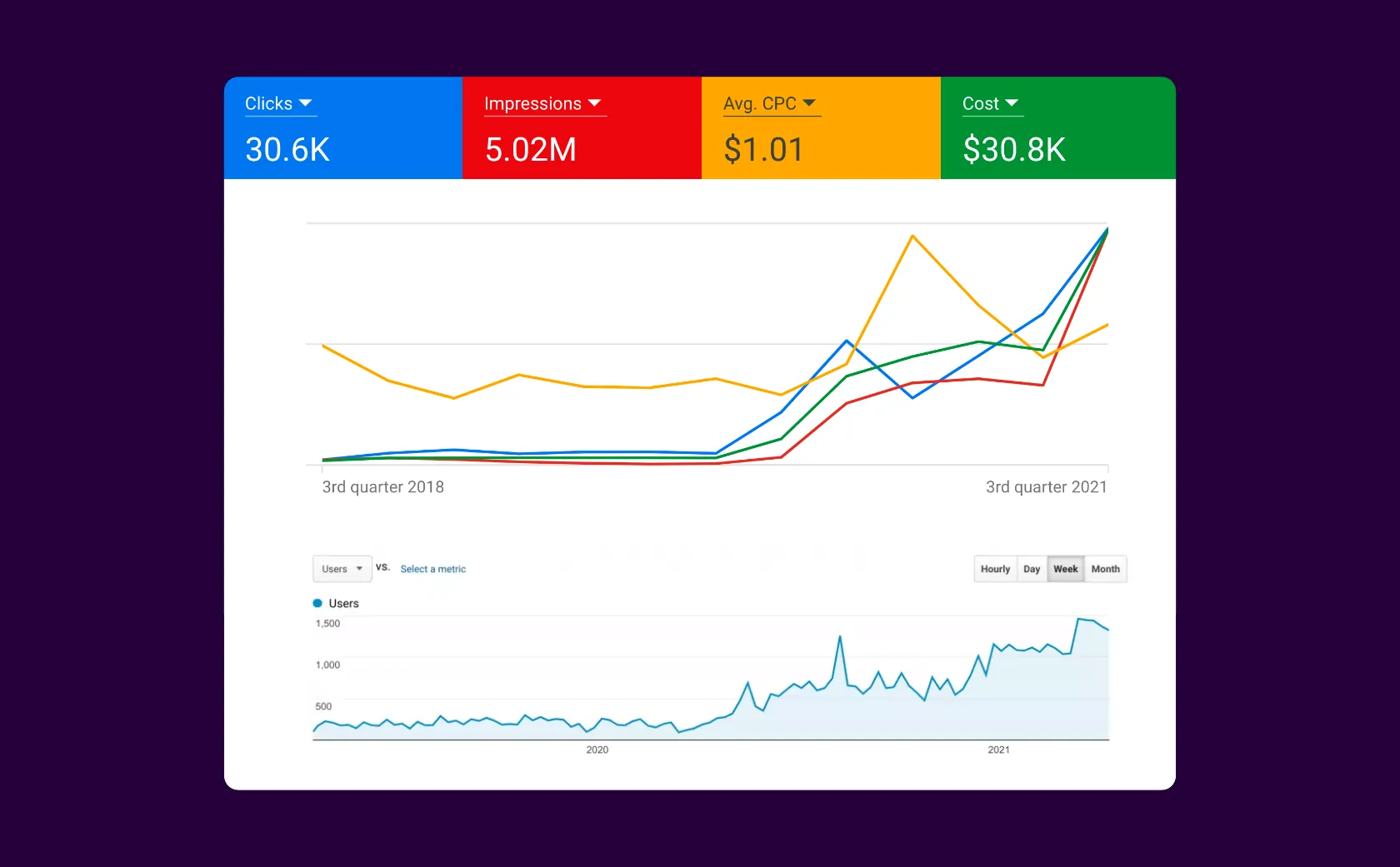
The screenshot below shows typical results from a managed account — top position for competitive industry terms with cost-per-click well below industry average. This is achieved through a combination of tightly themed ad groups, highly relevant ad copy with dynamic keyword insertion, optimised landing pages that boost quality scores, and aggressive negative keyword lists that prevent wasted spend on irrelevant searches. Every account is structured for maximum relevance, which Google rewards with lower costs and better positions.

Google Ads management results showing top positions for competitive search terms with reduced cost-per-click. Professional PPC management on the Gold Coast.
Google Ads campaign performance showing improved click-through rates and reduced cost per conversion.

Full-Funnel Campaign Strategy

Search, Display, YouTube, and Performance Max — the right channel for each goal.

I manage campaigns across the full Google Ads ecosystem. Search campaigns capture high-intent buyers actively looking for your services. Display and YouTube campaigns build awareness and feed remarketing audiences. Performance Max campaigns leverage Google's machine learning across all channels simultaneously. The right mix depends on your business, budget, and goals — and I structure accounts to give each campaign type clear objectives and measurement criteria so you always know what's working.

Beyond campaign setup, ongoing management includes weekly bid adjustments, search term reviews, A/B testing of ad copy, landing page optimisation, audience refinement, and monthly reporting with clear ROI metrics. I also build custom dashboards using Google Looker Studio connected directly to your Ads and Analytics accounts, giving you real-time visibility into performance without waiting for monthly reports. For larger accounts, I integrate with BigQuery for advanced attribution modelling and cross-channel analysis.

Account Structure and Campaign Organization

Well-architected accounts scale more efficiently.

How you organize an Google Ads account determines how effectively you can manage and optimize it. I structure accounts around business objectives: separate campaigns for brand terms (your business name) versus generic terms (industry keywords), separate campaigns for different products or service lines, separate campaigns for different geographic regions or demographics. This structure makes it obvious which campaigns are driving ROI and where to allocate budget. Brand campaigns typically have lower cost-per-click but capture demand you'd lose to competitors anyway. High-intent keyword campaigns often have higher CPC but convert at much better rates. Low-intent awareness campaigns have high volume and low cost but require careful audience targeting to avoid wasting impressions.

Google Ads account structure showing campaign organization by objective and keyword intent.
Ad group organization showing tightly themed keyword, ad copy, and landing page alignment.

Bid Strategy and Automated Optimization

Balancing automation with strategic oversight.

Google's automated bidding strategies — Smart Bidding, Target CPA, Target ROAS — have improved significantly. Rather than manually adjusting individual keyword bids, I use automated strategies that Google's machine learning optimizes toward clear objectives: a target cost-per-acquisition (CPA) for lead-gen, target return-on-ad-spend (ROAS) for e-commerce, or maximized conversions for awareness. These strategies require clean conversion tracking and sufficient conversion volume to train on — typically at least 30 conversions per week. Newer accounts or smaller budgets might use manual bidding until data accumulates. The key is being strategic about automation: use it for commoditized campaigns where optimization patterns are clear, keep hands-on control over high-stakes campaigns where strategy is nuanced.

Even with automation, continuous monitoring is essential. Weekly reviews check whether Smart Bidding is driving conversions at acceptable costs, whether new competitor ads have appeared, and whether there are new search terms to bid on or exclude. Seasonal adjustments update bid strategies for peak periods. For Gold Coast businesses with seasonal demand (tourism peaks, summer renovations), bid strategies scale up budget during high-season and preserve it during slow periods. This optimization compounds — a 10% improvement in cost-per-acquisition over 12 months might save 20-30% of annual spend while generating the same revenue. For most businesses, this reinvestment into increased lead volume drives growth.

Keyword Research and Negative Keyword Management

Precision keyword targeting prevents budget waste.

Effective campaigns start with thorough keyword research. I use Google Keyword Planner, SEMrush, and Ahrefs to identify keywords that align with your services and have sufficient search volume. For a Gold Coast trades business, this means researching local variations: "plumber Gold Coast" versus "emergency plumber Surfers Paradise" versus "pipe repair near me". Long-tail keywords (3-5 words) often have lower volume but higher conversion rates — someone searching "emergency plumber Broadbeach at 2am" is more likely to convert than someone searching "plumbing". Keyword match types (exact, phrase, broad) determine how closely a search query must match the keyword to trigger your ad. Exact match offers precision but limits volume. Broad match captures more searches but risks irrelevant clicks.

Google Keyword Planner research showing search volume and competition for trades keywords.
Negative keyword list preventing irrelevant searches like DIY, jobs, or courses.

Landing Page Optimization and Quality Score

Google rewards landing pages that match search intent.

Google's quality score determines your cost-per-click — higher quality scores mean lower costs and better ad positions. Quality score depends on click-through rate (how often searchers click your ad), landing page experience (does the page load fast and match the ad's promise?), and historical account performance. A searcher clicking an ad for "emergency plumber" expects to land on a page about emergency plumbing, not a generic homepage. Landing pages should open fast (under 2 seconds), immediately answer the searcher's question, and make the call-to-action obvious. For a trades business, this might be a specific service page with pricing, availability, and a phone number. Mobile optimization is essential — over 60% of searches are on mobile, and a page that's slow or hard to navigate on mobile will see poor quality scores and high bounce rates.

I work with clients to optimize their landing pages for Google Ads conversions. This includes improving page speed (often through image optimization and CDN usage), improving mobile layout, testing different headlines and copy, and ensuring forms are simple and not intrusive. A/B testing different landing page variations reveals which elements drive conversions. Even small changes compound — testing a different headline might improve conversion rate by 5%, testing form field count might improve it another 3%. These improvements feed back into quality score improvements, further reducing CPC. For Gold Coast service businesses, optimized landing pages typically improve cost-per-lead by 30-50% while generating more total leads from the same budget.

Competitive Analysis and Market Positioning

Understanding competitive dynamics to find optimization opportunities.

Effective Google Ads management isn't just about managing your own campaigns — it requires understanding your competitive landscape. What keywords are competitors bidding on? What landing pages are they sending traffic to? What ad copy is performing? Tools like SEMrush, Ahrefs, and SpyFu provide visibility into competitor strategies. This intelligence reveals gaps and opportunities: maybe you're not bidding on a high-intent keyword that drives lots of traffic. Maybe competitors are getting better CTR with a different messaging angle. Maybe there's an underserved market segment you haven't targeted. This competitive perspective informs strategy refinement that keeps your campaigns consistently outperforming competitors.

Competitive analysis showing competitor keyword positions and landing page quality.
Market opportunity analysis revealing underserved keywords and audience segments.

Long-Term Strategy and Account Health

Building sustainable growth vs. extracting short-term value.

There's a difference between managing Google Ads for short-term revenue extraction and building sustainable, long-term growth. Short-term extraction means maxing out budgets on high-ROAS campaigns now without thought for tomorrow. Sustainable growth means investing in brand keywords (your business name) that protect market share, building audience segments for remarketing that generates future revenue, testing new markets and keywords that might become tomorrow's growth engines. It means occasionally running campaigns with slightly lower ROAS if they build brand awareness or capture market share. These investments don't show ROI today but compound into strong competitive positions and pricing power over time.

Account health matters more than most advertisers realize. A well-organized account with clean structure, healthy conversion rates, and consistent optimization compounds over time. New campaigns start with stronger baselines. Bid automations learn faster. Quality scores improve, reducing costs. Conversely, a neglected account with poor structure, declining conversion rates, and weak data quality becomes increasingly expensive to operate. The long-term cost of a poorly managed account far exceeds the short-term savings of neglecting it. This is why businesses investing in proper Google Ads management with experienced professionals see better ROI over 12-24 months compared to those managing campaigns in-house or with low-cost agencies.

Need Google Ads management?

Let's connect.

Please provide your full name.
Please provide your phone number.
Please provide a valid phone number.
Please provide your email address.
Please provide a valid email address.
Please enter your message.

From the blog

Latest thinking

Tech news, design insights, and development deep-dives from the Gold Coast.

View all articles
📍
Local SEO — April 2026

A Complete Guide to Local SEO for Australian Businesses

Local Seo Guide Australia

Read article
🎯
Conversion Focused Web Design

Everything You Need to Know About Designing Websites That Actually Convert

Conversion Focused Design Guide

Read article
🛠
Design Systems — April 2026

So You Want to Build a Design System (Here's What Nobody Warns You About)

Design System From Scratch

Read article
🛒
Ecommerce

The Difference Between an Online Store That Sells and One That Just Exists

Ecommerce Website Design Guide

Read article
😴
Tech News

Tired of New Frameworks? The Answer Isn't Going Frameworkless — It's Picking One and Shipping

Frontend Framework Fatigue

Read article
🏗
Frontend Architecture — April 2026

The Component Architecture Patterns We Use After Building 30+ React Apps

Component Architecture React

Read article
🔌
API Development

The API Integration Patterns That Won't Break at 2am

Api Integration Patterns

Read article
📍
SEO and Digital Marketing

Everything We Know About Ranking Locally on the Gold Coast

Local Seo Gold Coast 2025

Read article
📊
Data Engineering

What We Learned Building Data Pipelines That Process 6,000+ Insurance Claims

Data Pipeline Bigquery

Read article
🗄️
Backend & Infrastructure

So We Ditched Firebase for Supabase — Here's What Happened

Supabase Vs Firebase 2025

Read article
🔌
Tech News

What Is MCP? Anthropic's Protocol Is Becoming the USB-C of AI Tools

Mcp Protocol Explained

Read article
👁
DevOps

Preview Deployments Changed How We Work with Clients (And You Should Use Them Too)

Staging Environments Guide

Read article