





SEO Traffic Growth

Organic traffic growth through technical SEO, content strategy, and systematic on-page optimisation.

Organic search traffic is the highest-quality, lowest-cost traffic source available to any business. Over the past decade, I have delivered significant organic traffic growth for clients across real estate, medical, legal, trades, and e-commerce industries — through a combination of technical SEO foundations, strategic content creation, and relentless on-page optimisation. The approach is methodical: fix the technical foundation, build topical authority through content, and compound results over time. As a Gold Coast web design specialist with deep experience in local and regional SEO, I understand the specific opportunities and challenges of building search visibility in competitive markets while serving hyperlocal audiences who are actively searching for solutions now.

Measurable Results

Traffic growth backed by data, not promises.

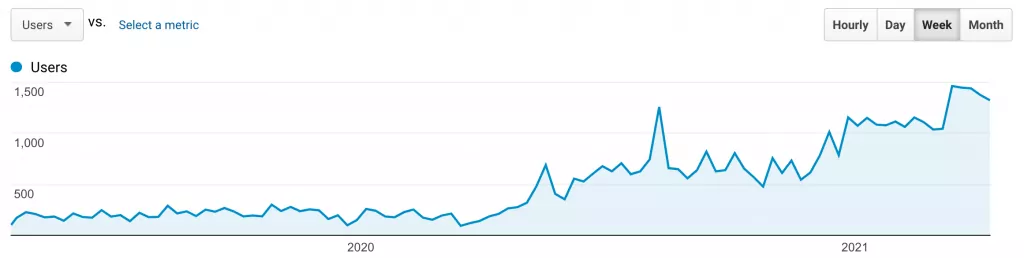
SEO results are measured in rankings, traffic, and most importantly — qualified leads and revenue generated from organic search. The graph below shows typical organic traffic growth achieved through systematic SEO work. This kind of growth doesn't happen overnight — it's the compounding result of consistent technical improvements, content publication, and authority building over 6-12 months. Every client receives monthly reports showing keyword rankings, traffic trends, and conversion attribution so you can see exactly how organic search contributes to your bottom line. The trajectory matters more than the absolute numbers. Initial months often show flat or declining traffic as technical changes propagate and the algorithm re-evaluates your site. Weeks 8-12 typically show acceleration as content begins ranking for target keywords. By month 6-9, compounding effects become apparent — new content ranks faster, old content accumulates more backlinks, domain authority strengthens, and organic traffic accelerates. Conservative estimate: 2-3x traffic growth in year one for competitive markets, 5-10x for less competitive niches. For Gold Coast businesses specifically, the opportunity is enormous. Many competitors are either neglecting SEO entirely (still relying on directory listings and Facebook) or employing outdated tactics that no longer work. A modern, disciplined SEO approach typically provides 3-5 months of competitive advantage before competitors wake up and invest themselves. Early movers in property management, medical services, legal, and trades accumulate significant competitive advantages. Metrics tracking is essential for understanding what's working. I implement detailed conversion tracking that connects organic visitors not just to page views, but to actual business outcomes: form submissions, phone calls, appointment bookings, or ecommerce purchases. This transforms SEO from a vanity metric ("we got 100K monthly visitors") into a business metric ("organic search generated $50K revenue this month"). This distinction completely changes how you prioritize work. Traffic from poorly targeted keywords is worthless; traffic from people actively searching for your specific solution is gold.

SEO organic traffic growth results showing significant improvement in search visibility and website visits through technical SEO and content strategy.
Google Search Console and Analytics data showing organic traffic growth achieved through professional SEO management.

Technical SEO and Content Strategy

The two pillars of sustainable organic growth.

Technical SEO ensures Google can efficiently crawl, index, and understand your website. I audit and fix issues including site speed (Core Web Vitals), mobile responsiveness, crawl errors, duplicate content, structured data markup, internal linking architecture, XML sitemaps, and canonical tag implementation. For sites built on Astro, Next.js, or modern frameworks, I ensure server-side rendering and static generation are configured correctly for optimal indexation. The technical foundation must be solid before content investment pays off. Core Web Vitals are no longer optional — they're explicit ranking factors. I optimize Largest Contentful Paint (LCP) by lazy-loading images, critical CSS inlining, and deferring non-critical JavaScript. First Input Delay (FID) is reduced by minimizing JavaScript parse time and deferring expensive computations off the main thread. Cumulative Layout Shift (CLS) is eliminated through explicit sizing of media and reserved space for ads. These aren't technical niceties; they directly impact rankings and user experience. Mobile-first indexing means Google evaluates the mobile experience exclusively. Many older sites still optimize for desktop first, then adapt for mobile — backwards from how Google evaluates them. I ensure mobile experiences are fast, navigable with thumbs (large touch targets), and load resources efficiently. For Gold Coast businesses, mobile optimization is critical — many local searchers use mobile while on-the-go. Structured data markup (Schema.org vocabularies) helps Google understand page meaning beyond word content. For local businesses, LocalBusiness schema with address, phone, hours, and reviews appears in Google's Knowledge Panel, making you more clickable. For service businesses, Service schema communicates offerings and pricing. For e-commerce, Product schema displays in search results with ratings and pricing. Product schema directly impacts click-through rates. Internal linking is often overlooked but crucial. Strategic internal links distribute page authority throughout your site, creating topical clusters that Google recognizes as authoritative on specific subjects. A well-structured internal linking strategy can significantly increase rankings for target keywords — sometimes more effectively than building external backlinks.

Content strategy is built on keyword research that identifies realistic ranking opportunities — terms with sufficient search volume where your site can realistically compete. I develop content calendars, write or brief high-quality articles targeting specific keyword clusters, optimise existing pages for better relevance signals, and build internal linking structures that distribute authority effectively. For local businesses, local SEO including Google Business Profile optimisation, local citations, and geo-targeted content rounds out the strategy to capture nearby searchers. Keyword research is where opportunity lives. I identify keywords by search volume (monthly search count), competition (how many quality competitors rank), and commercial intent (whether searchers are ready to buy or just learning). The sweet spot is medium-competition keywords — enough volume to matter, but achievable for a site that isn't already massive. For Gold Coast markets, there's significant opportunity in "City/Suburb + Industry" combinations: "real estate Southport," "plumber Broadbeach," "dentist Surfers Paradise" — all relatively low competition with high intent. Content creation is the vehicle for targeting these opportunities. Each article ranks for a cluster of related keywords, capturing the full search intent around a topic. A comprehensive article on "Gold Coast real estate investment tips" might rank for 50+ variations of that phrase, capturing all the demand around that topic. I prioritize quality over quantity — better to publish one comprehensive guide monthly than four shallow articles. Depth, specificity, and timeliness signal relevance to Google. Local SEO is particularly important for businesses serving specific geographic areas. Google Business Profile optimization directly impacts local pack rankings (the map view with three businesses). Citation building across relevant directories (Yellow Pages, Yelp, industry-specific databases) strengthens local relevance signals. Geo-targeted content (location-specific pages, local testimonials, area-specific guides) communicates to both Google and customers that you serve their area specifically. This is where Gold Coast businesses win — many competitors are thinking regionally or nationally, missing the opportunity to dominate hyper-local searches.

Industry-Specific SEO Expertise

Proven success across competitive markets.

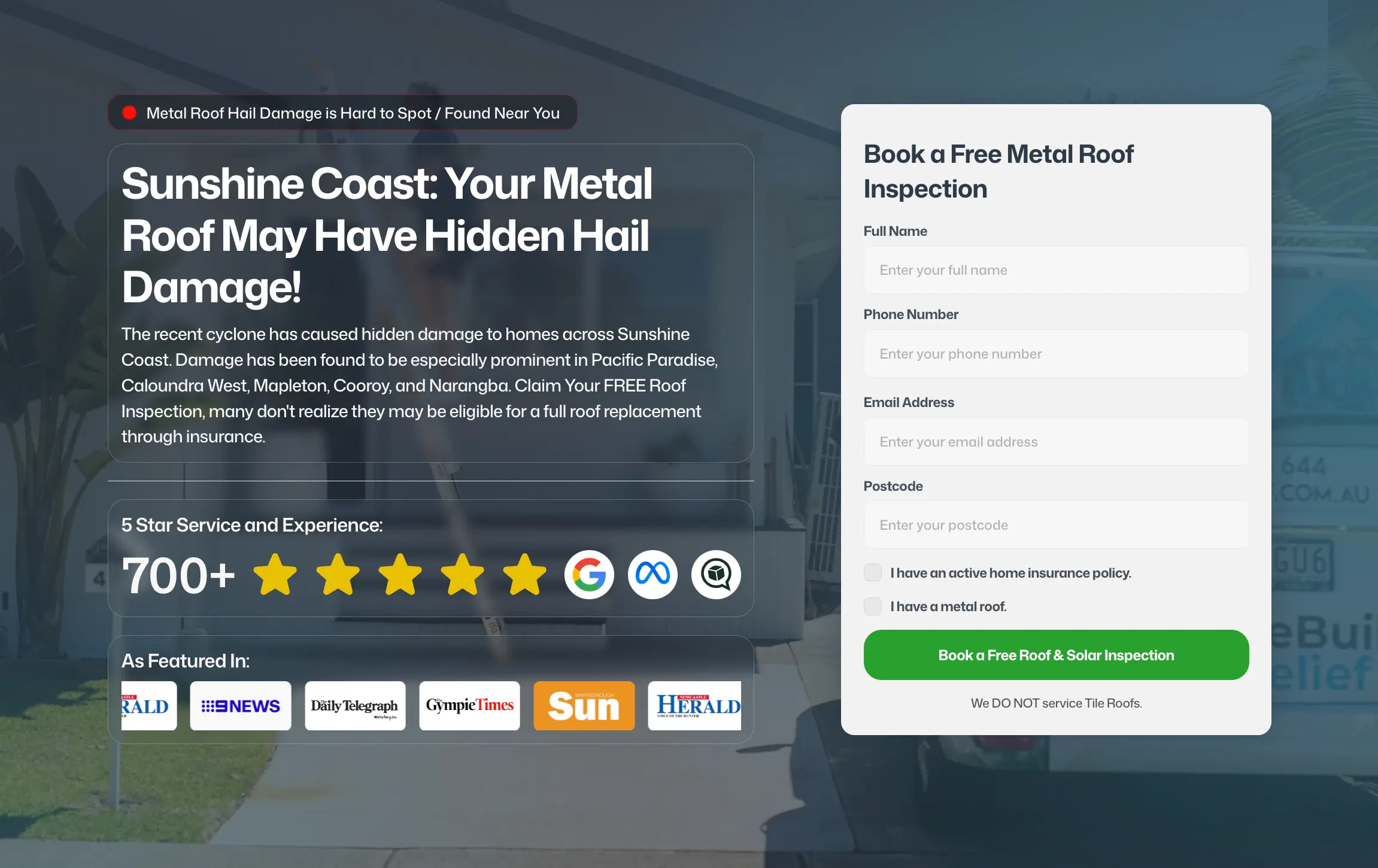
Over a decade of SEO work across diverse industries has revealed patterns that transcend industry boundaries. The fundamentals are universal — technical excellence, authoritative content, trust signals — but implementation differs significantly by market. Real estate has different keyword intent than legal services. Medical practices have different compliance requirements than e-commerce. B2B marketing has different buyer journey dynamics than consumer products. Understanding these differences is what separates effective SEO specialists from generalists. For real estate specifically (common in Gold Coast markets), I've delivered significant results by targeting hyperlocal keywords and geographic intent. Most real estate websites default to broad "property" and "real estate" keywords — highly competitive, expensive to rank, with ambiguous searcher intent. Instead, I target "3-bedroom homes Coolangatta," "investment properties Surfers Paradise," "waterfront real estate Gold Coast" — specific, high-intent keywords where purchasing intent is clear. Local agents dominate these keywords while competitors waste resources on national terms. For trades (plumbing, electrical, construction), the SEO strategy emphasizes service-area pages, Google Business Profile optimization, and trust signals specific to the industry. Homeowners searching for "emergency plumber Southport at 2am" need results immediately. They don't care about comprehensive content; they want someone who can arrive quickly and solve the problem. SEO strategy focuses on fast, authoritative answers to urgent problems. For professional services (lawyers, accountants, consultants), the strategy shifts to demonstrating expertise and credentials. These buyers are comparing multiple providers on credibility, experience, and fit. Content strategy emphasizes detailed analysis articles that prove subject-matter expertise. Backlinks from authoritative sources (bar associations, professional bodies) matter more than generic web mentions. The sales cycle is longer, so nurturing content that builds trust over multiple interactions is critical. For e-commerce, SEO focuses on product category optimization, competitive keyword targeting, and review aggregation. Product pages need optimized titles, comprehensive descriptions, and schema markup that displays pricing and ratings in search results. The aggregated user rating directly impacts click-through rates — a 4.8-star product shows higher engagement than an unrated competitor. For SaaS and B2B, SEO addresses the long consideration cycle. Buyers search for "marketing automation software comparison," "best project management tools," and "enterprise CMS options" — decision-stage keywords that require extensive content addressing feature comparison, pricing analysis, and implementation considerations. Blog content addressing these topics positions your product as a thoughtful option worthy of evaluation. The Gold Coast context is interesting because the region competes simultaneously in local, national, and sometimes global markets. A Gold Coast real estate photographer serves local buyers and sellers, but also shoots for national magazines and international publications. Their SEO strategy needs to address all three levels. This complexity makes targeted strategy critical — resources are finite, so focusing on the keywords that generate actual business is essential.

Need SEO and organic growth?

Let's connect.

Please provide your full name.
Please provide your phone number.
Please provide a valid phone number.
Please provide your email address.
Please provide a valid email address.
Please enter your message.

From the blog

Latest thinking

Tech news, design insights, and development deep-dives from the Gold Coast.

View all articles
🔑
DevOps

The Complete Guide to Environment Variables (Because You're Probably Doing It Wrong)

Environment Variables Guide

Read article
🧊
Creative Development — April 2026

Three.js in 2026: A Practical Guide for Web Developers Who Want to Add 3D Without Losing Their Minds

Threejs Beginners Guide

Read article
Paid Advertising — April 2026

The Surprisingly Complicated Decision Between Facebook Ads and Google Ads

Facebook Ads Vs Google Ads

Read article
📜
HTML & SEO — April 2026

Semantic HTML Is the Easiest Performance and SEO Win You're Ignoring

Semantic Html Guide

Read article
DevOps

Everything We've Learned About Deploying to Netlify After 40+ Client Sites

Netlify Deployment Guide

Read article
📲
Social Media Marketing — April 2026

A Platform-by-Platform Guide to Social Media That Actually Drives Business

Social Media Marketing 2026

Read article
🔌
DevOps

The Git Workflow That Actually Works for Small Agency Teams

Git Workflow Small Teams

Read article
💥
Web Performance — April 2026

That Analytics Script Is Costing You More Than You Think

Third Party Scripts Performance

Read article
Tech News

The Deployment Platform Wars: An Honest Pricing Breakdown of Vercel, Netlify, and Cloudflare

Vercel Vs Netlify Vs Cloudflare

Read article
🚀
JavaScript

Stop Writing For Loops: The Array Methods That Make JavaScript Actually Readable

Javascript Array Methods

Read article
Tech News

HTMX Proved Everyone Wrong — Hypermedia Is Back and SPAs Are Sweating

Htmx Is The Future

Read article
📦
Packaging Design — April 2026

Everything You Need to Know About Packaging Design That Sells on the Shelf

Packaging Design Tips

Read article