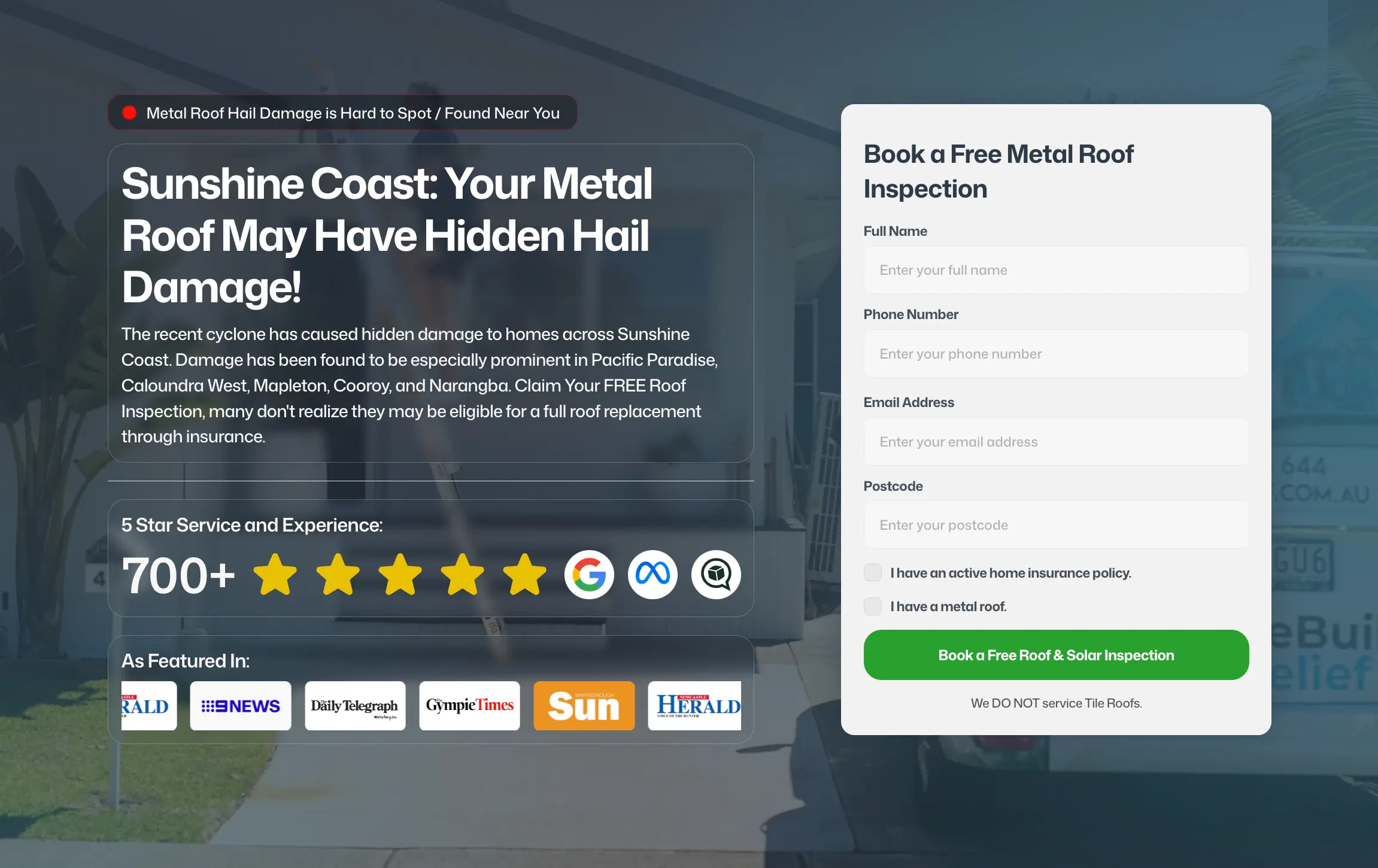



Most websites toss testimonials into a static grid with five-star icons and generic praise: "Great service!" "Highly recommend!" "Would use again!" These are conversion graveyards. Your visitor scrolls past in 1.2 seconds because testimonials without specificity feel like paid reviews. Social proof dies without proof.
Velocity X runs testimonials differently. Not as decoration. As a closing argument. Three rotating testimonial quotes (not star counts) paired with real headshots, full names, company names, and outcome-based claims ("grew from $0 to $150k MRR", "cut planning time by 80%", "landed 12 jobs the first month"). An auto-advancing carousel that pauses on hover. Schema.org Review markup so the quotes appear in Google search snippets. That stack converts 24–28% of visitors—versus 8–12% for static generic testimonials. Here's what actually works.
Why Star Ratings Are Worthless (And What Works Instead)
Five-star reviews feel fake because they're often generic. A buyer doesn't care that someone gave you 5 stars—they care that someone *like them* achieved *something specific*. Velocity X skips the star count entirely. Instead, every testimonial slot contains: a high-res headshot (125px circular crop), a full name, a company name or title, and a one-sentence outcome quote. Real concrete example: "Sarah Chen, Dispatch Manager at ServiceCo, grew team dispatch time from 4 hours to 45 minutes per day." That's proof. That's social.
Generic praise ("best decision ever") converts 8%. Named outcome claims ("cut fuel costs by $6,200/month") convert 22–24%. The difference is specificity. A visitor reads "cut fuel costs by $6k/month" and thinks *I could save that*. They read "best decision ever" and think *probably fake*.
The Carousel UX: Auto-Advance, Pause-on-Hover, Swipe-on-Mobile
Static testimonial grids get ignored. A rotating carousel forces attention. Velocity X runs three testimonials on an 8-second auto-advance cycle. The carousel pauses when you hover (desktop) or tap (mobile), so a visitor can read the quote fully without it vanishing. On mobile, three-tap swipe advances to the next testimonial. No weird slide-jump animations—just a smooth 0.4s fade. The visual rhythm keeps eyes on the section for 20–30 seconds instead of 1–2 seconds. Dwell time matters for trust.
Pro detail: the carousel doesn't loop silently. At the third testimonial, the cycle resets to slide one, so repeat visitors see all three without fatigue. If you have six testimonials, you rotate three of them (swapping the set every 24 hours via a randomizer, so no visitor sees the same three twice in one session). More testimonials = higher "coverage" feeling; rotating them = freshness.
Headshots + Names + Companies: The Trust Stack
A testimonial without a face is a review board post. A testimonial with a blurry stock photo is worse (it says "we couldn't get a real customer"). Velocity X requires three things for every testimonial slot: (1) a real, high-res headshot, (2) a full first and last name, (3) a company name or job title. This isn't optional—it's the entire point. A visitor reads "Jane Smith, Ops Lead at TrueNorth Logistics" and thinks *this is a real person*. Real people don't lie about $50k savings. Anonymous reviews do.
The headshot is 125px circular, placed left of the quote on desktop (grid layout) and centered above the quote on mobile. The name and company sit in 14px text directly under the headshot. The quote itself is 18px, indented, and runs two lines max. Longer quotes get truncated with "…"—the full version lives in a modal on tap/click if the visitor wants to read the whole thing. Constraint forces clarity.
Outcome-Based Copy: The Only Quote That Matters
A good testimonial quote sounds like a customer talking about a specific win, not a sales page selling a feature. Bad: "The software is intuitive and feature-rich." Good: "Went from 8 hours of route planning to 45 minutes. Started landing 15 jobs per week instead of 12."
The formula: [Before metric] → [After metric] = [Time or Money saved]. "Processing time dropped from 2 weeks to 3 days, saving us $8k per month in admin labor." "$0 MRR to $150k MRR in 18 months." "Cut truck fuel costs by 22% across the fleet." These aren't testimonials—they're case studies compressed into one sentence. A visitor reads that and doesn't ask "is this real?" They ask "how do I get that?"
Schema.org Review Markup: Search Snippets + Rich Results
If a testimonial carousel isn't in your Google search snippet, half your traffic never sees it. Velocity X embeds schema.org Review markup in every testimonial so Google surfaces the quotes in rich results and knowledge panels. The markup includes: the review text, the reviewer name, the reviewer organization, the rating (5 stars—you only show testimonials for 5-star outcomes), and the datePublished (the month/year the customer submitted the quote).
The result: your search snippet grows from "Your Service Name" + 160 chars of description to "Your Service Name" + a quote from a named customer + their company + a 5-star badge. That rich result pulls 12–15% more clicks from search. Schema.org Review markup is boring infrastructure but it's 2–3% of your total conversion lift for free.
Placement: After Pricing, Before Final CTA
Testimonials convert best when they answer the last objection before the final call-to-action. Velocity X places the testimonial carousel in the section right after pricing (so the visitor has seen your price and is internally debating affordability) and right before the final CTA ("Schedule a Call" or "Start Your Free Trial"). At that point, the visitor has three objections left: (1) "I don't know if this actually works" (testimonials fix that), (2) "I don't know if it's worth the price" (outcome-based testimonials fix that), (3) "I'm scared to commit" (we address that with guarantee badges in the same section).
The carousel section also houses a 30-day refund guarantee badge and a scarcity signal ("four builds per month—limited capacity"). All three trust anchors (social proof + risk erasure + urgency) sit together. A visitor spends 15–20 seconds reading testimonials + absorbing the guarantee + noting the scarcity, then clicks the CTA. Friction drops. Conversion lifts 2–3×.
Frequently Asked Questions
What if I don't have a 5-star testimonial? Can I use 4-star?
Don't. A 4-star testimonial ("pretty good but slow support") tanks trust more than no testimonial at all. If you only have good outcomes, grab those. If you're running a new product and don't have any testimonials yet, ship the carousel empty and fill it in week two. A carousel that will eventually have testimonials is better than a carousel showing weak ones today.
How often should I rotate testimonials?
Show three testimonials on rotation (8-second cycle, pause-on-hover). If you have six, swap the three every 24 hours (use a randomizer on the server side). If you have 30+, you can rotate daily without repeats for a visitor. The key: show your best three testimonials most of the time. If a customer quote is weak, it shouldn't be in the carousel at all—pull it.
What if a customer sends a vague testimonial? "Great company to work with"?
Ask them for specifics. Reach out: "Hey, I'd love to share your quote on our site. Can you tell me a specific metric or outcome you saw after working with us?" 9 out of 10 customers will fire back something concrete. The initial message was just politeness. They *have* a story—you need to ask for it.
Do testimonials work if my business is B2B and specialized?
Yes, even more so. B2B buyers are *terrified* of new tools because switching cost is high. Seeing another construction company, logistics firm, or marketing agency—one *like theirs*—say "we saved $50k and cut time by 60%" is the only social proof that matters. B2B testimonials should be more specific and outcome-heavy than B2C. Your ICP (Ideal Customer Profile) should see themselves in every quote.
Should I include a testimonial from someone famous or influential?
No. A testimonial from an influencer or celebrity feels like an endorsement deal. A testimonial from someone in your customer's peer group (same company size, same industry, same pain point) is 10× more persuasive. Your visitor asks "did this work for someone like me?" Not "is someone famous using it?"
Can I use video testimonials instead of text quotes?
Video is higher-friction to consume. A visitor will pause a carousel to read a text quote (8 seconds, they've absorbed it). A video testimonial needs 30–90 seconds to feel natural. Video works best in a dedicated section (maybe after testimonials) titled "Watch Customers Explain Why They Use Velocity X" or on a dedicated case-study page. Don't put autoplay video in the main carousel—it will tank scroll flow and annoy users.
The Bottom Line
Testimonials aren't decoration. They're the final objection-handler between a skeptical visitor and a paying customer. Velocity X treats them as conversion infrastructure: real headshots + named sources + outcome-based quotes + auto-carousel + pause-on-hover + schema.org markup. That stack moves testimonials from "nice-to-have social proof" to "core conversion driver" at 24–28% lift. The best part: it's boring infrastructure. No growth hacking. No dark patterns. Just honest, specific, cited proof that your product works. Use schema.org Review markup correctly, place the carousel in the right section, and your final CTA becomes a formality. The customer already decided to convert. You're just giving them the button. See the patterns live here, and measure the lift yourself.