





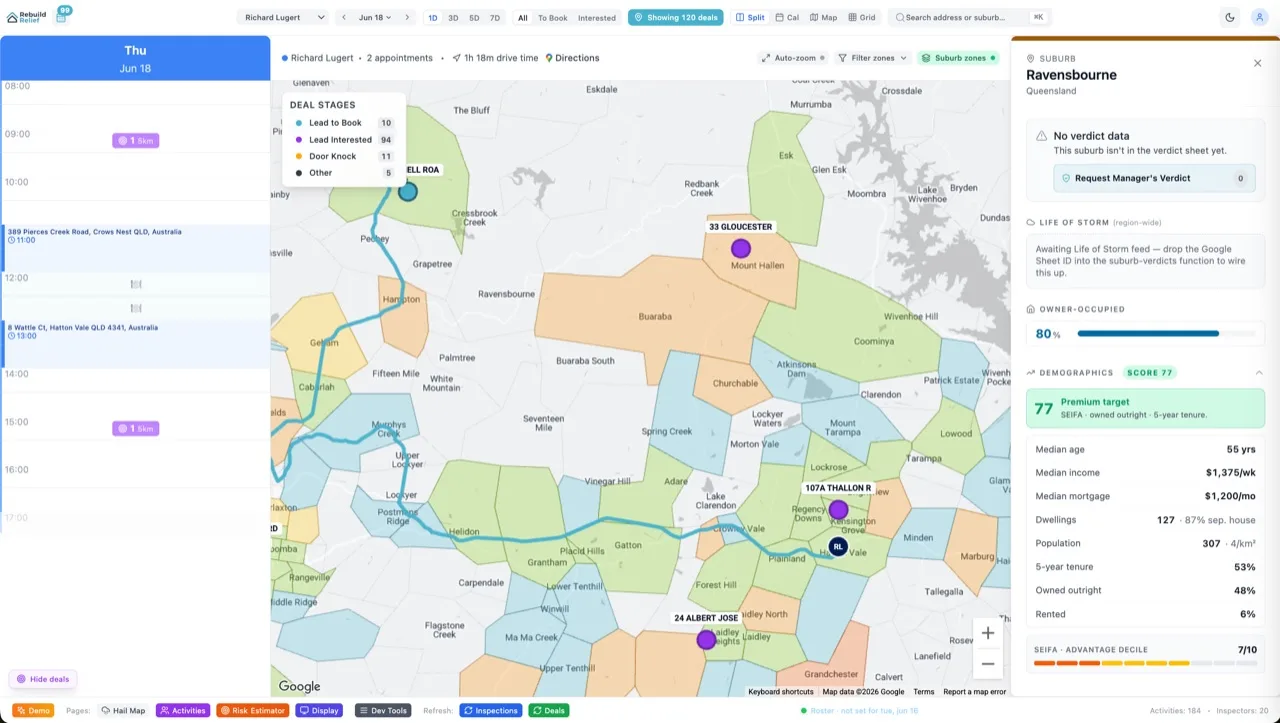

Every business that runs on multiple tools faces the same question: how do we connect them? Zapier and Make have positioned themselves as the universal glue, and they work great for one-off automations. But the moment you hit 750+ monthly tasks (roughly $30/mo on Zapier), or the moment latency matters (a CRM deal sync needs to happen in under 100ms, not after a 5–15 second queue), native integrations start looking a lot cheaper and faster. Velocity X exposes both paths: for Zapier-side automations, outbound webhooks fire directly from your dashboard. For high-volume flows, native integrations to HubSpot, Pipedrive, and Attio bypass the no-code layer entirely.
The No-Code Automation Pitch
Zapier and Make let you build workflows with zero code: "when X happens, do Y, then tell Z." Click buttons, draw arrows, watch it run. The hidden cost is the task limit. Zapier charges per 100 tasks/month: $19.99 at 750 tasks, $49 at 2K, $99 at 5K. A small CRM doing 20–50 deals/month, each firing 2–3 automations (notify Slack, log to spreadsheet, send email), hits 50–150 tasks easily. Scale to three teams and you're at $30–50/mo before you know it.
For one-off integrations — "send me a Slack when this happens" or "add new leads to a spreadsheet" — that's a solid trade. For mission-critical, latency-sensitive flows, it starts looking expensive compared to the alternative.
When Native Integrations Win
HubSpot, Pipedrive, and Attio APIs let you push or pull data at near-real-time speed with zero per-task fees. Create a deal in your dashboard → it lands in HubSpot immediately. Sync a contact → it's there before the page refreshes. The engineering cost is front-loaded (OAuth setup, token handling, API client), but after that, marginal cost is zero. For any flow that runs 100+ times/month, native is cheaper and faster than Zapier.
The trade-off is that you need a developer to set it up. Velocity X handles this by shipping pre-wired integrations to the major platforms; you enable the connection in settings and your dashboard syncs without additional coding. If you need a custom integration, adding a new provider takes 2–4 hours of engineering time.
The Cost Calculus
Zapier at scale: 1,000 tasks/month = $30/mo = $360/year. 3,000 tasks/month = $82/mo = $984/year. 10,000 tasks/month = $299/mo = $3,588/year. Each task adds latency (5–15 seconds queuing typical) and couples your flow to Zapier's infrastructure.
Native integrations: Initial setup 4–8 hours of engineering ($400–$1,200), then zero per-task cost forever. After six months, you've paid for itself. After a year, you're ahead by thousands. Latency is sub-100ms because the API call is direct: your server to HubSpot, no intermediary queue.
The playbook: one-offs and prototypes live on Zapier. Once a flow stabilises and volume predictably exceeds 500 tasks/month, migrate it to native. Velocity X's webhook layer makes this easy — automations that currently fire Zapier actions can be swapped to direct API calls without changing your dashboard logic.
The Velocity X Bridge
Velocity X ships with native integrations to HubSpot, Pipedrive, and Attio (deal, contact, activity sync). It also exposes outbound webhooks: any event from your dashboard (new lead, deal closed, activity logged) can POST to a Zapier/Make trigger or to a custom endpoint. This means you get both paths simultaneously. High-volume, latency-critical flows use native APIs. One-off automations use webhooks + Zapier. One dashboard, flexible routing.
Six FAQs
Can I use both Zapier and native integrations at the same time?
Yes. Velocity X webhooks fire regardless of whether native integrations are active. Route high-volume flows through native APIs, low-volume one-offs through Zapier. The architecture doesn't care.
What happens if my Zapier integration breaks?
Workflow fails silently unless you set up error notifications. Native integrations are more forgiving because you control the error handling (retry logic, circuit breakers, dead-letter queues). Mission-critical flows belong on native for this reason.
Does Velocity X support integrations beyond HubSpot, Pipedrive, and Attio?
The pre-wired integrations are those three CRMs (plus Google, Meta, Stripe, and others in the dashboard). Custom integrations follow the same pattern: 2–4 hours of engineering gets you a new provider wired in. Webhook support is universal — any API that accepts POSTs can receive events from your dashboard.
How do I choose between Zapier and webhooks?
Use Zapier for workflows that require complex logic or integrations Velocity X doesn't support natively. Use webhooks for simple "when X, POST to Y" patterns. Webhooks are faster, cheaper, and one less subscription tab to manage.
What's the latency difference, really?
Zapier: typically 5–15 seconds for task execution plus whatever processing time the downstream API needs. Native integrations: 50–500ms depending on API response time. For a CRM sync, native is 10–30× faster.
Can I migrate from Zapier to native without downtime?
Yes. Keep the Zapier workflow running while you build the native integration, test it thoroughly, then flip the webhook destination. Once native is live and validated, disable the Zapier automation. Zero downtime, zero lost events if you overlap the transition window.
The Bottom Line
Zapier and Make are invaluable for one-off automations, prototypes, and niche integrations. But at scale, they're expensive compared to native APIs. If you're building a custom dashboard on Velocity X and any single integration will run 500+ tasks/month, ask about native integration support. The engineering upfront is modest. The savings compound.